Flocked Swabs vs. Polyester Swabs: How to Choose the Right Specimen Collection Swab


In medical and laboratory sampling, the swab is more than a simple collection tool. It is the first consumable that contacts the specimen, and its material, tip structure, shaft design, and packaging can influence how easily the sample is collected, handled, transported, and released for downstream testing.
Among common medical sampling swabs, flocked swabs and polyester swabs are two widely used synthetic-fiber options. Both can support clinical and laboratory workflows, but they are not identical. For hospitals, diagnostic laboratories, distributors, and medical consumable buyers, understanding the difference between these two swab types can make procurement decisions more practical and application-focused.
This article explains the main differences between flocked swabs and polyester swabs, including tip structure, sample uptake, sample release, comfort, transport protection, and suitable applications.
Why Swab Material Matters in Specimen Collection
Specimen collection belongs to the pre-analytical stage of testing. Before a specimen reaches the laboratory instrument or culture system, it must be collected from the correct site and transferred into the proper container or medium. A suitable swab helps make this process more consistent and convenient.
For many diagnostic workflows, synthetic fiber swabs are preferred because they are clean, stable, and compatible with a wide range of medical sampling applications. In respiratory specimen collection, many testing guidelines also emphasize the importance of using appropriate synthetic-fiber swabs and avoiding materials that may interfere with certain downstream tests.
For buyers, this means swab material should never be treated as a minor detail. The right choice depends on the collection site, testing method, transport condition, budget, and user preference.
What Is a Flocked Swab?
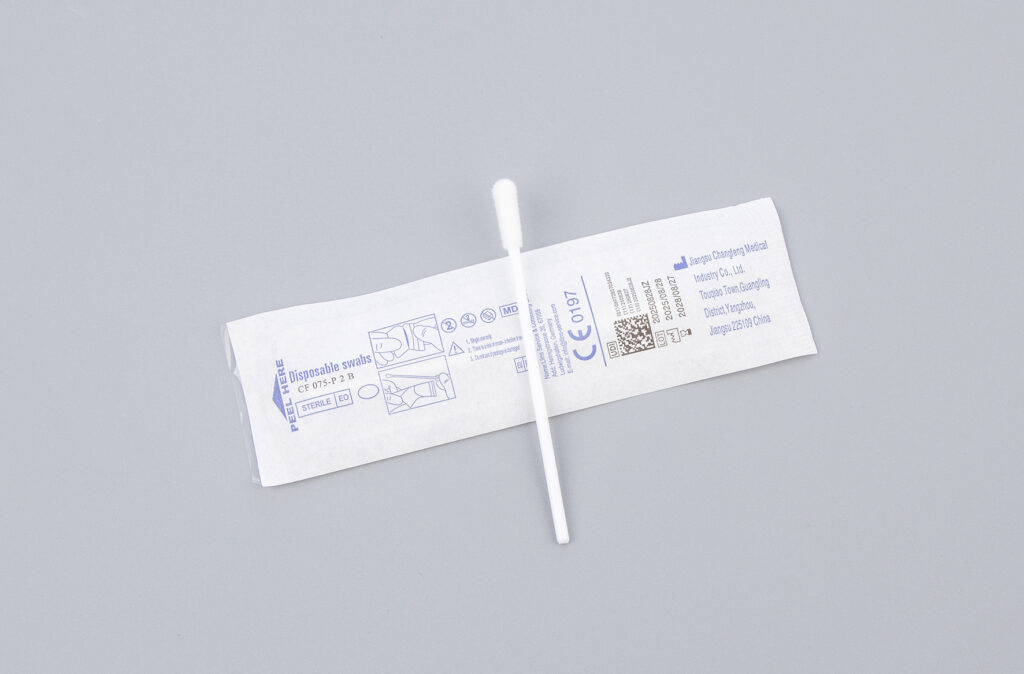
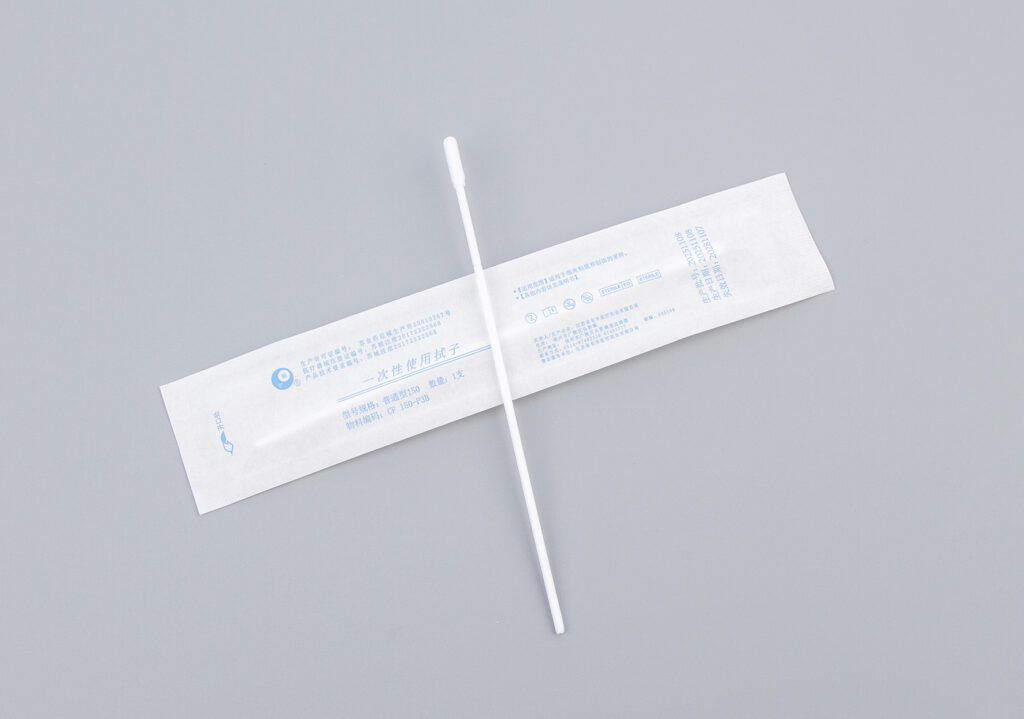
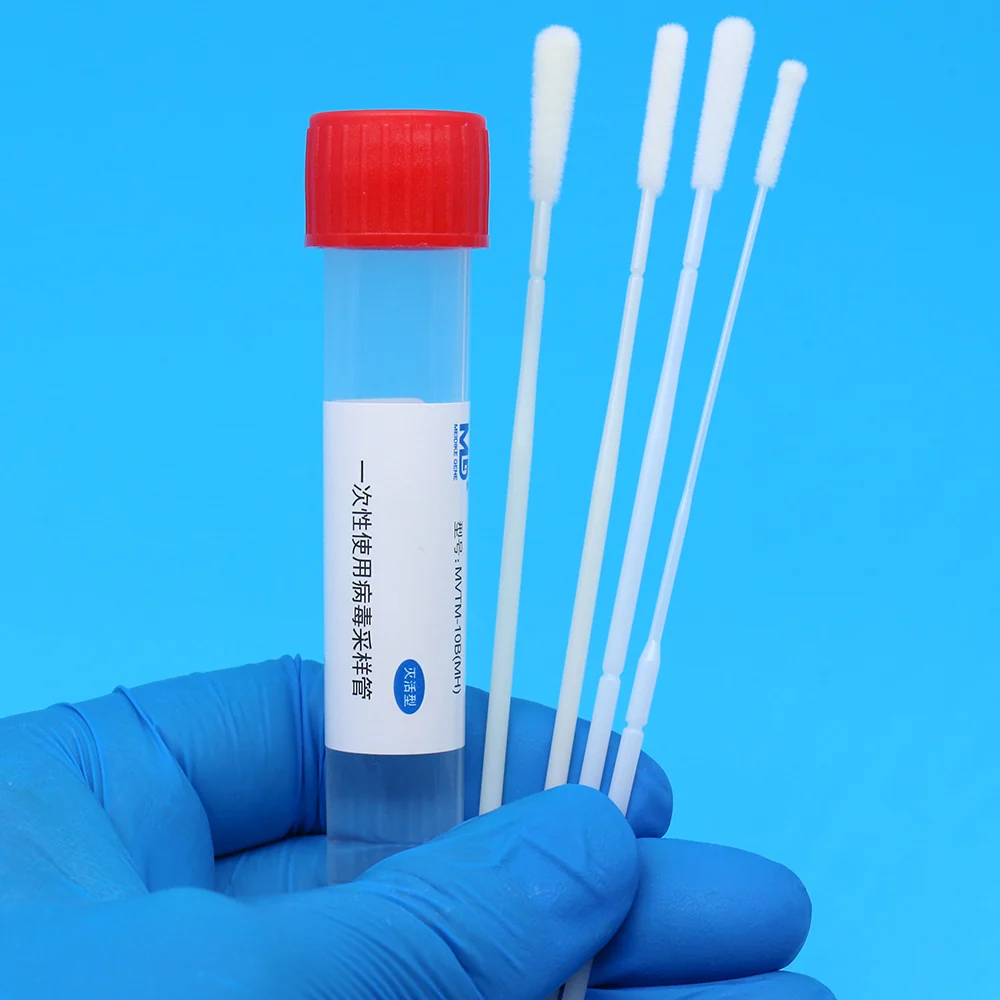
A flocked swab is made by applying short fibers vertically onto the swab tip. This creates a brush-like surface with many small fiber ends exposed. Compared with traditional wrapped fiber swabs, the flocked structure is designed to improve specimen collection and release.
The main idea behind flocking is simple: the fibers on the tip can collect the specimen on the surface rather than trapping it deep inside a wound fiber matrix. When the swab is placed into a tube, reagent, or transport medium, the collected specimen can be released more efficiently.
Flocked swabs are commonly used in medical diagnostics, respiratory sampling, molecular testing workflows, and other applications where sample release efficiency is important.
Common Advantages of Flocked Swabs
Flocked swabs are often selected for their efficient sample uptake and release. Their soft tip structure can also support patient comfort during nasal or throat specimen collection. For applications that require a strong balance between collection efficiency and release performance, flocked swabs are a popular option.
A large-headed flocked swab may be preferred when a larger sampling surface is needed. A nasal flocked swab may be selected when the collection site requires a softer, more controlled design.
What Is a Polyester Swab?
A polyester swab uses polyester fiber as the sampling tip material. Polyester is a synthetic fiber that is widely used in medical and laboratory consumables because of its cleanliness, stability, and broad compatibility.
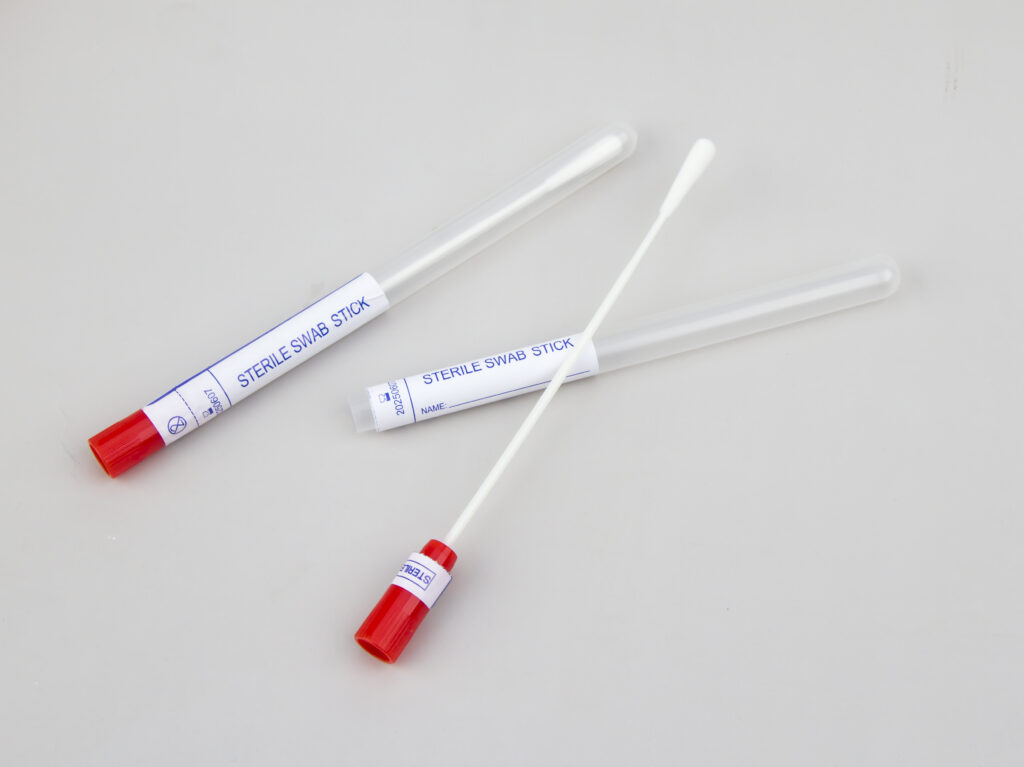
Unlike flocked swabs, polyester swabs usually have a more traditional fiber-tip structure. They can be used for many routine medical, laboratory, and controlled sampling applications. Depending on the design, a polyester swab may also be supplied with a protective sheath to reduce contamination risk during storage and handling.
Polyester swabs are often chosen for practical use cases where clean sampling, stable quality, and cost-effective procurement are important.
Common Advantages of Polyester Swabs
Polyester swabs are versatile and suitable for many general specimen collection tasks. They are often used in laboratories, clinics, and controlled sampling environments. For distributors and bulk buyers, polyester swabs can offer a practical balance between performance, availability, and cost control.
A polyester fiber swab with a sheath can provide additional protection before use. This design is useful when the swab needs to remain protected during transport, storage, or field use.
Flocked Swabs vs. Polyester Swabs: Key Differences
1. Tip Structure
The most obvious difference is the swab tip structure. Flocked swabs use short, upright fibers that form a velvet-like or brush-like surface. Polyester swabs usually use a more conventional fiber structure.
This difference affects how the swab contacts the sampling site and how the collected specimen is released into the testing system or transport medium.
2. Sample Collection Efficiency
Flocked swabs are often selected when efficient specimen collection is a priority. The larger effective surface area can help the swab collect material from the target site. This can be useful in nasal, throat, and other clinical sampling workflows.
Polyester swabs can also collect specimens effectively, especially in routine sampling applications. They may be preferred when the requirement is general-purpose sampling rather than maximum release efficiency.
3. Sample Release Performance
Sample release is one of the main reasons many laboratories and procurement teams choose flocked swabs. Because the specimen tends to remain near the fiber surface, flocked swabs can release the collected sample efficiently when placed into liquid media or testing systems.
Polyester swabs may retain more material within the fiber structure, depending on the design. However, they remain suitable for many applications where the required sample volume and testing method are compatible with polyester fiber swabs.
4. Comfort and Handling
For patient-facing applications, comfort matters. Nasal and throat sampling can be uncomfortable if the swab tip is too stiff, too large, or poorly shaped. Flocked swabs are often designed with a soft tip, which can support smoother sample collection in appropriate clinical workflows.
Polyester swabs can also be designed for comfortable use, especially when the tip size, shaft length, and shaft flexibility are matched to the intended application. Buyers should evaluate the whole swab design rather than judging only by material.
5. Contamination Control and Packaging
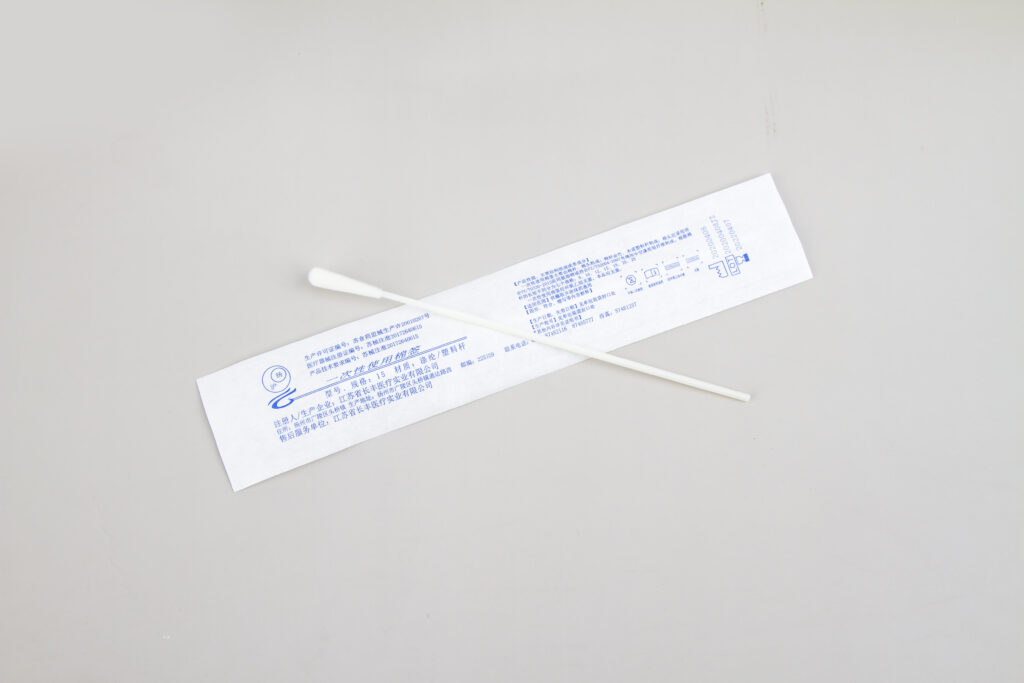
Both flocked swabs and polyester swabs can be supplied in sterile packaging. For medical use, packaging should keep the swab protected until the moment of collection and should be easy for healthcare professionals to open.
Polyester fiber swabs with protective sheaths are especially useful when users want extra protection during storage and handling. A sheath can help reduce unnecessary exposure before use, which is valuable for laboratory, clinical, and controlled sampling environments.
6. Cost and Procurement Planning
Cost is also part of swab selection. Flocked swabs may be preferred for higher-performance diagnostic sampling workflows, while polyester swabs may be suitable for routine use, large-volume procurement, or cost-sensitive applications.
For distributors and medical supply buyers, the best decision is not always the most expensive option. It is the swab that fits the intended application, testing workflow, and customer expectation.
When to Choose a Flocked Swab
A flocked swab is usually a strong choice when the application requires efficient sample uptake and release. It may be suitable for nasal sampling, throat sampling, respiratory pathogen workflows, and other diagnostic applications where release performance is important.
Buyers may consider flocked swabs when they need:
- Efficient sample collection and release
- Soft and practical sampling tips
- Swabs for nasal or throat specimen collection
- Options for molecular or clinical laboratory workflows
- Consistent performance for diagnostic consumable supply
For example, a nasal swab may be selected for nasal cavity specimen collection, while a large-headed flocked swab may be selected when a larger collection surface is preferred.
When to Choose a Polyester Swab
A polyester swab is a practical choice for many general medical and laboratory sampling needs. It can be suitable for routine specimen collection, controlled sampling, and applications where a stable synthetic-fiber swab is required.
Buyers may consider polyester swabs when they need:
- Clean synthetic fiber sampling
- Routine medical or laboratory use
- Cost-effective bulk procurement
- Stable product availability
- Optional protective sheath design
A polyester fiber swab with a sheath is especially useful when the buyer wants additional protection before use and cleaner handling during storage or transport.
How to Choose Between Flocked and Polyester Swabs
To choose the right swab, buyers should first define the intended use. A swab used for nasal specimen collection may have different requirements from a swab used for general laboratory sampling. A swab used with transport medium may require different properties from a dry swab used for controlled collection.
Before ordering, buyers should consider the following questions:
- What is the collection site?
- Is the swab used for nasal, throat, surface, or general laboratory sampling?
- Is efficient sample release important for the downstream test?
- Does the swab need to be sterile?
- What shaft material and shaft flexibility are required?
- Does the product need a protective sheath?
- Will the swab be used with transport medium?
- What packaging format is preferred by the end user?
- What documents and export support are required?
These questions help buyers select the swab based on real application needs rather than relying only on product names.
Related Swab Options for Medical and Laboratory Use
In addition to standard flocked and polyester swabs, medical suppliers may offer several application-specific designs.
Nasal Swab
Designed for nasal cavity specimen collection, nasal swabs usually focus on softness, shaft flexibility, sterility, and compatibility with collection tubes or transport systems.
Large-Headed Flocked Swab
A large-headed flocked swab provides a larger collection surface and can be useful when efficient sample uptake is important.
Polyester Fiber Swab with Sheath
This design combines synthetic polyester fiber with a protective sheath, supporting cleaner handling and reduced exposure before use.
Media-Coated Swab
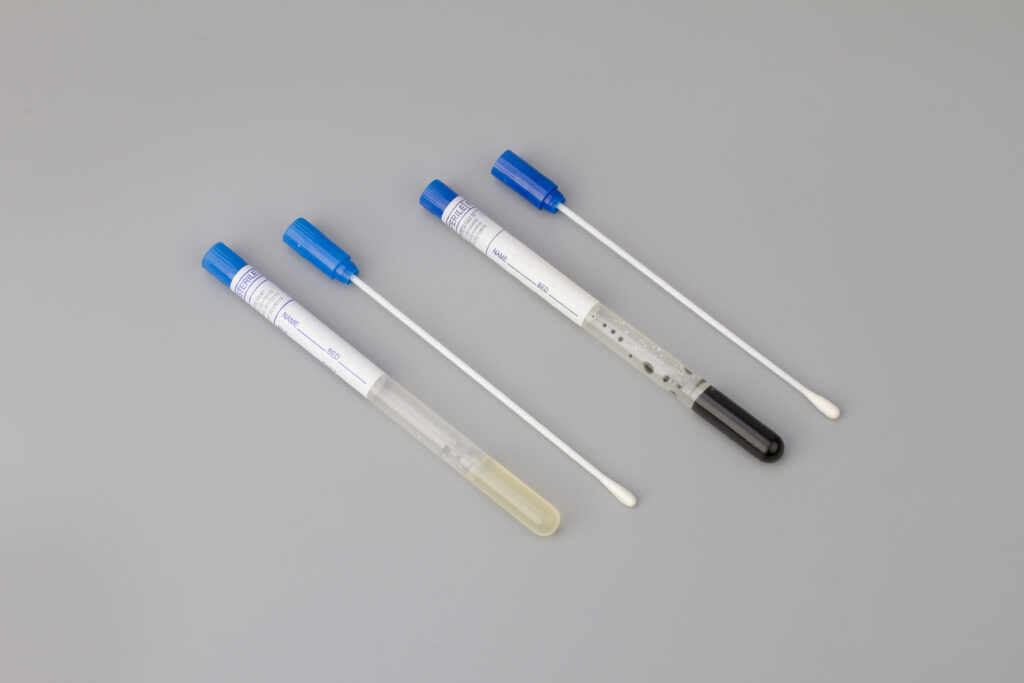
A media-coated swab includes pre-applied medium and can simplify sampling and transport workflows for microbiological or clinical laboratory use.
Double-Tip Throat Swab
A double-tip throat swab is designed for oropharyngeal sampling workflows where a dual-tip structure is preferred.
Supplier Considerations for Bulk Swab Procurement
For international buyers, the supplier is as important as the swab itself. A good swab supplier should provide stable quality, clear specifications, consistent packaging, and responsive support.
When evaluating a supplier, consider whether they can provide product samples, material information, sterile packaging options, shelf life details, batch traceability, export documentation, private label support, and stable lead times.
For distributors, these details help reduce after-sales issues and improve customer confidence in the product line.
Conclusion
Flocked swabs and polyester swabs are both useful synthetic-fiber sampling tools, but they serve different procurement needs. Flocked swabs are often preferred when efficient sample collection and release are important, while polyester swabs are practical for many routine medical and laboratory applications.
The right choice depends on the collection site, testing workflow, packaging requirement, cost target, and end-user expectations. Buyers should evaluate not only the tip material, but also the shaft, packaging, sterility, transport protection, and supplier consistency.
Changfeng Medical supplies a range of medical sampling swabs for diagnostic, clinical, and laboratory applications, including nasal swabs, large-headed flocked swabs, polyester fiber swabs with sheath, media-coated swabs, and double-tip throat swabs. Contact us to discuss product specifications, packaging options, and bulk supply solutions.
FAQ
Are flocked swabs better than polyester swabs?
Not always. Flocked swabs are often better when efficient sample release is important, while polyester swabs are practical for many routine and cost-sensitive applications. The best choice depends on the intended use and testing workflow.
What is the main advantage of a flocked swab?
The main advantage of a flocked swab is its tip structure, which supports efficient specimen collection and release. This can be useful in diagnostic sampling workflows.
What is a polyester swab used for?
A polyester swab can be used for general medical, laboratory, and controlled sampling applications. It is a clean synthetic-fiber option suitable for many routine workflows.
Why choose a swab with a protective sheath?
A protective sheath helps keep the swab covered before use and supports cleaner handling during storage and transport. It is useful in clinical, laboratory, and controlled sampling environments.
Can flocked swabs be used for nasal sampling?
Yes, flocked nasal swabs are commonly used for nasal specimen collection when the swab design is suitable for the collection site and intended workflow.
What should buyers check before ordering swabs?
Buyers should check the swab material, tip design, shaft material, sterility, packaging, shelf life, intended application, transport compatibility, documentation, and supplier quality consistency.