How to Communicate Sampling Swab Requirements to Suppliers?


Communicating sampling swab requirements clearly helps suppliers recommend suitable products, quote accurately, prepare correct samples, and avoid repeated revisions. Many sourcing delays happen because the buyer only asks for swabs without explaining application, material, packaging, sterile status, tube compatibility, or documentation needs.
For medical buyers, distributors, diagnostic companies, and laboratories, a clear requirement list can make the purchasing process faster and reduce misunderstandings before bulk orders.
Start with the Application
The first requirement to share is the application. Buyers should explain whether the swab is for nasal collection, throat collection, oral collection, laboratory sampling, diagnostic kit assembly, transport medium use, field sampling, hospital procurement, or distribution inventory.
Application helps suppliers narrow down product type and avoid sending unsuitable options.
State the Collection Site
Collection site affects tip size, shaft length, and shaft flexibility. Nasal swabs, nasopharyngeal swabs, throat swabs, oral swabs, and general sampling swabs may require different designs.
If the customer has a fixed protocol, buyers should share the required collection site early.
Specify Tip Material
Tip material may include nylon flocked fiber, polyester fiber, foam, rayon, cotton, or other options. Buyers should tell suppliers if a specific material is required.
If the buyer is unsure, they can ask the supplier to recommend options based on workflow and provide samples for comparison.
Describe Shaft Requirements
Shaft details may include material, length, diameter, flexibility, and breakpoint position. If the swab is used with a tube, the supplier should know tube length and cap closing space.
Clear shaft requirements help avoid problems with handling and tube compatibility.
Confirm Dry Swab or Transport System
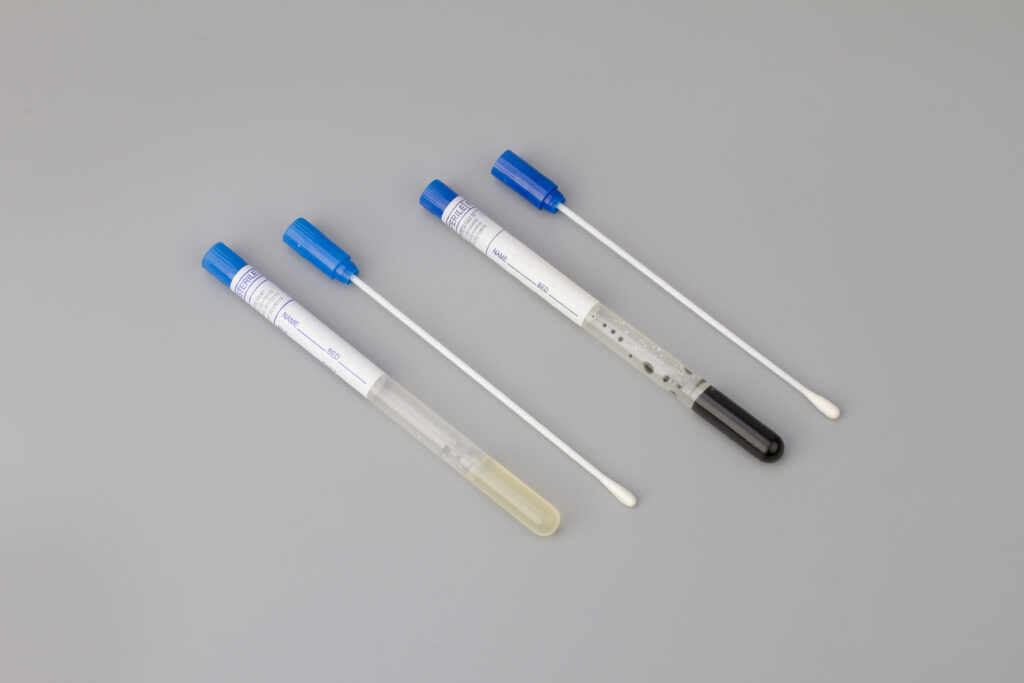
Buyers should say whether they need a dry swab, swab with tube, swab with transport medium, media-coated swab, or complete collection kit.
This information affects quotation, packaging, shelf life, carton quantity, and shipping weight.
Share Packaging Requirements
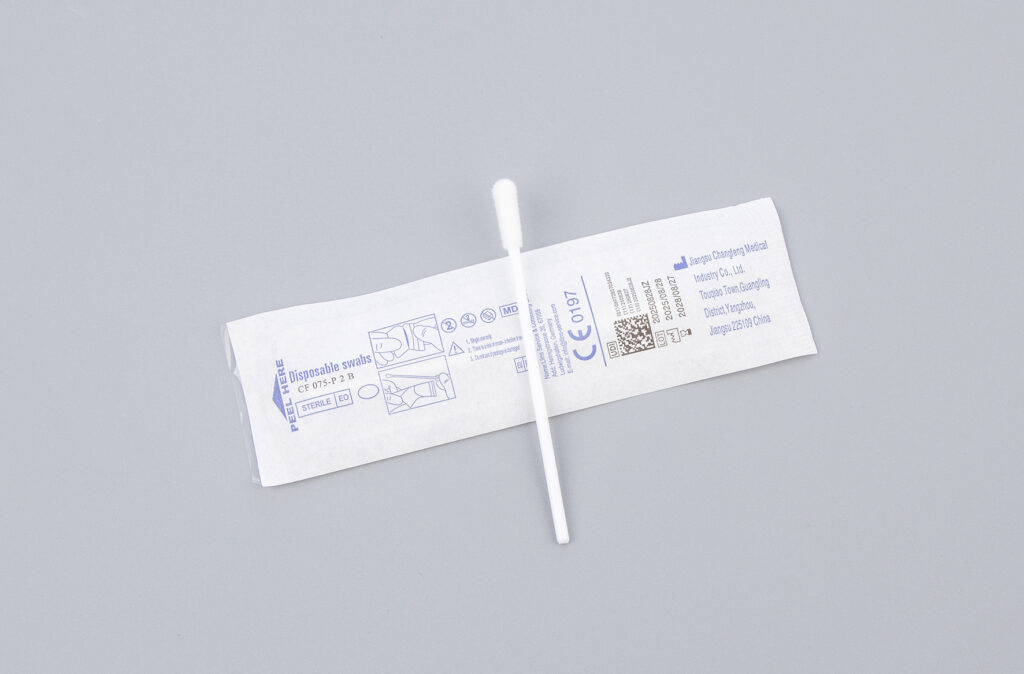
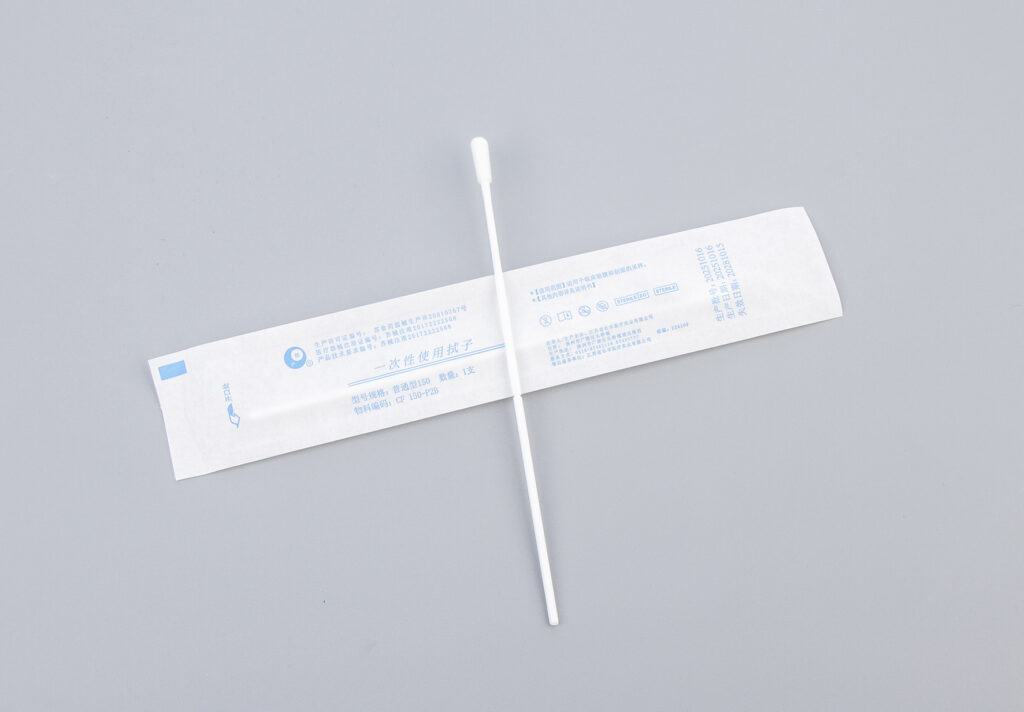
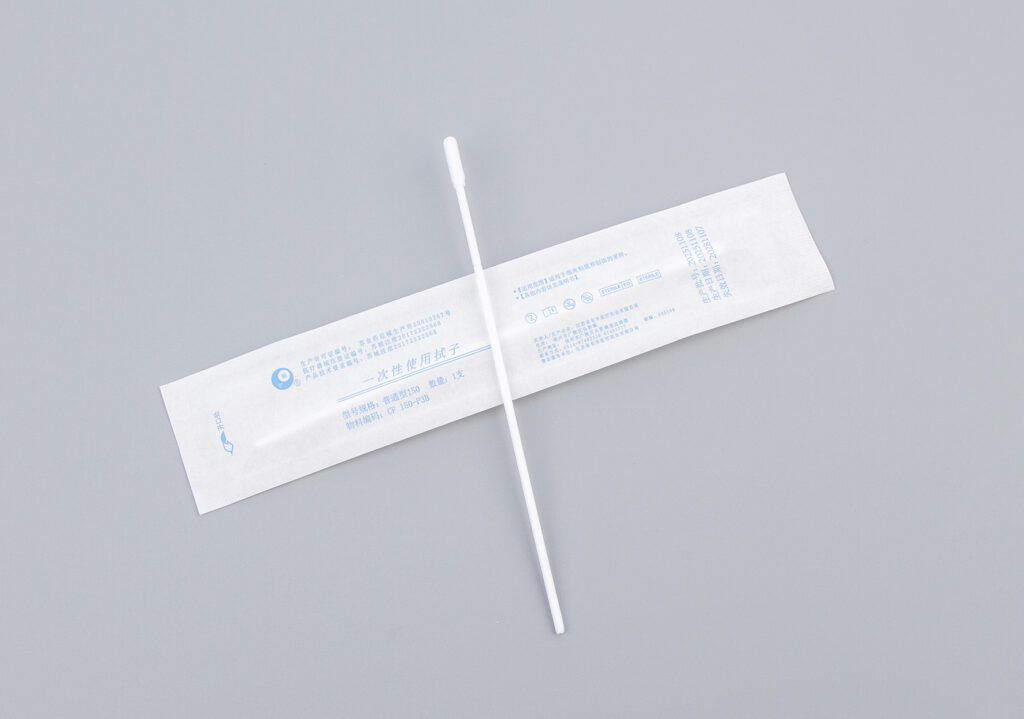
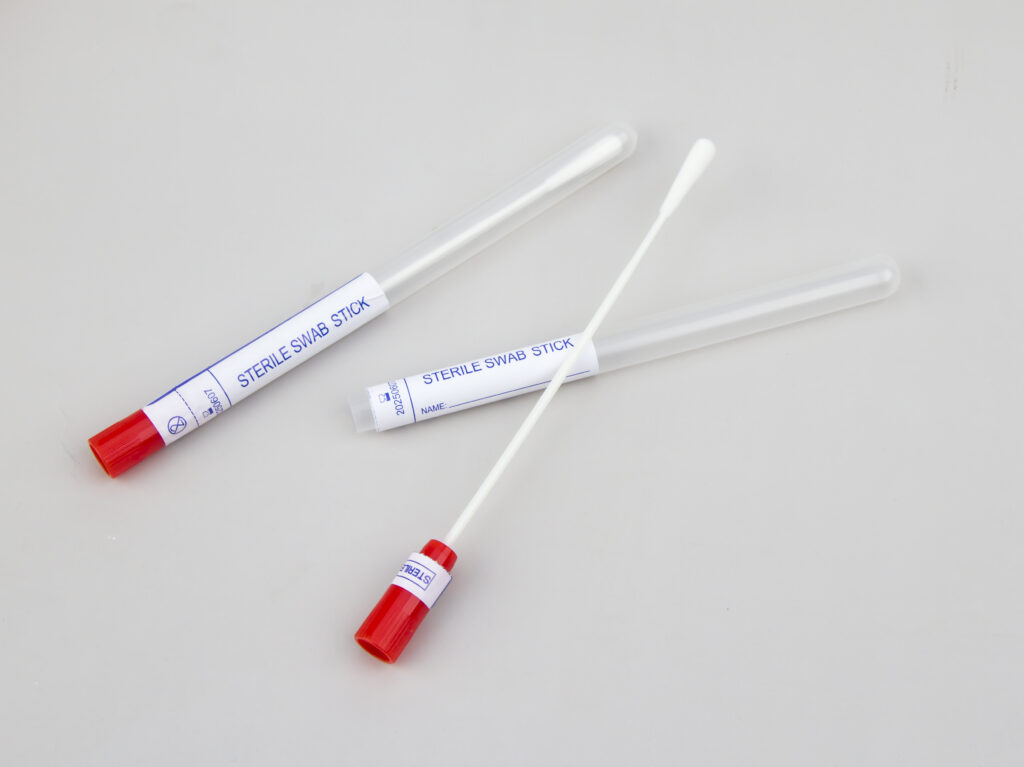
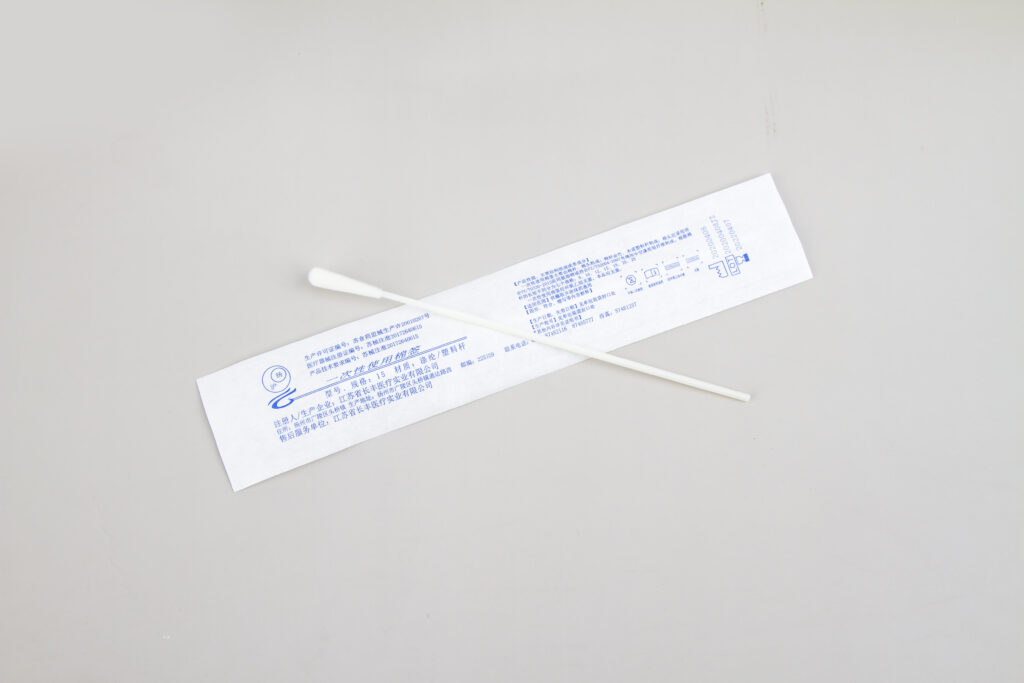
Packaging requirements may include individual pouch, sterile pouch, protective sheath, tube label, inner box, outer carton, private label pouch, instruction sheet, barcode, and carton marks.
If private label packaging is needed, buyers should provide logo files, artwork requirements, language, barcode, and label content.
Confirm Sterile Status
Buyers should clearly state whether the product must be sterile or non-sterile. If sterile swabs are required, buyers should ask about sterilization information, sterile packaging, shelf life, lot number, and expiration date.
Mention Shelf Life and Storage Needs
Buyers should communicate any shelf life requirement, remaining shelf life requirement, storage condition, or expiration date format. This is important for distributors, tenders, public health programs, and hospital procurement.
Provide Quantity and Delivery Details
Suppliers need target quantity, order frequency, destination market, delivery schedule, and preferred shipping method to provide a practical quotation. MOQ and lead time may differ for standard products and private label orders.
Ask for Samples and Documents
Buyers should request samples, product specifications, packing information, shelf life information, sterilization information if needed, and available export documents before confirming bulk orders.
For kit projects, samples should include the final tube, pouch, label, and packaging layout where possible.
Use a Requirement Checklist
A useful sampling swab requirement checklist includes application, collection site, swab type, tip material, shaft length, flexibility, breakpoint, dry or transport format, sterile status, packaging, labels, private label needs, shelf life, quantity, MOQ, lead time, destination, samples, and documents.
Common Communication Mistakes
One common mistake is asking for a quotation without a specification. Another mistake is discussing packaging and documents only after the price is confirmed.
Buyers should also avoid changing product requirements after sample approval unless the supplier confirms the change in writing.
Conclusion
To communicate sampling swab requirements to suppliers, buyers should provide clear details about application, collection site, material, shaft design, packaging, sterile status, shelf life, quantity, lead time, samples, and documents. Clear communication helps suppliers recommend the right product and reduces sourcing delays.
Changfeng Medical supplies sampling swabs for diagnostic, clinical, laboratory, and distribution channels, including nasal swabs, large-headed flocked swabs, polyester fiber swabs with sheath, media-coated swabs, and double-tip throat swabs. Contact us to discuss sampling swab requirements and bulk supply solutions.
FAQ
What information should buyers send to swab suppliers?
Buyers should send application, collection site, material, shaft requirements, sterile status, packaging, quantity, shelf life, and document needs.
Why is application important in a swab inquiry?
Application helps suppliers recommend the correct swab type and avoid unsuitable options.
Should buyers mention packaging early?
Yes. Packaging affects price, MOQ, lead time, shelf life, labels, and shipping details.
Should buyers request samples before bulk orders?
Yes. Samples help confirm product quality, packaging, tube fit, and workflow compatibility.