How to Choose Swabs for Laboratory Automation Workflows?

Laboratory automation workflows may require swabs and collection kits that are compatible with tubes, racks, labels, barcodes, caps, and sample processing steps. For buyers, the swab should not be evaluated alone. It should be checked together with the tube, packaging, labeling, and downstream handling process.
Not every laboratory uses automated systems, and not every swab needs automation compatibility. But when the customer has an automated or semi-automated workflow, small details such as tube dimensions, barcode position, and cap design can become important.
What Are Laboratory Automation Workflows?
Laboratory automation workflows may include automated sample registration, tube scanning, rack handling, liquid handling, extraction, or other processing steps. The exact workflow depends on the laboratory, equipment, test method, and sample type.
Buyers should ask the customer what parts of the process are automated before selecting swabs or kits.
Start with the Tube System
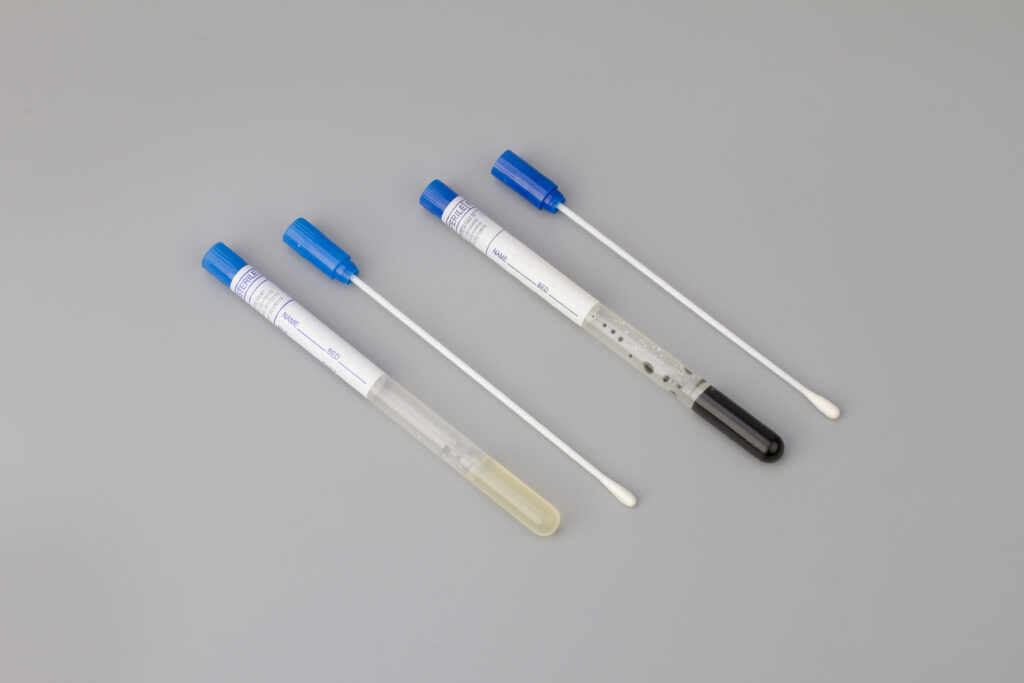
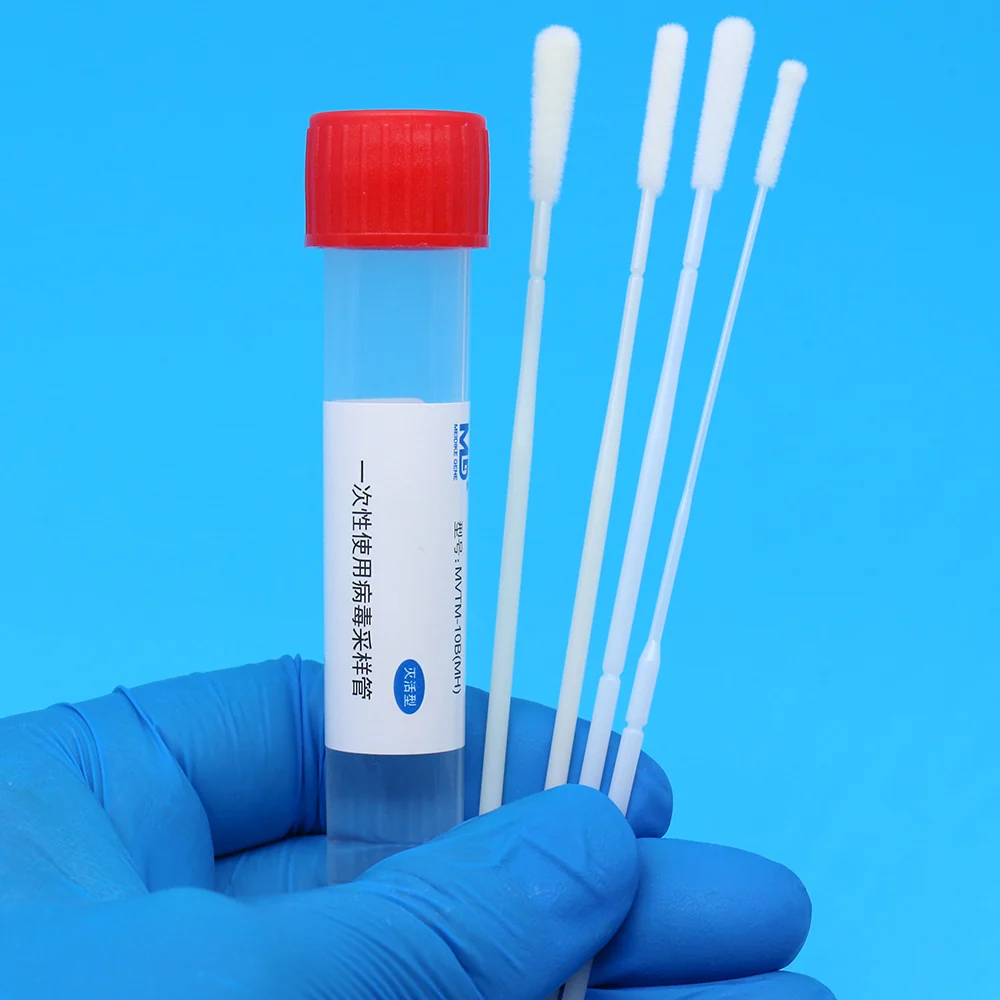
In many automated workflows, the tube is just as important as the swab. Tube height, diameter, cap design, label area, and barcode position may affect compatibility with racks or instruments.
If the swab is supplied with a tube, buyers should test the complete tube system before bulk orders.
Check Swab Length and Breakpoint
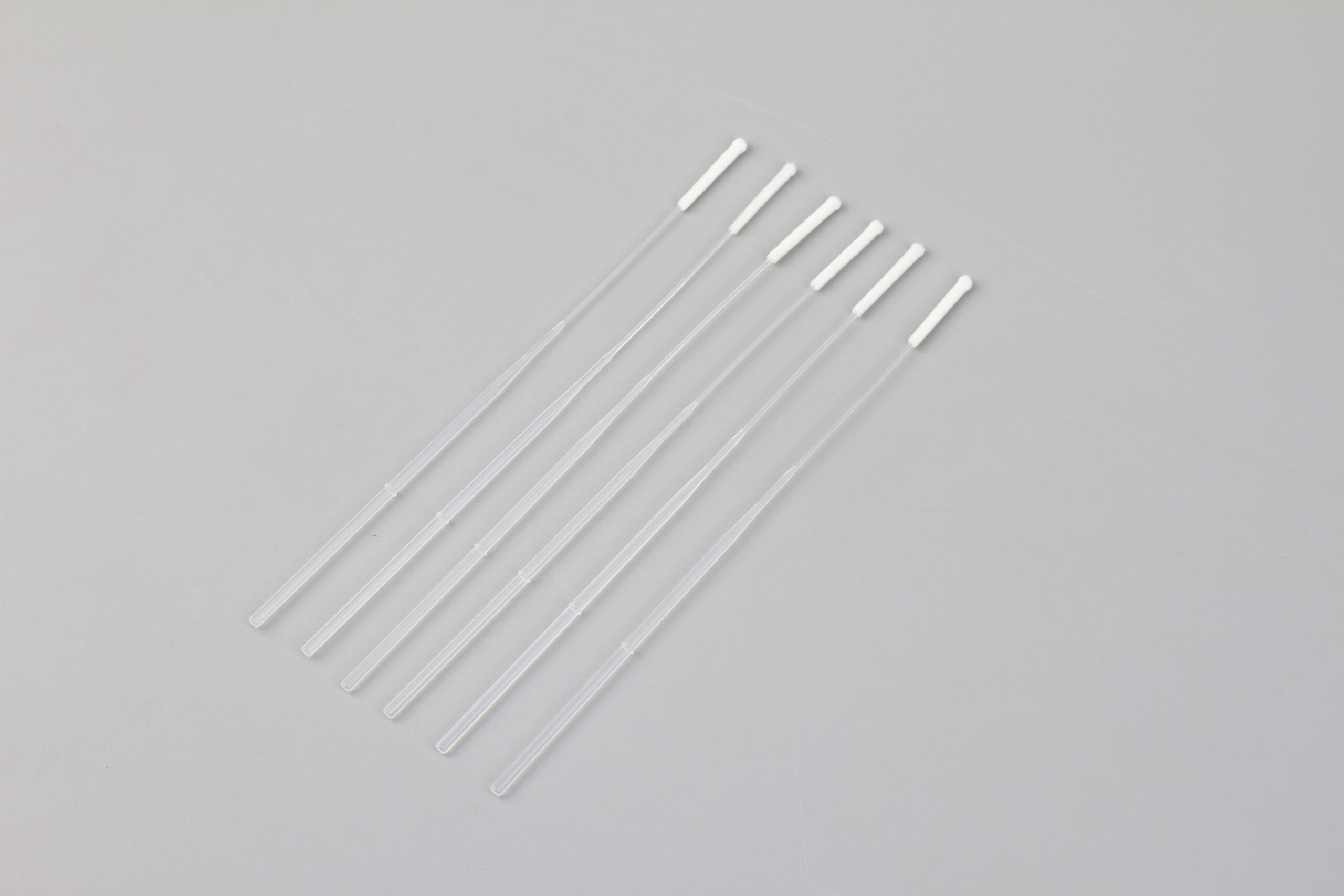
Swab length and breakpoint position should match the tube and workflow. After collection, the broken swab tip should fit inside the tube without blocking cap closure or interfering with processing.
A swab that is too long, too short, or broken at the wrong position may create handling problems.
Check Tube Fit and Cap Closure
Tube fit should be tested with the actual swab. The swab tip, shaft, breakpoint, medium volume, and cap closing space should work together.
For medium-based kits, buyers should also check leakage risk, storage position, and whether the cap remains secure during transport.
Check Barcode and Label Design
Laboratory automation may require barcode scanning. Barcode size, contrast, location, and label adhesive should be tested on the actual tube surface.
A barcode that looks clear on a flat artwork file may not scan well when wrapped around a small round tube.
Check Label Consistency
Labels on tubes, pouches, boxes, and cartons should use consistent product names, lot numbers, expiration dates, and storage information. Inconsistent labels can create confusion during warehouse or laboratory handling.
Choose the Right Swab Type
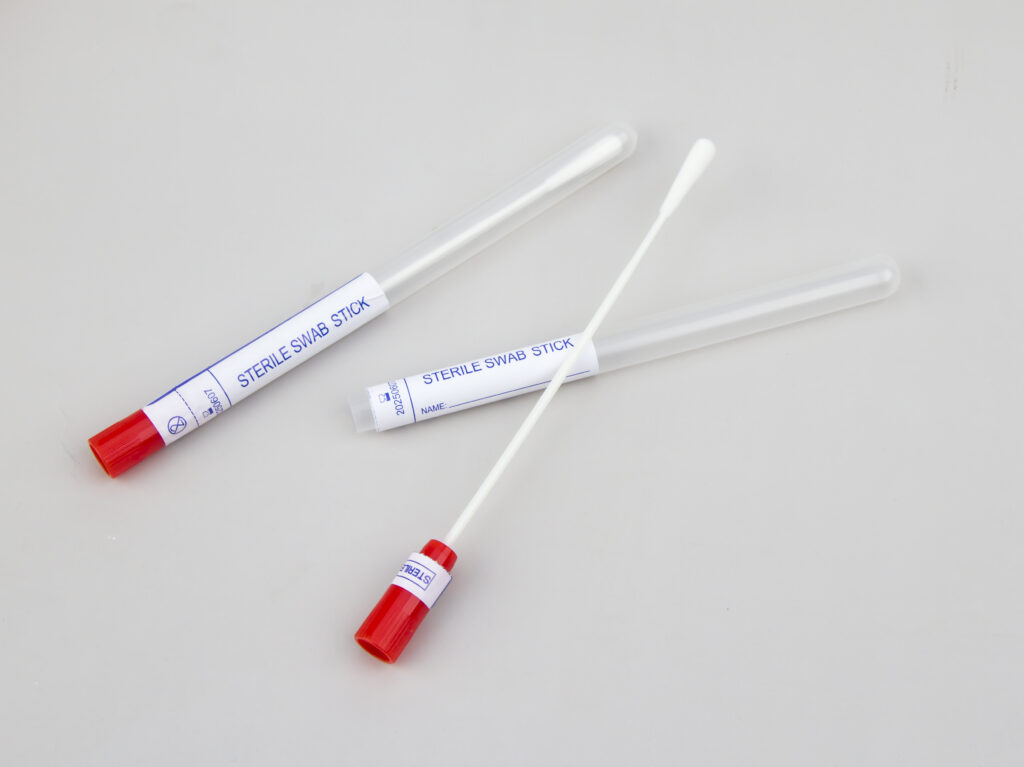
Possible swab options include nasal swabs, throat swabs, flocked swabs, polyester swabs, dry swabs, transport swabs, or swabs assembled into kits. The right type depends on the collection site and processing method.
For diagnostic workflows, buyers should confirm tip material and sample release requirements with the test method.
Check Packaging for Workflow Efficiency
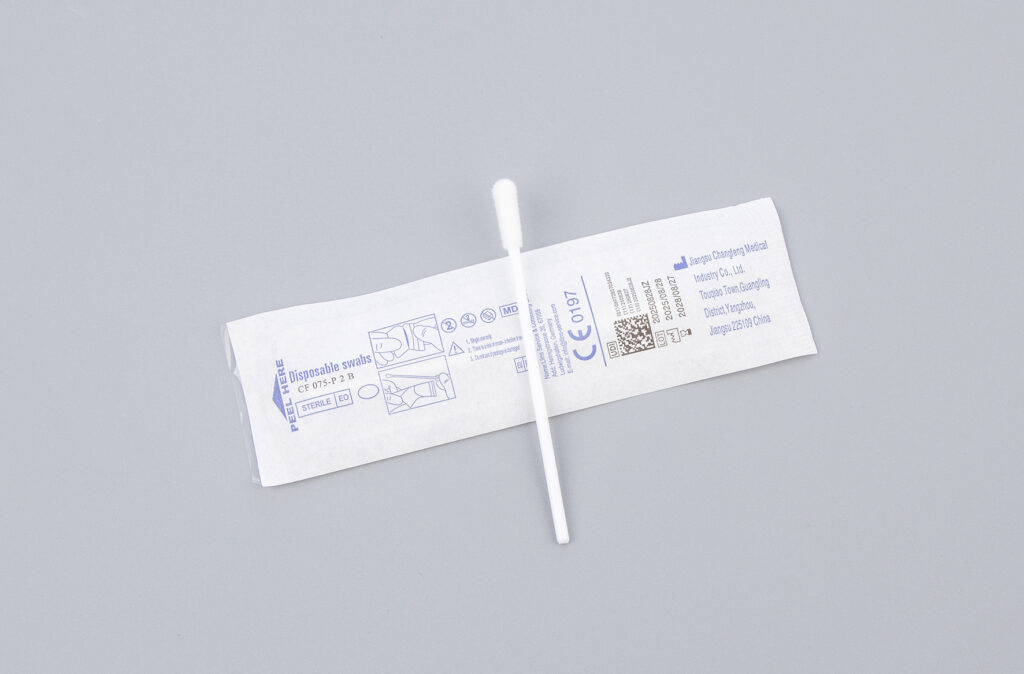
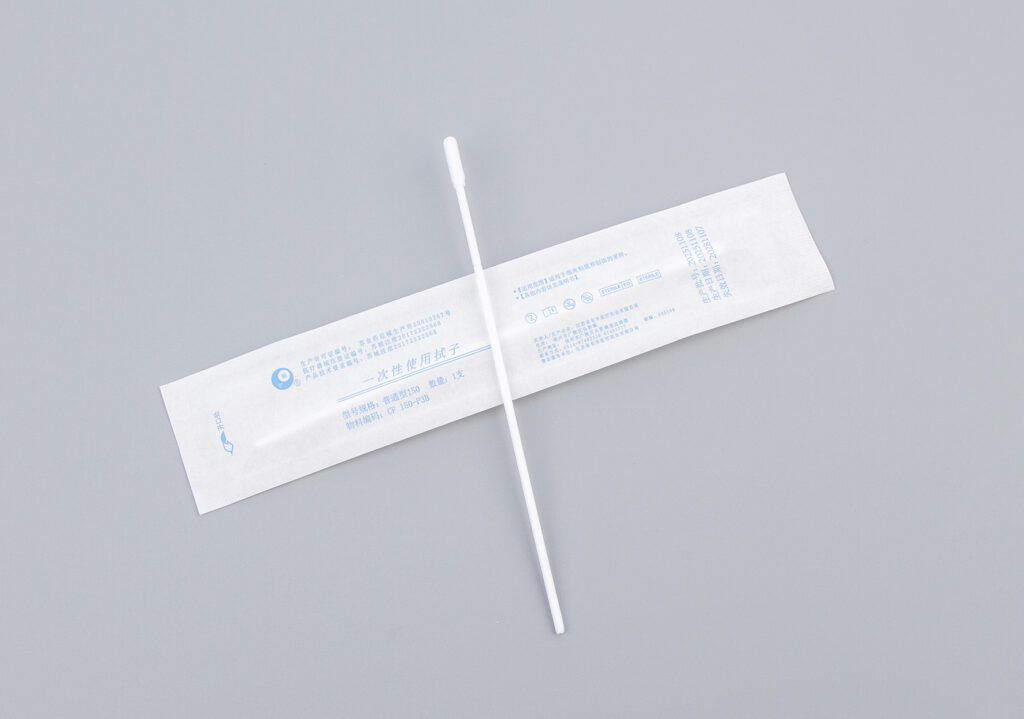
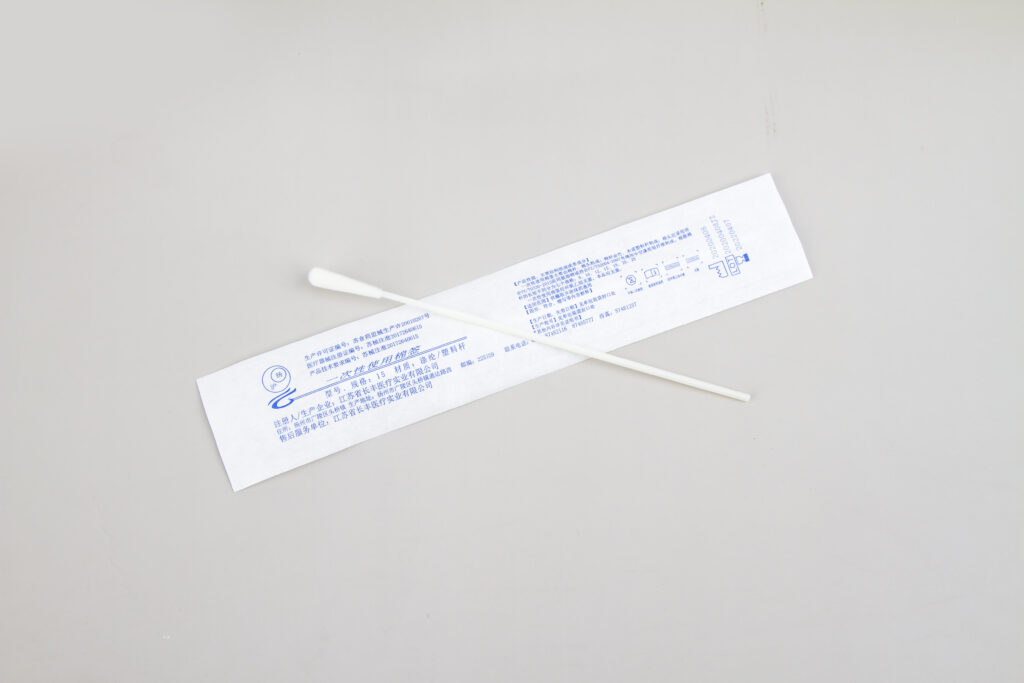
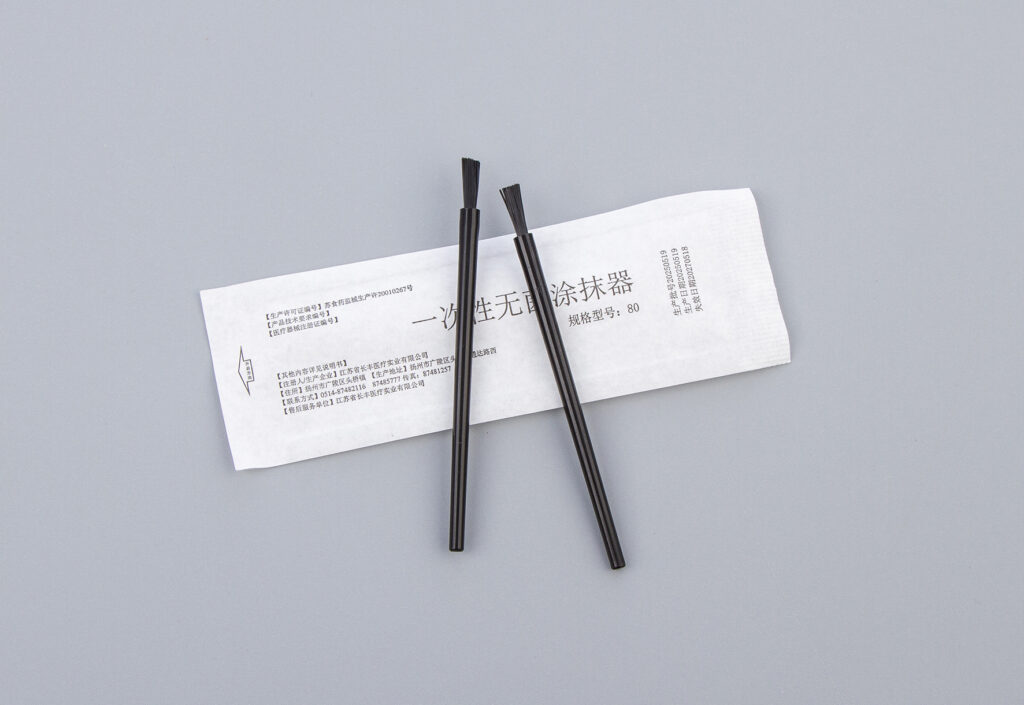
Packaging should be easy to open, identify, and distribute. Individual pouches, tube labels, box labels, and carton marks should support the customer’s workflow rather than slow it down.
For automated projects, packaging samples should be reviewed before mass production.
Sterile Status and Shelf Life
If the workflow requires sterile swabs, buyers should confirm sterile status, pouch quality, lot number, expiration date, shelf life, and storage conditions.
For swabs with medium, the final kit shelf life may depend on medium, tube, cap, packaging, and storage conditions.
What Buyers Should Check Before Ordering
Before ordering swabs for laboratory automation workflows, buyers should check swab type, tip material, shaft length, breakpoint, tube dimensions, tube opening, cap closure, barcode label, label adhesive, packaging, sterile status, shelf life, storage conditions, samples, MOQ, lead time, and documentation.
Common Mistakes
One common mistake is approving the swab without testing the tube and label in the real workflow. Another mistake is assuming that all tube labels can be scanned after being applied to curved surfaces.
Buyers should also avoid changing tube, cap, or label design after customer approval without confirming compatibility again.
Conclusion
To choose swabs for laboratory automation workflows, buyers should evaluate the swab and tube as a complete system. Swab length, breakpoint, tube dimensions, cap closure, barcode labels, packaging, shelf life, and documentation all matter.
Changfeng Medical supplies sampling swabs and collection solutions for diagnostic, clinical, and laboratory applications. Contact us to discuss swab and tube compatibility, labeling options, and bulk supply solutions for your market.
FAQ
Do all swabs need to support laboratory automation?
No. Automation compatibility is only needed when the customer workflow requires it.
Why is tube size important for automated workflows?
Tube size may affect rack fit, cap handling, barcode scanning, and downstream processing.
Should buyers test barcode labels on real tubes?
Yes. Barcode readability should be tested after the label is applied to the actual tube.
What should buyers check before ordering?
Buyers should check swab type, tube fit, breakpoint, cap closure, barcode labels, packaging, shelf life, samples, and documentation.