How to Choose Sampling Swabs for Medical Device Companies?

Medical device companies may need sampling swabs as part of diagnostic products, specimen collection kits, laboratory consumables, training kits, or private label medical supply programs. Choosing the right swab requires clear product specifications, reliable packaging, stable production quality, and supplier support.
For medical device buyers, the swab should not be treated as a simple accessory. It may affect kit assembly, user handling, sample release, labeling, shelf life, documentation, and customer acceptance.
Start with the Product Application
Before choosing a sampling swab, buyers should confirm where the swab will be used. It may be used for nasal collection, throat collection, oral collection, dry swab workflows, transport swab kits, diagnostic kit assembly, or laboratory sampling.
The intended application determines swab type, tip material, shaft design, sterile status, packaging format, tube compatibility, and documentation needs.
Confirm Swab Type
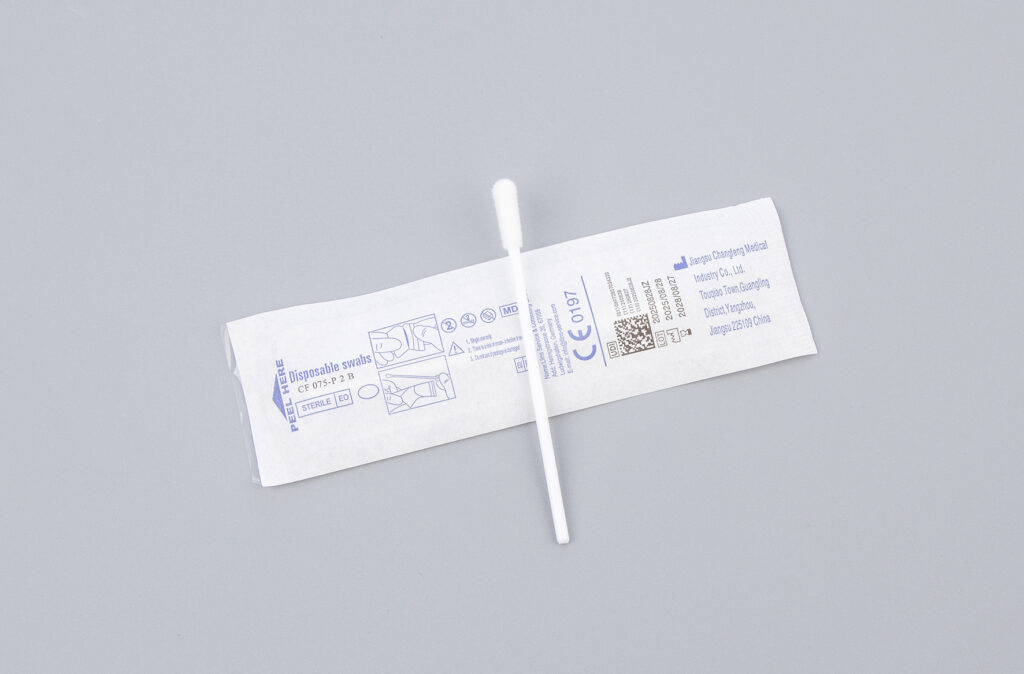
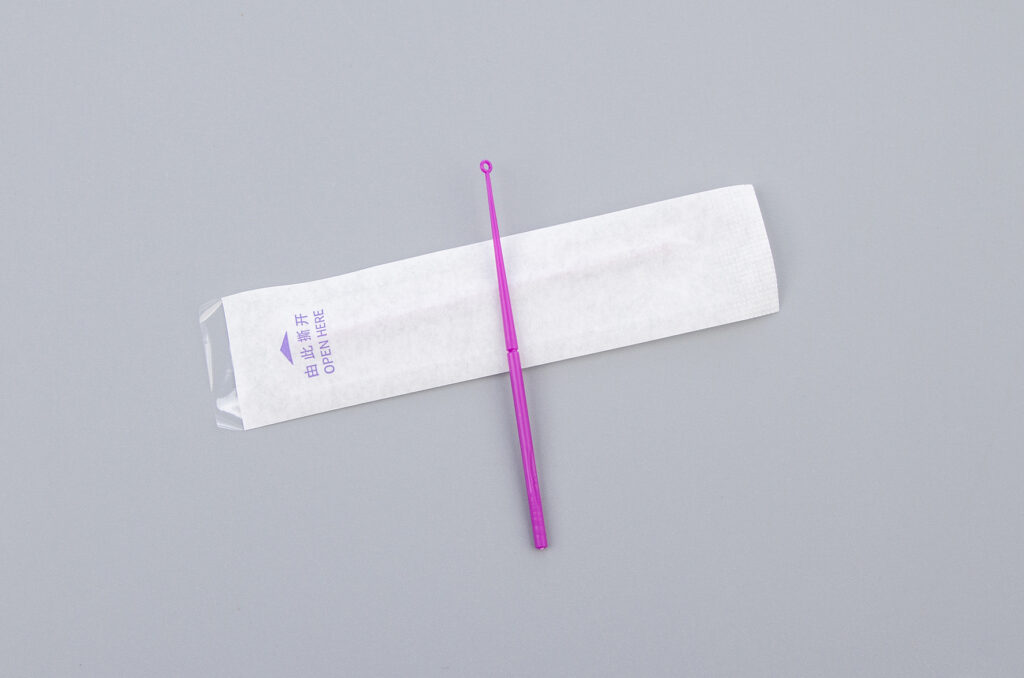
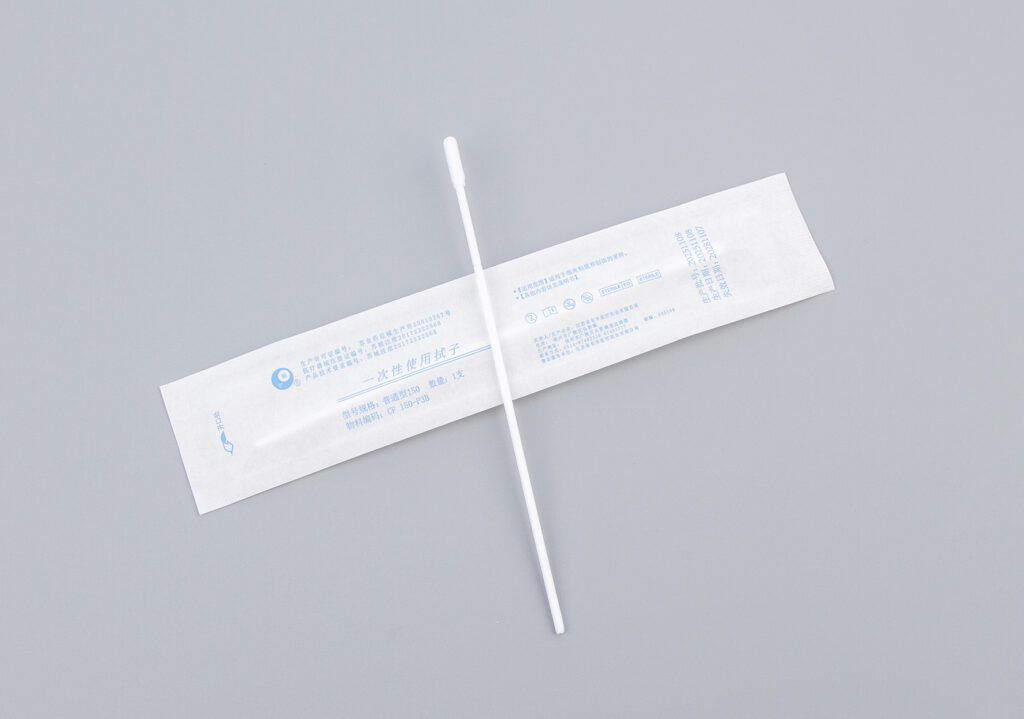
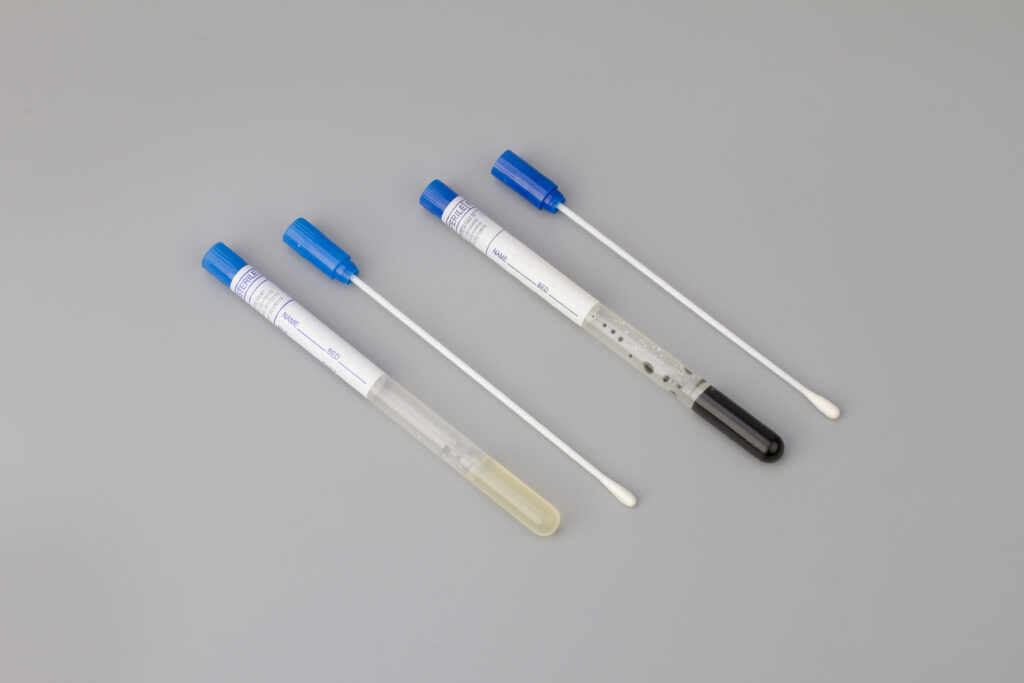
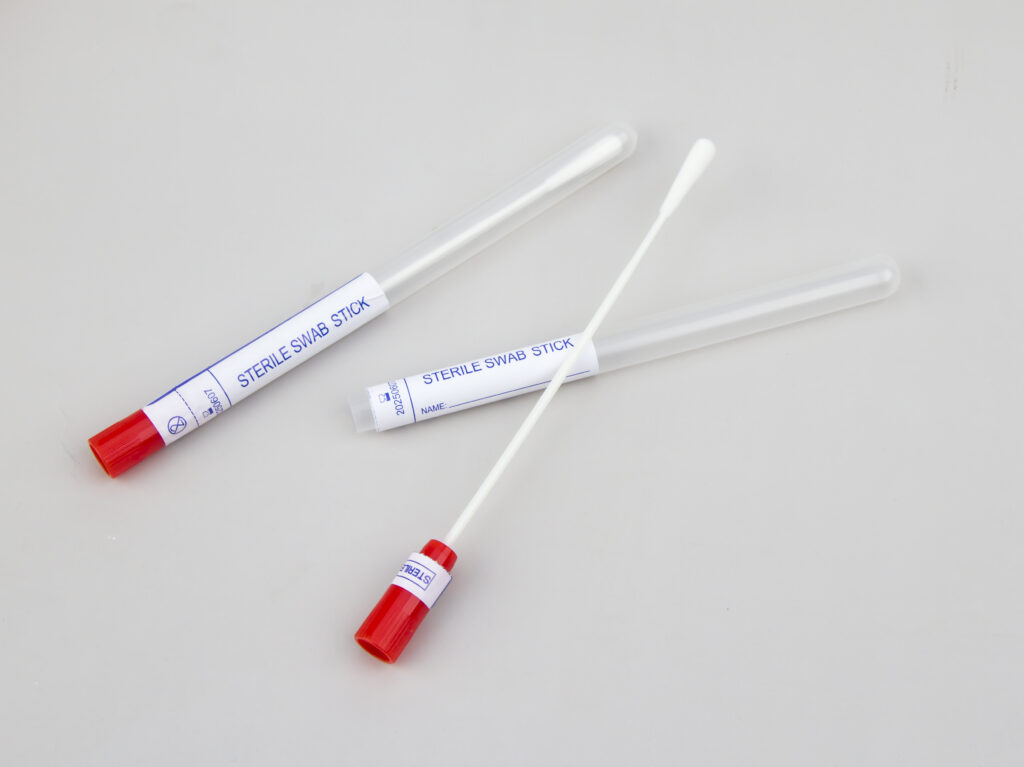
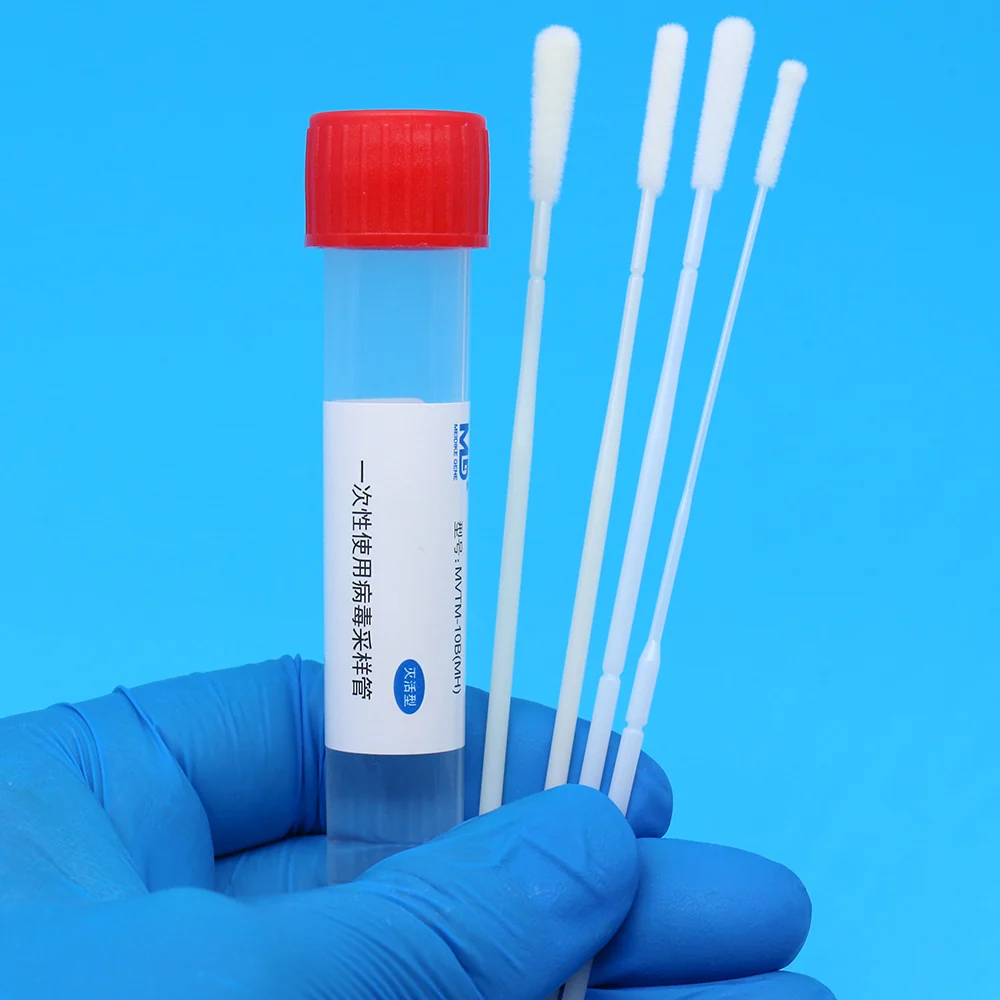
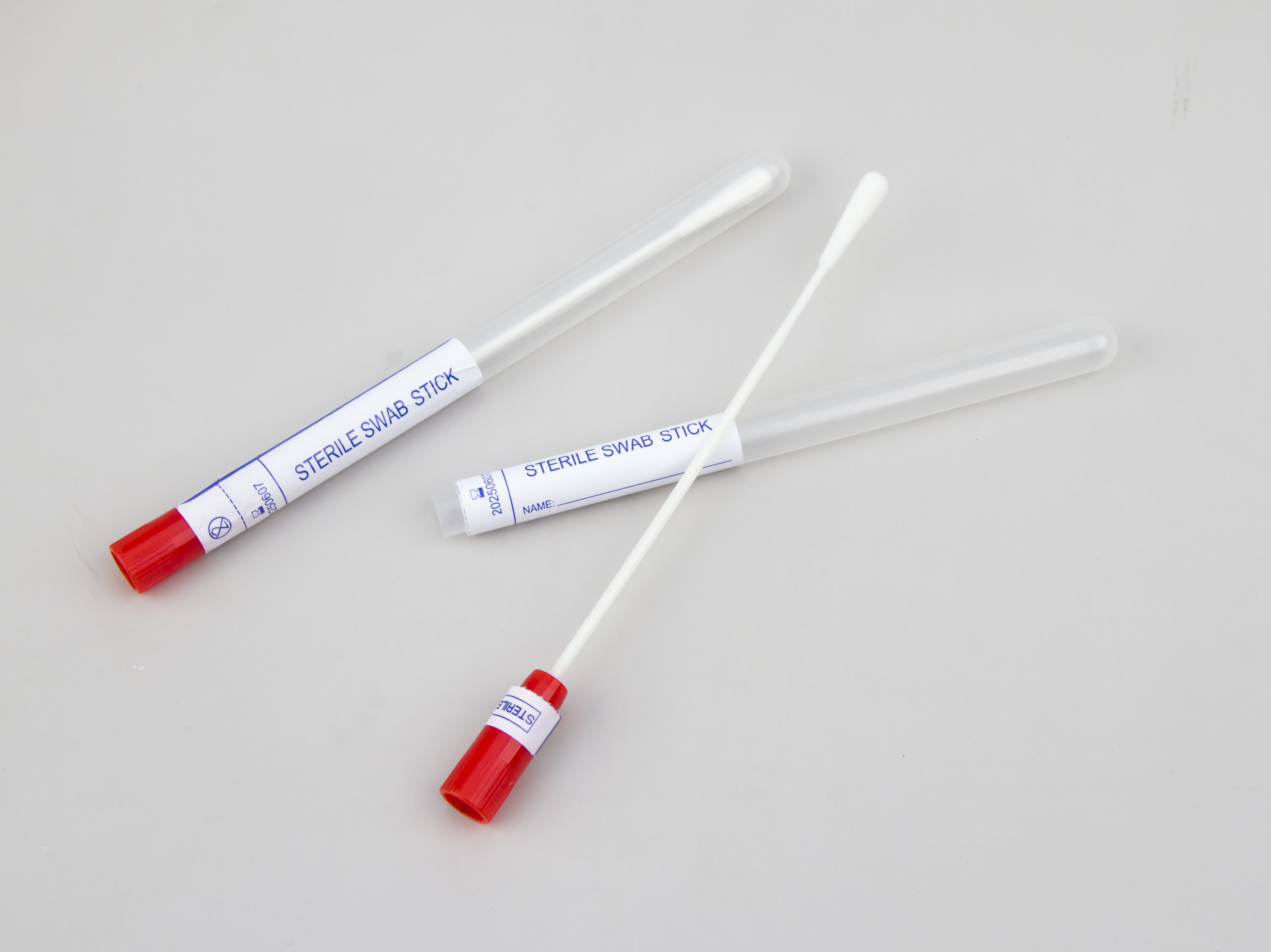
Possible options include nasal swabs, nasopharyngeal swabs, throat swabs, double-tip throat swabs, large-headed flocked swabs, polyester fiber swabs with sheath, sterile dry swabs, transport swabs, and swabs used in collection kits.
A product name alone is not enough. Medical device companies should request written specifications and samples before confirming bulk orders.
Check Tip Material
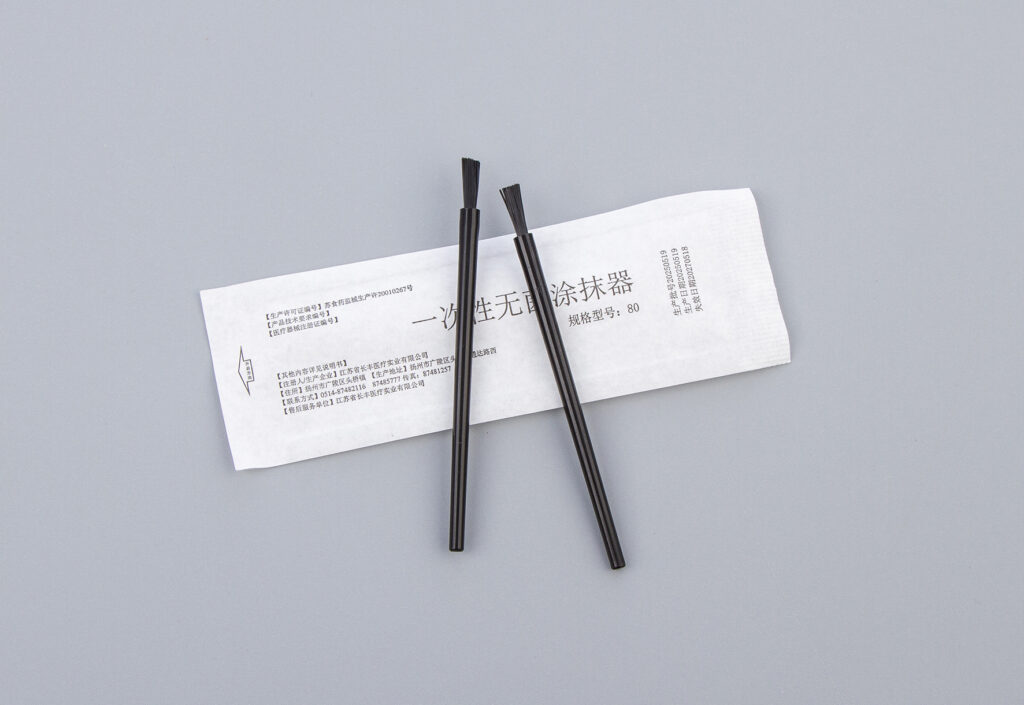
Tip material affects specimen collection, absorption, release, and compatibility with the workflow. Common swab tip materials include nylon flocked fiber, polyester fiber, foam, rayon, cotton, and other options.
For diagnostic or laboratory workflows, buyers should confirm whether the customer or test system requires synthetic fiber swabs.
Check Shaft Design
Shaft material, length, diameter, flexibility, and breakpoint position should match the collection site and kit design. A swab with the right tip may still be unsuitable if the shaft does not fit the tube, cap, or pouch.
If the swab will be inserted into a tube after collection, buyers should test breakpoint position and tube fit with the actual kit components.
Sterile Status and Packaging
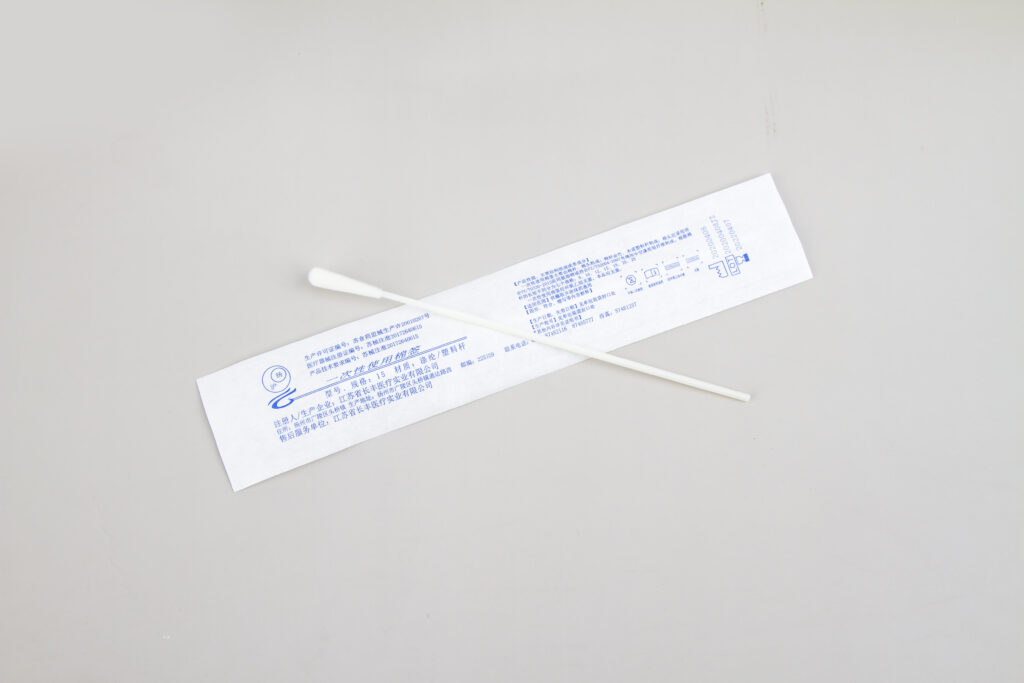
Many medical device projects require sterile swabs or sterile individually packaged components. Buyers should confirm sterile status, sterilization information, pouch material, seal strength, lot number, expiration date, and shelf life.
Individual packaging does not automatically mean the product is sterile. Sterile status should be clearly confirmed by the supplier.
OEM and Private Label Options
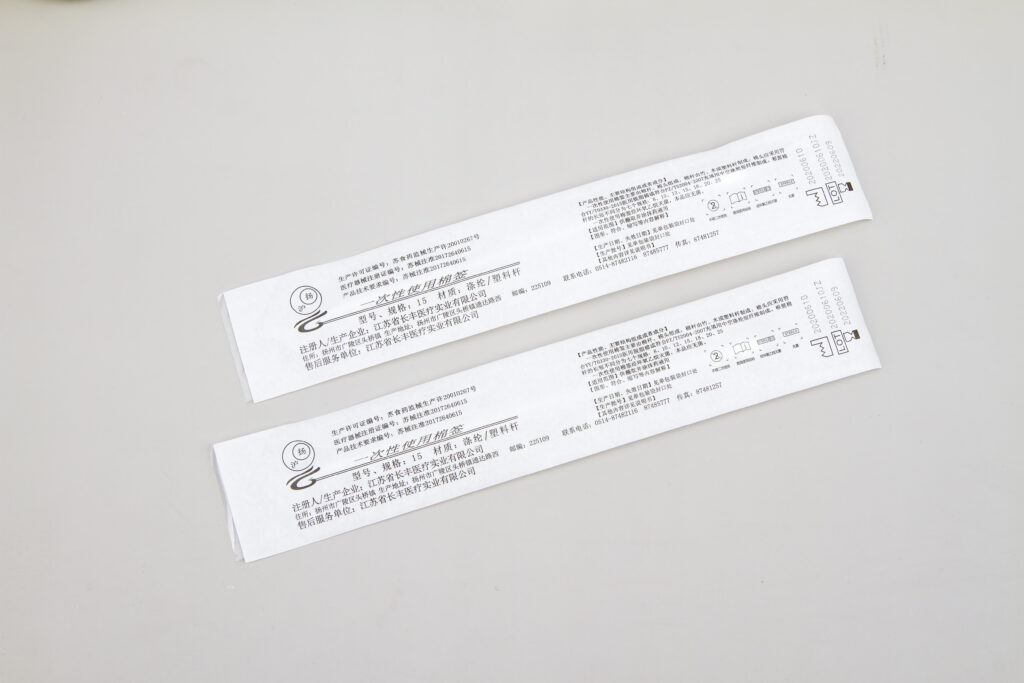
Medical device companies may need OEM or private label support, including printed pouches, tube labels, instruction sheets, barcodes, inner boxes, and carton marks.
Before production, buyers should approve artwork, sample packaging, label content, barcode position, lot number format, and expiration date format.
Kit Assembly Compatibility
If the swab is used in a medical device kit, the full assembly should be tested. Swab length, tube size, cap closure, medium volume, pouch dimensions, instruction sheet, box layout, and carton packing should all work together.
A swab that looks acceptable alone may not fit the final kit smoothly.
Supplier Documentation
Depending on market and customer needs, buyers may request product specifications, packing information, sterilization information, shelf life information, certificates, invoice, packing list, and other export documents.
Documentation requirements should be discussed before order confirmation, not after production is complete.
What Buyers Should Check Before Ordering
Before ordering sampling swabs for medical device projects, buyers should check application, swab type, tip material, shaft design, breakpoint, sterile status, packaging, tube compatibility, OEM options, shelf life, labels, carton packing, samples, MOQ, lead time, and documentation.
Common Mistakes
One common mistake is choosing a swab only by price while ignoring material compatibility, packaging quality, and kit assembly. Another mistake is approving product samples without reviewing final private label packaging.
Medical device companies should also avoid changing swab specifications after artwork or kit design has already been approved.
Conclusion
To choose sampling swabs for medical device companies, buyers should evaluate the complete system: swab type, material, shaft, sterile packaging, tube fit, OEM artwork, shelf life, samples, and documentation.
Changfeng Medical supplies sampling swabs for diagnostic, clinical, laboratory, and medical device supply projects, including nasal swabs, large-headed flocked swabs, polyester fiber swabs with sheath, media-coated swabs, and double-tip throat swabs. Contact us to discuss swab specifications, private label packaging, and bulk supply solutions for your market.
FAQ
What swabs do medical device companies use?
They may use nasal swabs, throat swabs, flocked swabs, polyester swabs, sterile dry swabs, transport swabs, or swabs assembled into diagnostic or collection kits.
Can sampling swabs be OEM customized?
Yes. OEM options may include packaging, labels, barcodes, instruction sheets, carton marks, and selected product configurations depending on supplier capability.
Why is kit compatibility important?
The swab must fit the tube, cap, medium, pouch, box, and final kit workflow.
What should buyers check before bulk ordering?
Buyers should check specifications, material, shaft design, sterility, packaging, tube fit, shelf life, samples, MOQ, lead time, and documents.