What Is the Difference Between a Nasal Swab and a Throat Swab?

Nasal swabs and throat swabs are both used for respiratory specimen collection, but they are not the same product. They are designed for different collection sites, different handling requirements, and different testing workflows.
For medical distributors, laboratories, hospitals, and procurement teams, understanding the difference between nasal swabs and throat swabs helps avoid choosing the wrong swab only by price or appearance. A suitable swab should match the collection site, specimen type, transport system, and laboratory requirement.
Nasal Swab vs. Throat Swab: The Simple Difference
A nasal swab is designed to collect specimens from the nasal cavity. A throat swab is designed to collect specimens from the throat or oropharyngeal area.
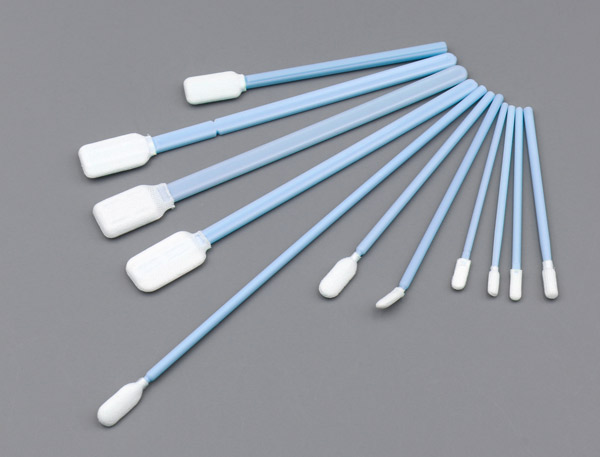
Because the collection sites are different, the swab design is also different. Nasal swabs usually focus on tip softness, smaller tip size, shaft flexibility, and patient comfort. Throat swabs usually require suitable shaft length, stable handling, and a tip design that can reach the target area during oropharyngeal collection.
What Is a Nasal Swab?
A nasal swab is a specimen collection swab used for nasal cavity sampling. Depending on the testing workflow, nasal swabs may be used for anterior nasal collection, mid-turbinate collection, or other nasal sampling methods required by the laboratory or clinical protocol.
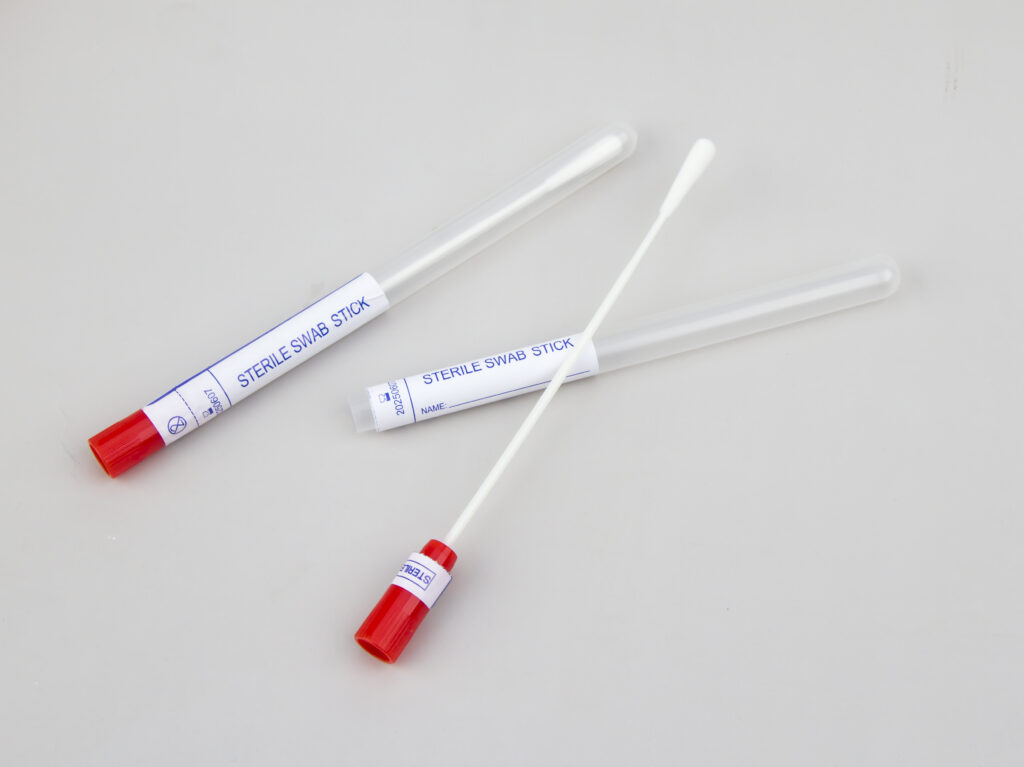
Nasal swabs are commonly used in respiratory specimen collection because they are practical and widely accepted in many diagnostic workflows. A nasal swab may have a flocked tip, polyester tip, or other synthetic fiber tip. The shaft may be plastic or another suitable material, depending on the intended use.
Common features of nasal swabs
- Soft sampling tip
- Small or medium tip size
- Suitable shaft flexibility
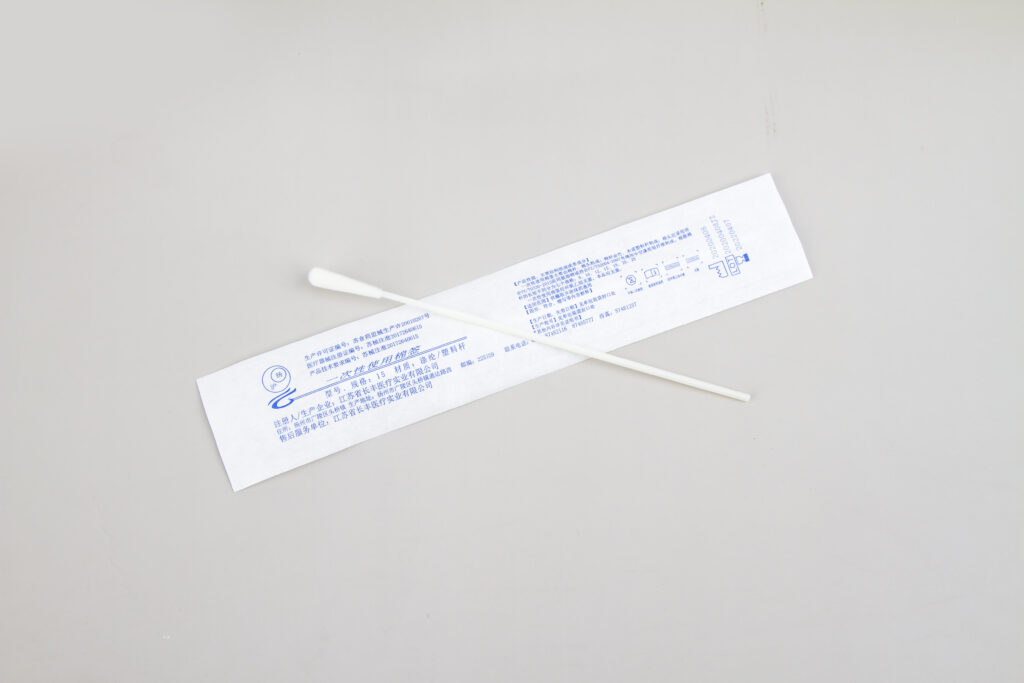
- Sterile individual packaging
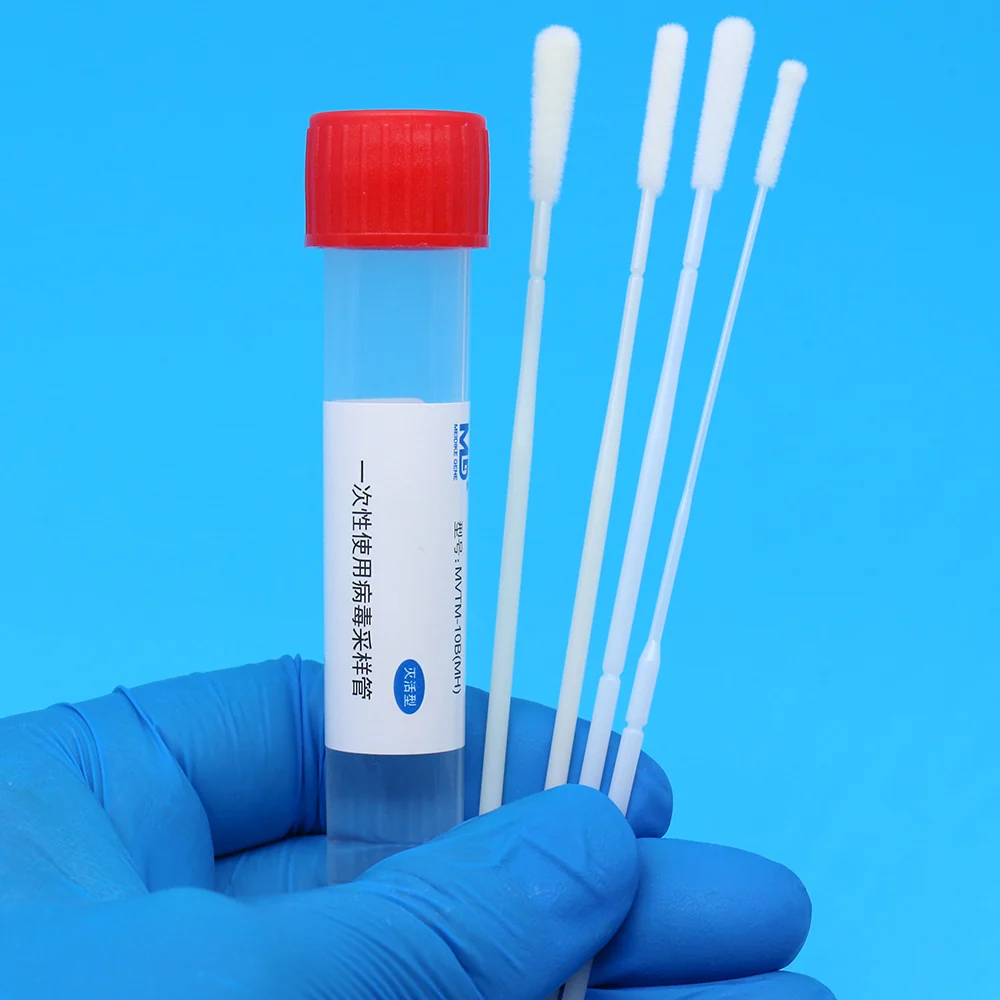
- Compatibility with collection tubes or transport medium
- Optional breakpoint for tube placement
What Is a Throat Swab?
A throat swab, also called an oropharyngeal swab in many testing contexts, is used to collect specimens from the throat area. The swab must allow the operator to reach the target area while maintaining good control.
Compared with nasal swabs, throat swabs may have a longer shaft or a different tip design. Some throat swabs use a single tip, while others use a double-tip structure to provide a different collection surface for specific workflows.
Common features of throat swabs
- Suitable shaft length for throat sampling
- Stable handling and control
- Soft synthetic fiber tip
- Single-tip or double-tip design
- Sterile individual packaging
- Compatibility with tubes or transport medium
Key Difference 1: Collection Site
The most important difference is the collection site. Nasal swabs are used in the nasal cavity, while throat swabs are used in the throat or oropharyngeal area.
This difference affects almost every design detail, including tip size, shaft length, shaft flexibility, and user comfort. A swab that works well for nasal sampling may not be the best choice for throat sampling, and a throat swab may not be suitable for nasal workflows.
Key Difference 2: Tip Design
Nasal swabs usually need a soft and controlled tip because the nasal cavity is sensitive. The tip is often smaller than many general-purpose swabs, especially when the swab is designed for narrower nasal collection sites.
Throat swabs may use a slightly different tip shape because the collection area is more accessible but requires controlled contact. A double-tip throat swab may be selected when users prefer a broader or dual collection structure.
Key Difference 3: Shaft Length and Flexibility
Nasal swabs often require a balance between flexibility and control. Some nasal or nasopharyngeal sampling workflows require a thinner and more flexible shaft.
Throat swabs usually need enough shaft length to reach the throat area comfortably. The shaft should be stable enough for controlled handling, but not so rigid that it becomes inconvenient for users.
Key Difference 4: Comfort and User Experience
Both nasal and throat sampling can be uncomfortable if the swab is poorly designed. For nasal swabs, tip softness and shaft flexibility are especially important. For throat swabs, shaft length, tip shape, and handling control are key factors.
For procurement teams, user experience matters because healthcare workers need products that are practical in routine workflows. A swab that looks acceptable in a catalog may still create problems if it is difficult to handle in real use.
Key Difference 5: Transport Medium Compatibility
After specimen collection, both nasal swabs and throat swabs may need to be placed into a tube or transport medium. Buyers should confirm that the swab tip, shaft, and breakpoint match the intended transport system.
For respiratory specimen collection, many workflows use synthetic fiber swabs with plastic or wire shafts. Buyers should always follow the test system instructions or laboratory requirements when selecting swabs and transport media.
Can Nasal Swabs and Throat Swabs Be Used Together?
In some respiratory testing workflows, nasal and throat specimens may be collected separately or combined according to the testing protocol. However, this should not be decided by the supplier alone. The final choice should follow the laboratory, clinical protocol, or test manufacturer’s instructions.
For distributors, it can be useful to offer both nasal swabs and throat swabs because customers in different markets may require different specimen collection options.
Which Swab Should Buyers Choose?
Choose a nasal swab when the intended collection site is the nasal cavity and the customer needs a swab designed for nasal specimen collection.
Choose a throat swab when the intended collection site is the throat or oropharyngeal area and the customer needs a swab with suitable length and handling control.
Before ordering, buyers should confirm:
- Collection site
- Testing method
- Tip material
- Tip size and shape
- Shaft length and flexibility
- Breakpoint position
- Sterility
- Packaging format
- Transport tube or medium compatibility
- Required documentation
Common Mistakes When Choosing Nasal or Throat Swabs
One common mistake is assuming that all respiratory swabs are interchangeable. In reality, nasal swabs, nasopharyngeal swabs, and throat swabs may have different dimensions and handling requirements.
Another mistake is comparing only price. A low-cost swab may not be suitable if the tip is too large, the shaft is too short, the breakpoint does not match the tube, or the material is not compatible with the intended test.
Buyers should request samples and confirm product specifications before placing bulk orders.
Related Swab Options
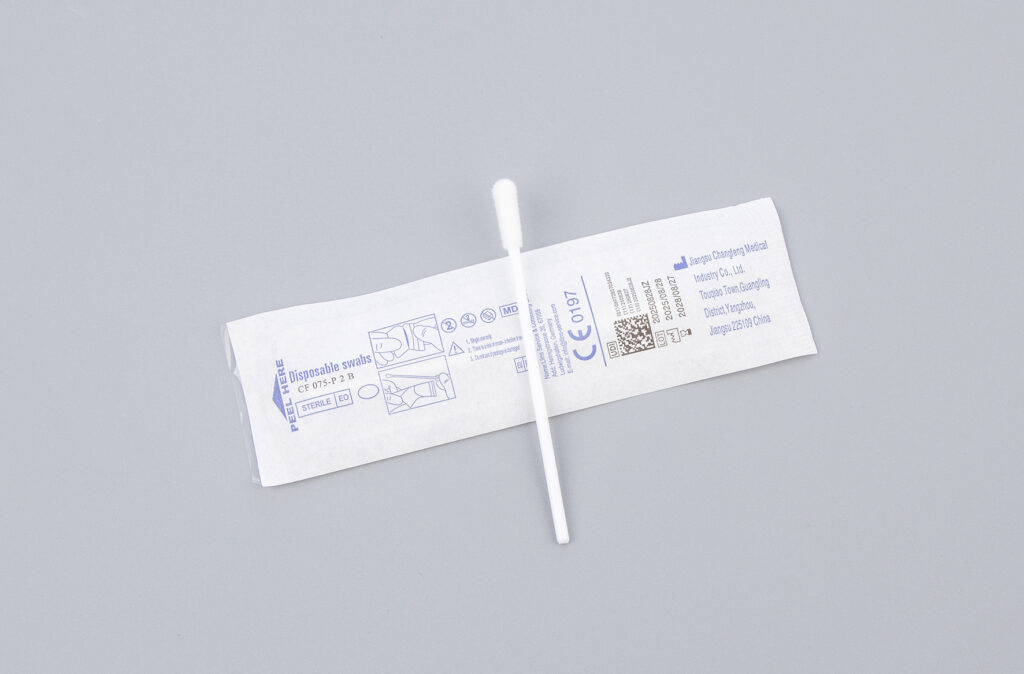
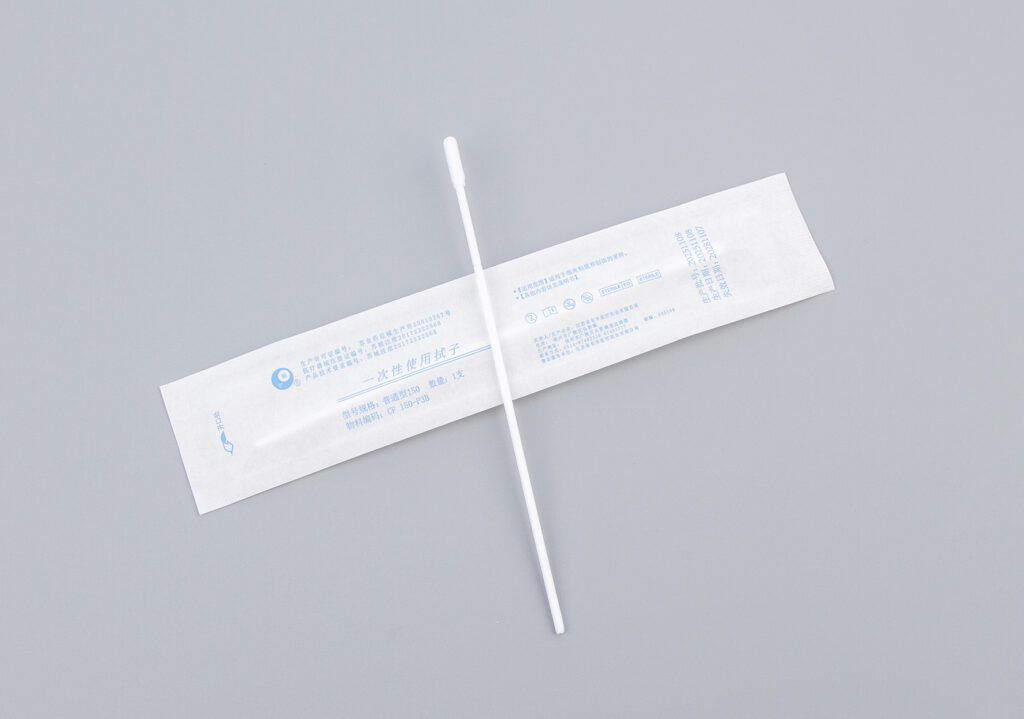
Nasal swab
Designed for nasal cavity specimen collection. It usually focuses on softness, flexibility, and practical handling.
Double-tip throat swab
Designed for throat or oropharyngeal collection workflows where a dual-tip structure is preferred.
Large-headed flocked swab
Provides a broader sampling surface for suitable collection sites.
Polyester fiber swab with sheath
Uses a synthetic polyester fiber tip and includes a protective sheath for cleaner handling before use.
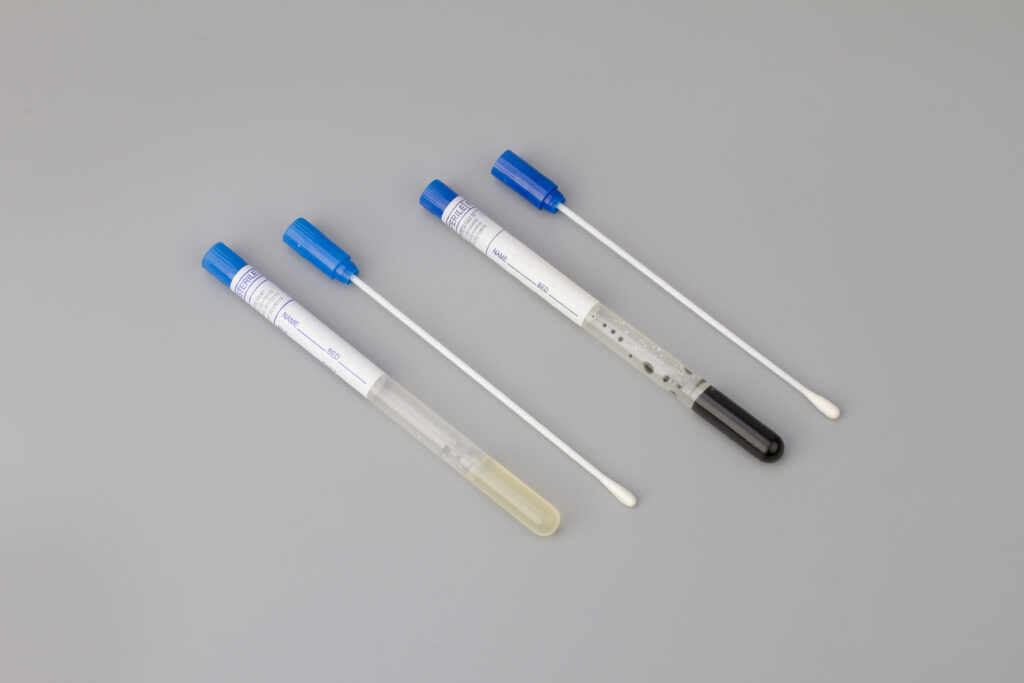
Media-coated swab
Includes pre-applied medium to support specimen collection or transport workflows.
Conclusion
The main difference between a nasal swab and a throat swab is the collection site. Nasal swabs are designed for nasal cavity sampling, while throat swabs are designed for oropharyngeal sampling. Because the collection sites are different, the swab tip, shaft, flexibility, length, and handling requirements may also be different.
For medical buyers, the best choice depends on the testing workflow, collection protocol, transport system, packaging requirement, and supplier quality consistency.
Changfeng Medical supplies sampling swabs for diagnostic, clinical, and laboratory applications, including nasal swabs, double-tip throat swabs, large-headed flocked swabs, polyester fiber swabs with sheath, and media-coated swabs. Contact us to discuss specifications, packaging options, and bulk supply solutions for your market.
FAQ
What is the difference between a nasal swab and a throat swab?
A nasal swab is used for nasal cavity specimen collection, while a throat swab is used for throat or oropharyngeal specimen collection.
Can a throat swab be used as a nasal swab?
Not necessarily. Swabs should be selected according to the intended collection site and testing workflow. Buyers should follow the laboratory or test system requirements.
Which is more comfortable, nasal swab or throat swab?
Comfort depends on the swab design and collection method. Nasal swabs usually require a soft, flexible design, while throat swabs require stable handling and suitable shaft length.
What material should respiratory swabs use?
Many respiratory specimen workflows use synthetic fiber swabs with plastic or wire shafts. Buyers should confirm the exact material requirement with the testing laboratory or test manufacturer.
What is a double-tip throat swab?
A double-tip throat swab is a throat sampling swab with two collection tips. It may be used when a dual-tip structure is preferred for a specific workflow.
How should buyers choose nasal or throat swabs?
Buyers should confirm the collection site, tip material, shaft design, sterility, packaging, breakpoint, transport medium compatibility, and documentation before ordering.