Large-Headed Flocked Swabs for Medical Specimen Collection: A Buyer’s Guide

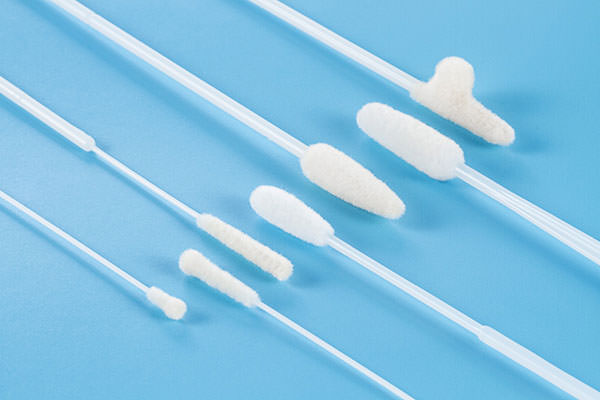
Flocked swabs are widely used in medical specimen collection because their fiber structure can support efficient sample uptake and release. Within this category, large-headed flocked swabs provide a broader sampling surface and can be useful in workflows where collection area, handling convenience, and sample transfer performance are important purchasing considerations.
For hospitals, diagnostic laboratories, medical distributors, and procurement teams, selecting a large-headed flocked swab requires more than comparing product photos. Buyers should understand the swab tip structure, intended application, shaft design, sterility, packaging, transport compatibility, and supplier quality consistency.
This buyer’s guide explains what large-headed flocked swabs are, when they may be selected, and what medical buyers should check before placing bulk orders.
What Is a Large-Headed Flocked Swab?
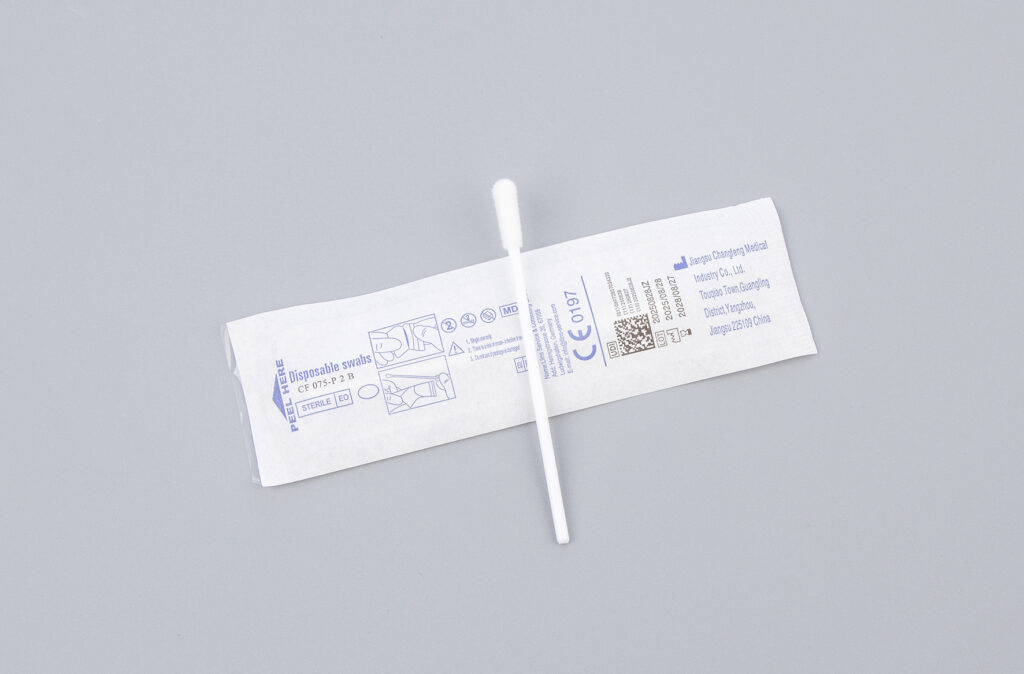
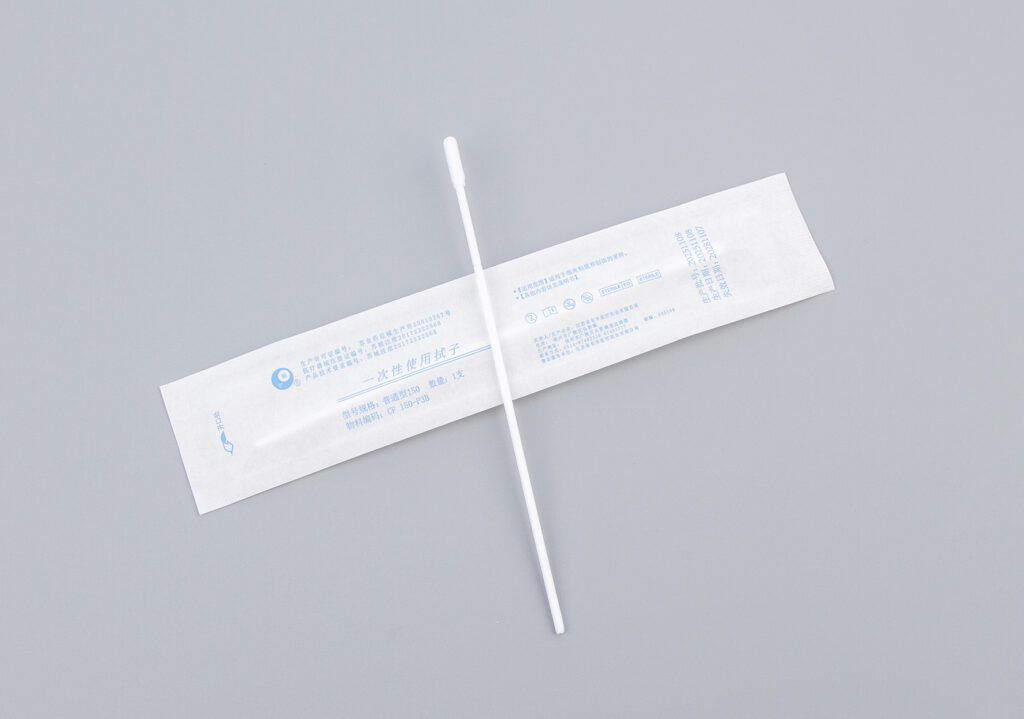
A large-headed flocked swab is a specimen collection swab with a larger flocked tip. The flocked tip is made with short fibers arranged on the swab surface, creating a soft, brush-like structure that can collect specimens on the surface and release them into a tube, reagent, or transport medium.
Compared with smaller swab tips, a large-headed design provides a broader contact area. This can be useful in appropriate sampling workflows where the collection site is accessible and a larger sampling surface is preferred.
The exact use of a large-headed flocked swab depends on the collection protocol, specimen type, downstream testing method, and end-user preference. Buyers should always confirm that the swab design matches the intended application.
How Flocked Swab Technology Works
Traditional fiber swabs may absorb specimens into a wound fiber structure. Flocked swabs use short, upright fibers that help keep the collected sample closer to the surface of the tip. This structure can support efficient sample release when the swab is placed into a liquid medium or collection tube.
For diagnostic workflows, sample release is an important feature because the collected specimen must be transferred into the next step of the process. A flocked structure is often selected when buyers want a swab that supports practical collection and release performance.
A large-headed flocked swab applies the same basic flocking principle to a larger tip format.
Why Choose a Large-Headed Flocked Swab?
1. Broader Sampling Surface
The main reason to choose a large-headed flocked swab is the larger collection surface. A broader tip can contact more area during sampling, which may be useful for certain medical, laboratory, or controlled collection workflows.
This does not mean that a large-headed swab is suitable for every collection site. For narrow or sensitive anatomical areas, a smaller swab may be more appropriate. Buyers should match tip size to the intended application.
2. Efficient Sample Uptake and Release
Flocked swabs are often chosen because their tip structure supports specimen uptake and release. The short fiber design helps collect the sample on the surface and release it into a tube, reagent, or transport system.
For laboratories and diagnostic consumable buyers, this can make large-headed flocked swabs a practical choice when sample transfer efficiency is part of the workflow requirement.
3. Soft Sampling Tip
The flocked surface provides a soft sampling tip, which can support smoother handling in appropriate medical collection scenarios. Softness is especially important when the swab may contact sensitive tissue or when user comfort matters.
4. Practical for Laboratory and Clinical Workflows
Large-headed flocked swabs can be used in different specimen collection environments depending on their design and intended use. They may be suitable for clinical sampling, laboratory collection, controlled sampling, or other medical consumable workflows.
5. Useful Product Option for Distributors
For distributors, a large-headed flocked swab can complement standard nasal swabs, throat swabs, polyester swabs, and media-coated swabs. Offering different swab formats allows distributors to serve a wider range of customer requirements.
Large-Headed Flocked Swab vs. Standard Flocked Swab
The main difference between a large-headed flocked swab and a standard flocked swab is the size of the sampling tip.
Standard Flocked Swab
A standard flocked swab usually has a smaller or more application-specific tip. It may be preferred for nasal sampling, narrow collection sites, or workflows where a smaller and more flexible tip is required.
Large-Headed Flocked Swab
A large-headed flocked swab has a broader tip. It may be preferred when a larger collection surface is suitable for the target site and when users want efficient sample uptake and release.
The best choice depends on the collection site, specimen type, operator preference, and downstream testing workflow. Buyers should avoid using tip size alone as the only selection factor.
Large-Headed Flocked Swab vs. Polyester Swab
Large-headed flocked swabs and polyester swabs can both be used for specimen collection, but their tip structures are different.
A flocked swab has short fibers arranged on the surface, which supports sample collection and release. A polyester swab typically uses a more traditional synthetic fiber tip and may be preferred for routine medical or laboratory sampling, cost-sensitive procurement, or applications that do not require a flocked structure.
For buyers, the choice between flocked and polyester swabs should be based on the intended workflow, customer expectations, budget, packaging requirements, and testing method compatibility.
When Should Buyers Consider Large-Headed Flocked Swabs?
Buyers may consider large-headed flocked swabs when the application requires a larger sampling surface and good sample release performance. They may be suitable for medical collection workflows, laboratory sample handling, and controlled sampling environments where the tip size is appropriate.
Large-headed flocked swabs may be a good option when customers need:
- A broader collection surface
- A soft flocked sampling tip
- Efficient sample uptake and release
- Sterile individually packaged swabs
- Compatibility with tubes or transport workflows
- Bulk supply for medical or laboratory use
However, large-headed swabs should not be selected for applications where a smaller, thinner, or more flexible swab is required. For example, nasal specimen collection often requires a swab designed specifically for the nasal cavity.
Important Specifications to Check
Before ordering large-headed flocked swabs in bulk, buyers should review detailed product specifications. Even if two swabs look similar, small differences in tip size, shaft material, and packaging can affect user acceptance.
1. Tip Diameter and Tip Length
The tip size should match the intended sampling site. Buyers should confirm the diameter, length, and shape of the flocked head before placing an order.
2. Flocked Fiber Material
Confirm what fiber material is used on the swab tip. The material should be suitable for the intended medical or laboratory application and compatible with the downstream workflow.
3. Shaft Material
The shaft may be made from plastic or another suitable material. Buyers should confirm the shaft length, shaft diameter, flexibility, and strength.
4. Breakpoint Design
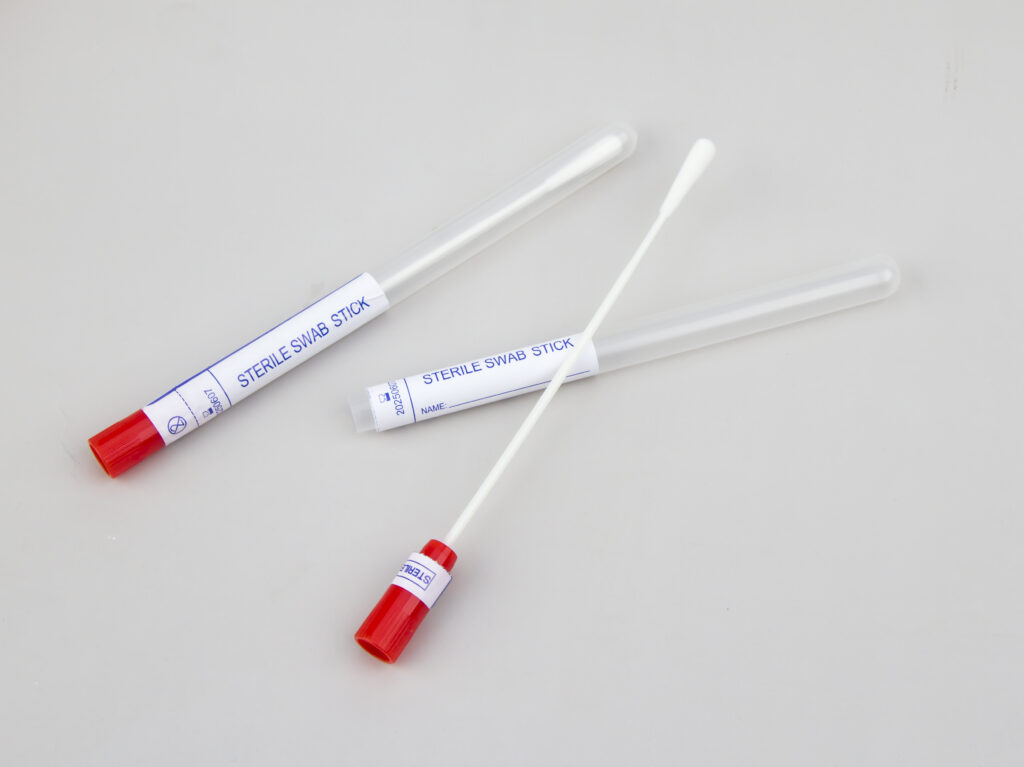
If the swab needs to be placed into a tube after collection, a breakpoint may be required. Buyers should check the breakpoint position, breaking force, and compatibility with the intended tube.
5. Sterility
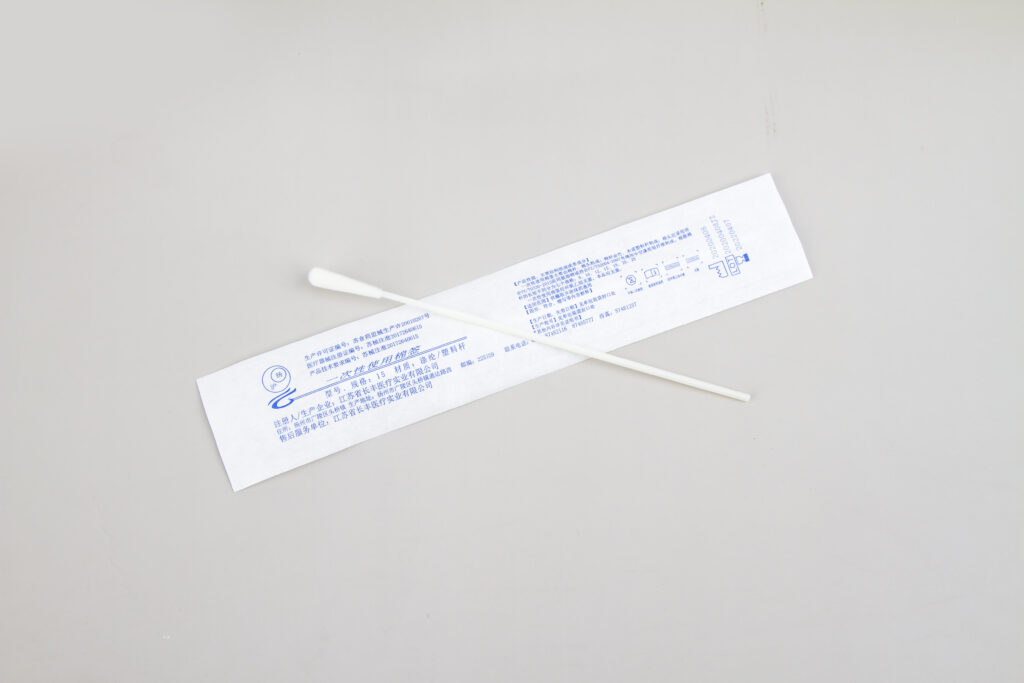
For medical use, sterile individual packaging is usually preferred. Buyers should confirm sterilization method, packaging integrity, shelf life, batch number, and expiration labeling.
6. Packaging Format
Packaging should protect the swab before use and support easy handling. For international buyers, inner box quantity, carton quantity, carton dimensions, labeling, barcode options, and private label support may also matter.
7. Transport Compatibility
If the swab will be used with transport medium, buyers should confirm whether the tip size, shaft length, breakpoint, and material are compatible with the selected tube and medium.
8. Documentation
International buyers may need product specifications, packing information, certificates, and other export-related documents. A reliable supplier should be able to provide clear documentation support.
Packaging Considerations for Export Buyers
For export distribution, packaging quality is part of product quality. A large-headed flocked swab should remain protected during storage, shipping, and handling before use.
Buyers should check individual sterile pouch quality, sealing strength, printed information, lot number display, expiration date, inner box format, carton strength, and private label options.
Good packaging helps distributors manage inventory, reduce customer confusion, and present the product professionally in the market.
Quality Control Considerations
For large-volume procurement, consistency is essential. Buyers should evaluate whether the supplier can maintain stable tip dimensions, flocking quality, shaft strength, packaging integrity, and batch traceability.
Important quality points include:
- Consistent flocked tip shape
- Stable fiber attachment
- No obvious fiber shedding under normal handling
- Uniform shaft length and diameter
- Reliable sterile packaging
- Clear labeling and batch information
- Stable carton packaging for export shipping
For medical distributors, stable product quality helps reduce complaints and supports repeat orders.
Supplier Selection for Bulk Procurement
A good swab supplier should provide more than a product quotation. Buyers should also evaluate communication, sampling support, lead time, documentation, and customization capability.
Before placing a bulk order, buyers can ask:
- Can product samples be provided?
- What is the swab tip material?
- What are the tip and shaft dimensions?
- Is the swab sterile and individually packaged?
- What is the shelf life?
- Can packaging be customized?
- What is the minimum order quantity?
- What export documents are available?
- What is the regular production lead time?
- Can the product be supplied consistently for repeat orders?
These questions help buyers compare suppliers more accurately and reduce procurement risk.
Common Mistakes When Buying Large-Headed Flocked Swabs
Some buyers choose large-headed flocked swabs based only on the idea that a larger tip is always better. This is not true. A larger tip is useful only when it matches the collection site and workflow.
Common mistakes include:
- Choosing a tip size that is too large for the intended application
- Not confirming the flocked fiber material
- Ignoring shaft length and flexibility
- Failing to check breakpoint compatibility
- Overlooking sterile packaging quality
- Not confirming transport tube fit
- Ordering in bulk without testing samples
- Comparing only price instead of total product suitability
To avoid these issues, buyers should define the intended use clearly and request samples before confirming large-volume orders.
Related Sampling Swab Options
Nasal Swab
A nasal swab is designed for nasal cavity specimen collection and usually focuses on tip softness, shaft flexibility, and patient comfort.
Polyester Fiber Swab with Sheath
A polyester fiber swab with sheath offers clean synthetic fiber sampling and added protection before use.
Media-Coated Swab
A media-coated swab includes a pre-applied medium and can support specimen collection and transport workflows.
Double-Tip Throat Swab
A double-tip throat swab is designed for throat or oropharyngeal specimen collection workflows where a dual-tip structure is preferred.
By combining different swab types, distributors can serve a wider range of clinical, diagnostic, laboratory, and medical supply customers.
Conclusion
Large-headed flocked swabs provide a useful option for specimen collection workflows where a broader sampling surface and efficient sample release are important. However, buyers should select them based on the intended application, not simply because the tip is larger.
When choosing large-headed flocked swabs, buyers should check tip size, flocked fiber material, shaft design, breakpoint, sterility, packaging, transport compatibility, quality consistency, and supplier capability.
Changfeng Medical supplies medical sampling swabs for diagnostic, clinical, and laboratory applications, including large-headed flocked swabs, nasal swabs, polyester fiber swabs with sheath, media-coated swabs, and double-tip throat swabs. Contact us to discuss product specifications, packaging options, and bulk supply solutions for your market.
FAQ
What is a large-headed flocked swab?
A large-headed flocked swab is a specimen collection swab with a larger flocked sampling tip. The flocked structure supports specimen collection and release in suitable medical or laboratory workflows.
When should buyers choose a large-headed flocked swab?
Buyers may choose a large-headed flocked swab when a broader sampling surface is suitable for the collection site and when efficient sample uptake and release are important.
Is a large-headed flocked swab suitable for all specimen collection applications?
No. A large-headed swab is not suitable for every collection site. Buyers should match the swab tip size and design to the intended workflow and end-user requirement.
What is the advantage of a flocked swab?
A flocked swab has short fibers arranged on the tip surface, which can support efficient specimen collection and release into a tube, reagent, or transport medium.
Should large-headed flocked swabs be sterile?
For medical and clinical use, sterile individually packaged swabs are usually preferred. Buyers should confirm sterility, packaging integrity, shelf life, and batch traceability.
What should buyers check before ordering large-headed flocked swabs?
Buyers should check tip size, flocked fiber material, shaft material, shaft length, breakpoint design, sterility, packaging, transport compatibility, documentation, and supplier quality consistency.