Nasopharyngeal Swab vs. Nasal Swab: What Is the Difference?

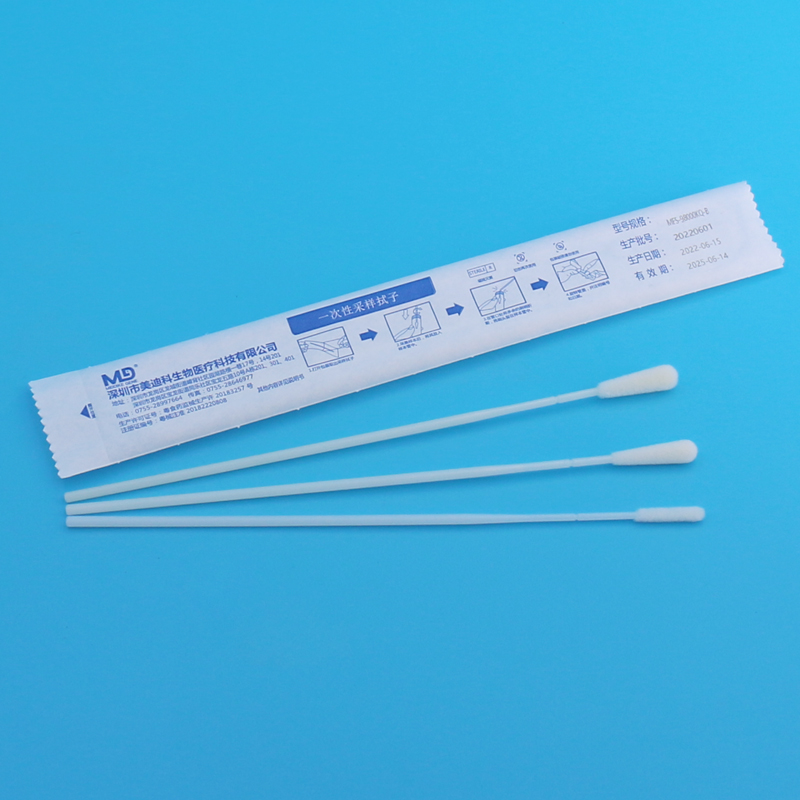
Nasopharyngeal swabs and nasal swabs are both used for respiratory specimen collection, but they are not the same product. They are designed for different collection sites, different shaft requirements, and different testing workflows.
For medical buyers, laboratories, distributors, and procurement teams, understanding the difference between these two swab types helps avoid ordering the wrong product for a customer’s workflow. A suitable swab should match the collection site, test method, tube system, packaging requirement, and user environment.
Nasopharyngeal Swab vs. Nasal Swab: The Simple Difference
A nasal swab is designed for specimen collection from the nasal cavity. A nasopharyngeal swab is designed for specimen collection from the nasopharynx, which is deeper than the nasal cavity.
Because the collection depth is different, the swab design is different. Nasopharyngeal swabs usually require a thinner, longer, and more flexible shaft. Nasal swabs usually focus on practical nasal cavity collection, tip softness, and user comfort.
What Is a Nasal Swab?
A nasal swab is a specimen collection swab used for nasal cavity sampling. Depending on the workflow, it may be used for anterior nasal collection, mid-turbinate collection, or other nasal sampling methods required by the laboratory or clinical protocol.
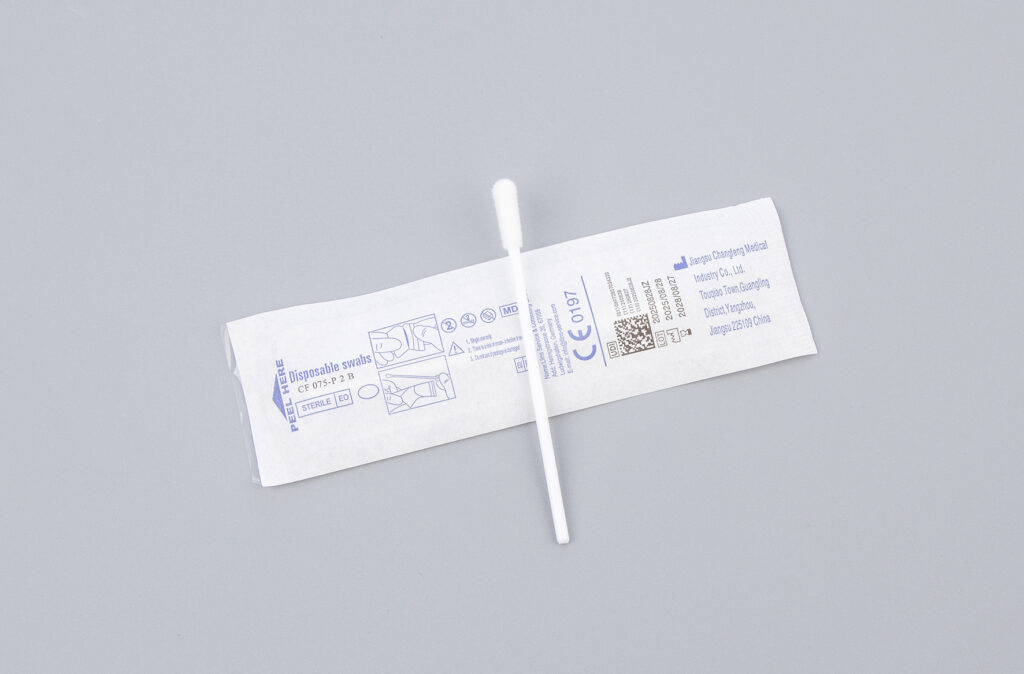
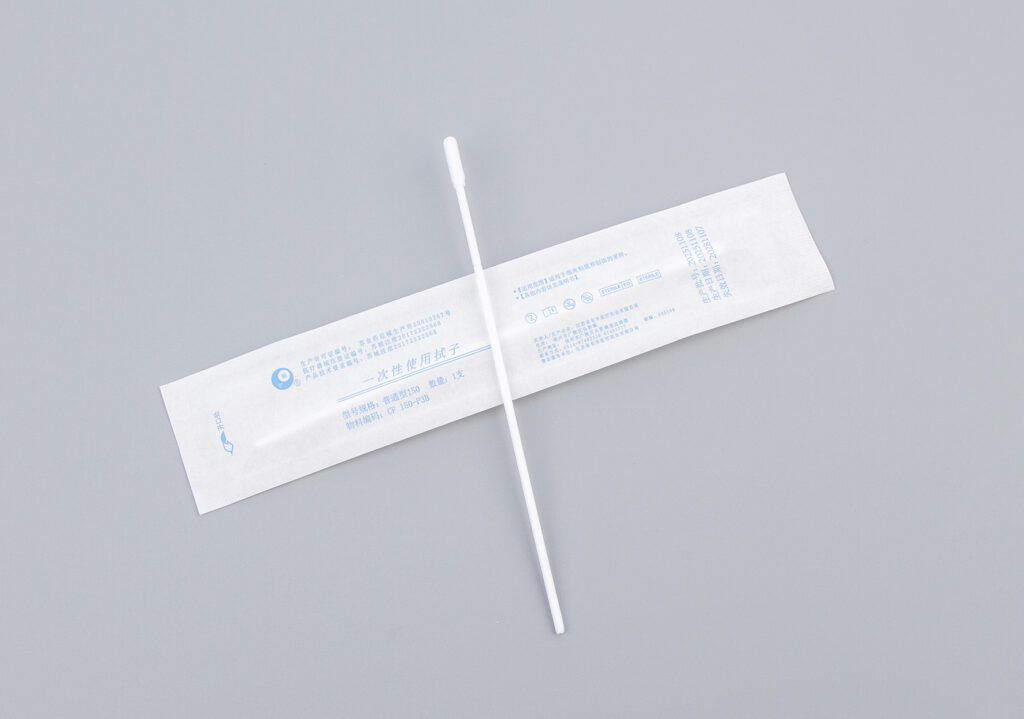
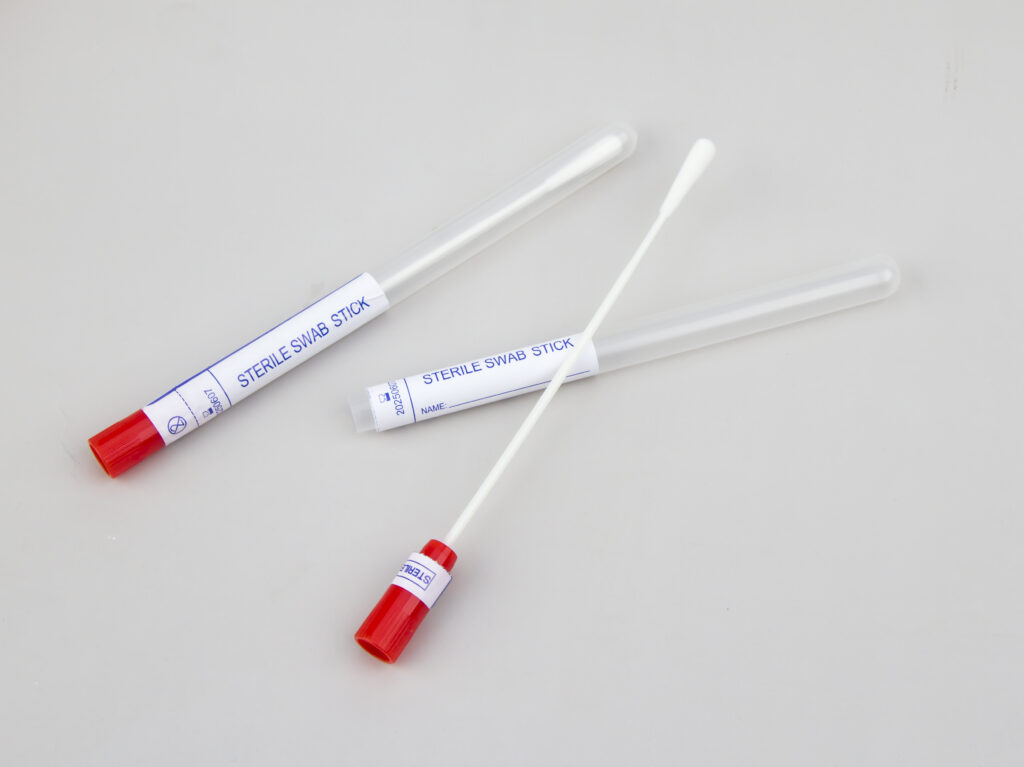
Nasal swabs may use flocked fiber, polyester fiber, or other suitable synthetic materials. They are often supplied sterile and individually packaged for medical or diagnostic use.
What Is a Nasopharyngeal Swab?
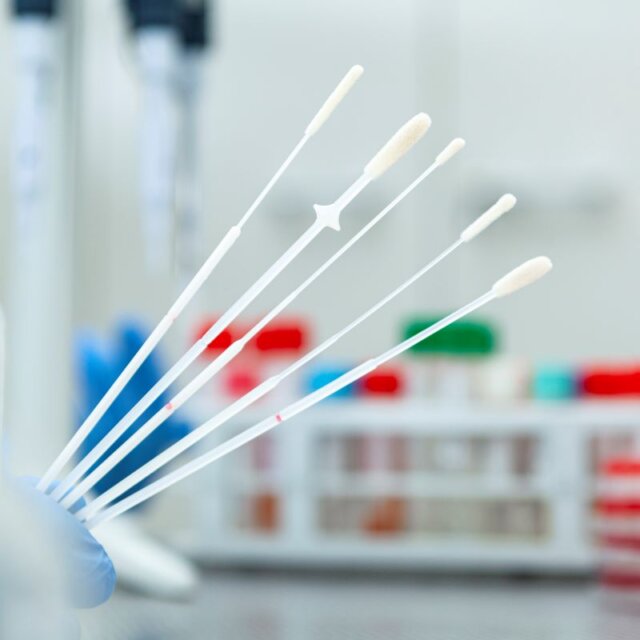
A nasopharyngeal swab is a swab designed for deeper upper respiratory specimen collection. It usually has a small sampling tip and a thin flexible shaft so the swab can match the intended collection workflow.
Nasopharyngeal swabs are often used in respiratory testing workflows when the laboratory or clinical protocol requires this specimen type. Buyers should not replace a nasopharyngeal swab with a standard nasal swab unless the test instructions allow it.
Key Difference 1: Collection Site
The most important difference is the collection site. A nasal swab is used for the nasal cavity, while a nasopharyngeal swab is used for the nasopharyngeal area.
This difference affects swab length, shaft flexibility, tip size, and handling requirements. A swab that is suitable for simple nasal collection may not be suitable for nasopharyngeal collection.
Key Difference 2: Shaft Flexibility
Nasopharyngeal swabs usually require a more flexible shaft. The shaft should bend appropriately for the intended workflow while still giving the operator enough control.
Nasal swabs may also need some flexibility, but the requirement is usually different. For many nasal sampling workflows, the shaft can be shorter or less flexible than a nasopharyngeal swab.
Key Difference 3: Tip Size
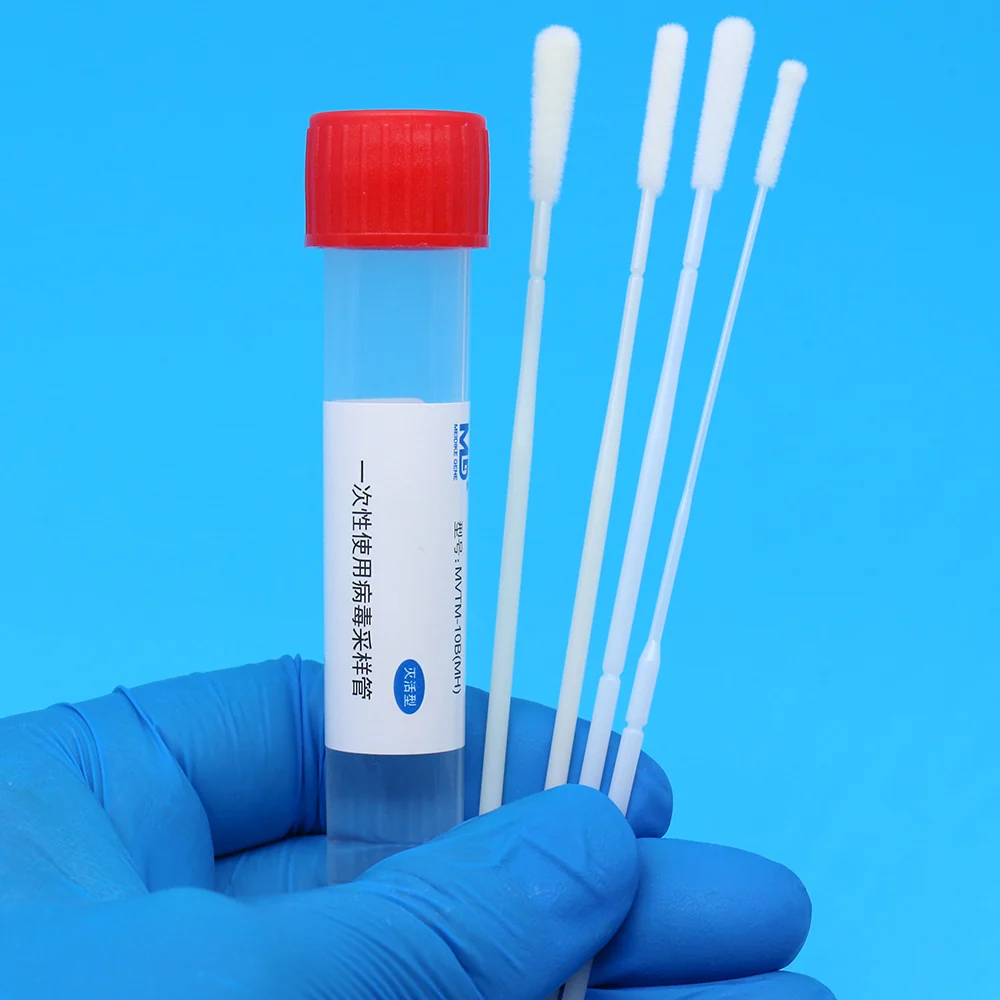
A nasopharyngeal swab usually has a smaller tip because it is designed for deeper and narrower collection sites. The tip should be soft and consistent to support practical handling.
A nasal swab may have a small or medium tip depending on the collection method. A large-headed swab is usually not suitable for narrow nasal or nasopharyngeal workflows unless the product is specifically designed for that use.
Key Difference 4: Shaft Length
Nasopharyngeal swabs are often longer than basic nasal swabs because they need to match a deeper collection site. Shaft length should be confirmed before bulk ordering.
If the shaft is too short, the swab may not match the intended workflow. If it is too long or poorly balanced, it may be inconvenient for users.
Key Difference 5: Breakpoint Position
Both nasal and nasopharyngeal swabs may include a breakpoint if the swab tip needs to be placed into a tube after collection. However, the breakpoint position must match the tube size and collection system.
For nasopharyngeal swabs, breakpoint position can be especially important because the shaft is often thin and flexible. Buyers should test samples with the actual transport tube before confirming bulk orders.
Key Difference 6: User Comfort and Handling
Both swab types should be designed for practical handling. Nasal swabs usually emphasize comfort and ease of use for nasal cavity collection. Nasopharyngeal swabs need a more specialized balance of flexibility, tip softness, and control.
For procurement teams, user experience matters because healthcare workers may use the swabs repeatedly in routine workflows. A swab that looks acceptable in a catalog may still cause complaints if the shaft is too stiff, too weak, too short, or difficult to break.
Nylon Flocked Nasopharyngeal Swab vs. Polyester Nasal Swab
Many nasopharyngeal swabs use nylon flocked tips because flocked fiber structures can support sample collection and release. Polyester nasal swabs may be suitable for routine sampling workflows when the material matches the test requirements.
The choice between nylon flocked and polyester swabs should be based on collection site, sample release needs, test method, transport medium, and customer preference.
Can a Nasal Swab Replace a Nasopharyngeal Swab?
Not automatically. Nasal swabs and nasopharyngeal swabs are designed for different collection sites. A nasal swab should only replace a nasopharyngeal swab if the laboratory, test manufacturer, or clinical protocol allows that specimen type.
For suppliers and distributors, it is safer to present each swab according to its intended use rather than treating all respiratory swabs as interchangeable.
When Should Buyers Choose a Nasal Swab?
Buyers may choose a nasal swab when the customer needs nasal cavity specimen collection, routine respiratory sampling, or a swab designed for easier nasal workflows.
Before ordering, buyers should confirm tip material, tip size, shaft material, shaft flexibility, sterile packaging, breakpoint requirement, and compatibility with the intended tube or medium.
When Should Buyers Choose a Nasopharyngeal Swab?
Buyers may choose a nasopharyngeal swab when the customer specifically requires nasopharyngeal specimen collection. This product usually needs a smaller tip and a thin flexible shaft.
Before ordering, buyers should confirm shaft flexibility, total length, tip dimensions, breakpoint position, sterile packaging, tube compatibility, and the intended testing workflow.
What Buyers Should Check Before Bulk Ordering
Before ordering nasal or nasopharyngeal swabs, buyers should review the full product specification rather than relying only on product photos.
- Collection site
- Tip material
- Tip diameter and length
- Shaft material
- Total swab length
- Shaft flexibility
- Breakpoint position
- Sterile packaging
- Transport tube compatibility
- Transport medium compatibility
- Shelf life and storage conditions
- Export documentation
- Sample availability before bulk order
Packaging Considerations
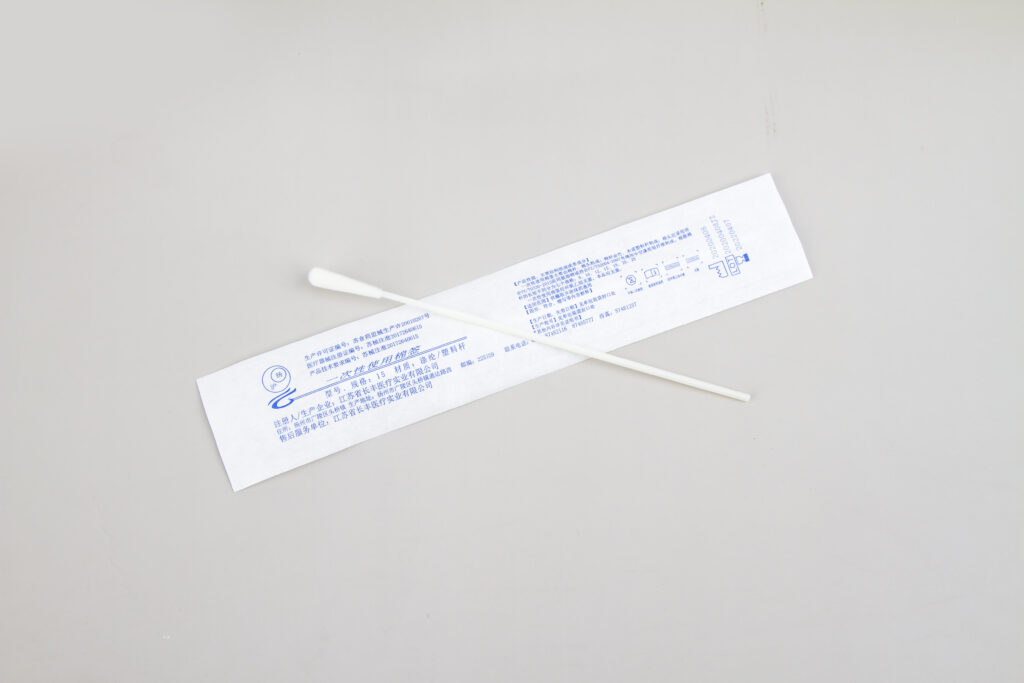
Medical swabs are often individually packaged to support clean handling before use. For sterile swabs, packaging integrity is especially important.
Export buyers should check pouch quality, printed information, lot number, expiration date, inner box quantity, carton quantity, carton strength, barcode options, and private label availability.
Common Mistakes When Buying Respiratory Swabs
One common mistake is assuming that nasal swabs, nasopharyngeal swabs, and throat swabs are interchangeable. They may all be used in respiratory specimen collection, but their designs can be very different.
Another mistake is choosing by price only. A lower-cost swab may not be suitable if the shaft is too rigid, the tip is too large, the breakpoint does not match the tube, or the material does not match the test workflow.
Buyers should request samples and test them with the actual collection tube or kit before placing large-volume orders.
Related Swab Types
Nasal swab
Designed for nasal cavity specimen collection and routine respiratory sampling workflows.
Nasopharyngeal swab
Designed for deeper upper respiratory specimen collection with a small tip and flexible shaft.
Throat swab
Designed for oropharyngeal specimen collection and may use a single-tip or double-tip design.
Large-headed flocked swab
Provides a broader sampling surface for suitable collection sites.
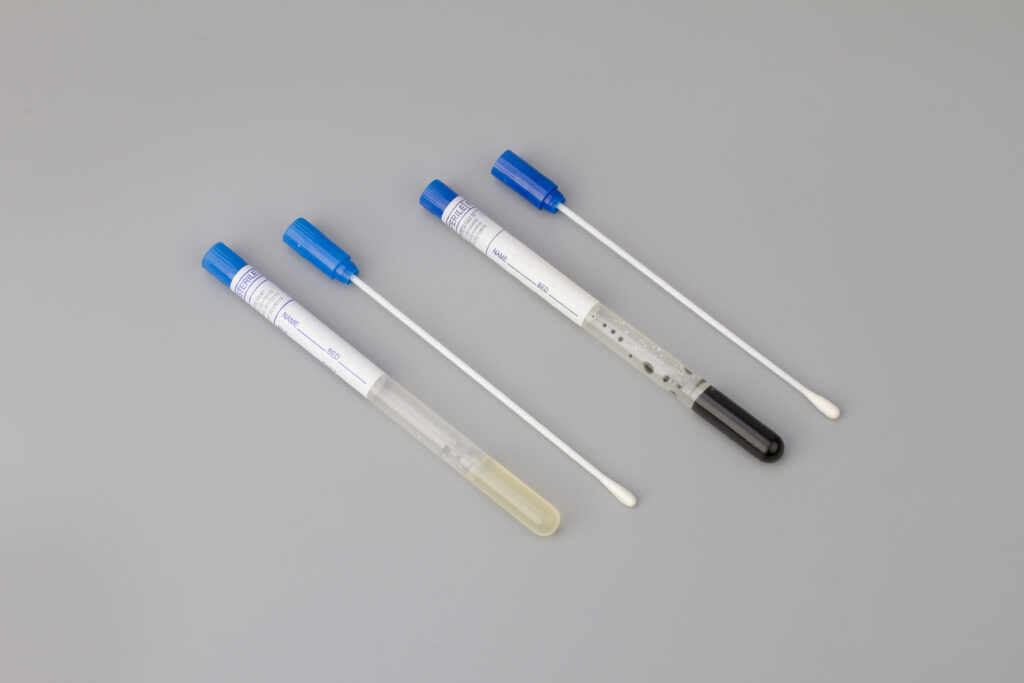
Media-coated swab
Includes medium support for collection or transport workflows.
Conclusion
The main difference between a nasopharyngeal swab and a nasal swab is the collection site. Nasopharyngeal swabs are designed for deeper upper respiratory collection and usually require a thinner, longer, and more flexible shaft. Nasal swabs are designed for nasal cavity collection and may use a different tip size and shaft structure.
For buyers, the right choice depends on the testing protocol, collection site, swab material, shaft design, breakpoint, sterile packaging, tube compatibility, and supplier consistency.
Changfeng Medical supplies sampling swabs for diagnostic, clinical, and laboratory applications, including nasal swabs, large-headed flocked swabs, polyester fiber swabs with sheath, media-coated swabs, and double-tip throat swabs. Contact us to discuss specifications, packaging options, and bulk supply solutions for your market.
FAQ
What is the difference between a nasopharyngeal swab and a nasal swab?
A nasopharyngeal swab is designed for deeper upper respiratory collection, while a nasal swab is designed for nasal cavity specimen collection.
Can a nasal swab replace a nasopharyngeal swab?
Not automatically. The swab type should follow the laboratory, test manufacturer, or clinical protocol requirements.
Why is a nasopharyngeal swab more flexible?
It usually needs a thin flexible shaft to match the intended deeper collection workflow while still providing handling control.
Are nasopharyngeal swabs usually flocked?
Many nasopharyngeal swabs use flocked tips, but buyers should confirm the exact material and product design with the supplier.
What should buyers check before ordering nasopharyngeal swabs?
Buyers should check tip size, shaft flexibility, total length, breakpoint position, sterility, packaging, tube compatibility, and documentation.
Are nasal swabs and throat swabs the same?
No. Nasal swabs are designed for nasal cavity collection, while throat swabs are designed for oropharyngeal collection.