
Additive Chemistry in Blood Collection Tubes: What EDTA, Heparin, Citrate, and Gel Separators Actually Do

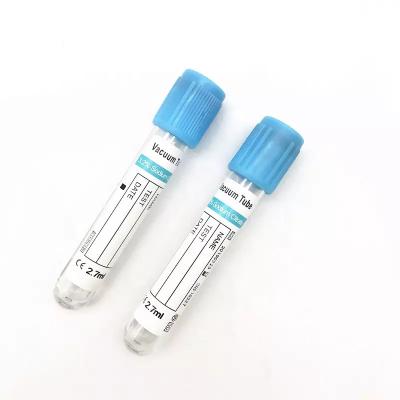
The color on a blood collection tube cap tells a phlebotomist which test the sample is destined for, but the chemistry underneath the cap is what actually determines whether that test produces a usable result. For OEM buyers assembling diagnostic kits or distributors stocking a multi-additive product line, understanding what each additive does — and where the failure modes show up when the wrong tube is matched to the wrong assay — is more useful than memorizing the color code itself.
This article walks through the major additive categories used in vacuum blood collection tubes, the analytical reasons each one exists, and the procurement implications for buyers who are sourcing or private-labeling tube lines for clinical and laboratory customers.
EDTA and the Hematology Workflow
EDTA tubes, typically capped in lavender or pink, are the workhorse of routine hematology. The additive works by chelating calcium ions, which removes calcium from the coagulation cascade and prevents clot formation without altering the size, shape, or count of blood cells — a property that matters enormously for complete blood count testing and blood film morphology. Potassium EDTA (K2 or K3 salt forms) is the standard formulation, and the distinction between the two matters more than buyers often assume: K2EDTA is spray-dried onto the tube wall and dissolves rapidly on contact with blood, producing less dilution and more consistent cell counts than the liquid K3EDTA formulation, which has fallen out of favor in markets with access to spray-dried alternatives but remains common in lower-cost product lines.
The practical failure mode with EDTA tubes is under-filling. Because the additive is dosed for a specific fill volume, a partially filled tube creates a higher anticoagulant-to-blood ratio than intended, which can shrink red cells osmotically and produce falsely low hematocrit and falsely elevated white cell count flags on automated analyzers. This is why fill-volume tolerance during manufacturing — and clear draw-volume markings on the tube — directly affects the rate of pre-analytical errors a laboratory experiences downstream.
Heparin and Its Narrower Clinical Window
Heparin tubes, usually green-capped, work by activating antithrombin III rather than removing calcium, which leaves the sample suitable for tests like blood gas analysis, ammonia, and certain stat chemistry panels where the assay would otherwise be disrupted by EDTA or citrate. Lithium heparin is the dominant formulation because lithium is rarely the analyte of clinical interest, while sodium heparin is reserved for tests where lithium itself needs to be measured or where the assay specifically calls for a sodium-based anticoagulant.
Heparin’s narrower window shows up in two places that matter for buyers spec’ing OEM products. First, heparin does not prevent platelet clumping the way EDTA does, so heparin tubes are unsuitable for platelet counts and are typically excluded from hematology test menus even though they are anticoagulated. Second, heparin tubes used for plasma chemistry require complete mixing immediately after draw — inadequate mixing is a more common source of micro-clot formation in heparin tubes than in EDTA tubes, and micro-clots are a leading cause of analyzer flags and sample rejection in chemistry labs.
Sodium Citrate and Coagulation Testing
Light blue-capped citrate tubes are formulated almost exclusively for coagulation studies — PT, INR, and aPTT testing — and the additive chemistry here is the least forgiving of any tube type on this list. Sodium citrate also works by calcium chelation, but unlike EDTA tubes, citrate tubes require a precise 9:1 blood-to-additive ratio to produce a valid coagulation result. Under-filling a citrate tube by even 10 to 20 percent can prolong PT and aPTT results enough to suggest a coagulopathy that is not actually present, which is why citrate tubes are the tube type most frequently rejected by laboratories for insufficient fill volume.
For OEM buyers, this ratio sensitivity has a direct manufacturing implication: vacuum draw consistency matters more for citrate tubes than for any other additive category, because the vacuum level is what determines whether the tube pulls its intended fill volume. A citrate tube line with even modest vacuum-retention variability across lots will generate a measurably higher sample rejection rate at the customer’s laboratory, which is the kind of downstream quality signal that surfaces in distributor complaints well after a purchase order has been placed.
Serum Separator and Plasma Separator Tubes
Serum separator tubes (SST) contain a clot activator along with a thixotropic gel that forms a physical barrier between serum and cellular components during centrifugation. Plasma separator tubes (PST) use the same gel mechanism but combine it with an anticoagulant — typically lithium heparin — so that plasma rather than serum is separated, which shortens turnaround time because the sample does not need to clot before centrifugation.
The gel barrier’s performance depends on density calibration — it has to sit precisely between the cellular and liquid fractions after centrifugation, which requires manufacturing consistency in gel formulation and tube geometry that lower-tier suppliers sometimes struggle to maintain across production lots. A gel barrier that forms incompletely or migrates after standing allows cellular contamination of the serum or plasma fraction, which can alter potassium, LDH, and other analyte values that are sensitive to red cell leakage. Buyers qualifying an SST or PST line should ask specifically for gel barrier integrity data under standard centrifugation parameters, not just a general claim of separation performance.
Matching Additive Selection to Distribution Strategy
Global market data shows plasma and serum separation tubes together accounting for the largest share of clinical diagnostic volume, with EDTA tubes representing the fastest-growing additive segment as testing volumes for chronic disease monitoring continue to climb. For a distributor building a product line, this suggests that EDTA and SST coverage should be prioritized ahead of more specialized additive types when shelf space or initial purchase order volume is limited, with citrate and heparin tubes added once the core hematology and chemistry menu is established.
OEM buyers building a private-label line face a related but distinct question: which additive formulations the manufacturer has actual validation data for, rather than which formulations appear on a general capabilities list. A supplier who can show fill-volume consistency, anticoagulant dosing accuracy, and gel barrier performance data across multiple additive types is a fundamentally different sourcing proposition than one who lists additive options without lot-level performance evidence behind each one.
Changfeng Medical manufactures vacuum blood collection tubes across the major additive categories under ISO 13485 and CE certification, with fill-volume and additive-dosing controls validated at production scale. For specifications and sample requests, visit our IVD diagnostic consumables page or get in touch through our contact page.