How to Choose the Right Swab Tip Size for Specimen Collection?

.jpg)
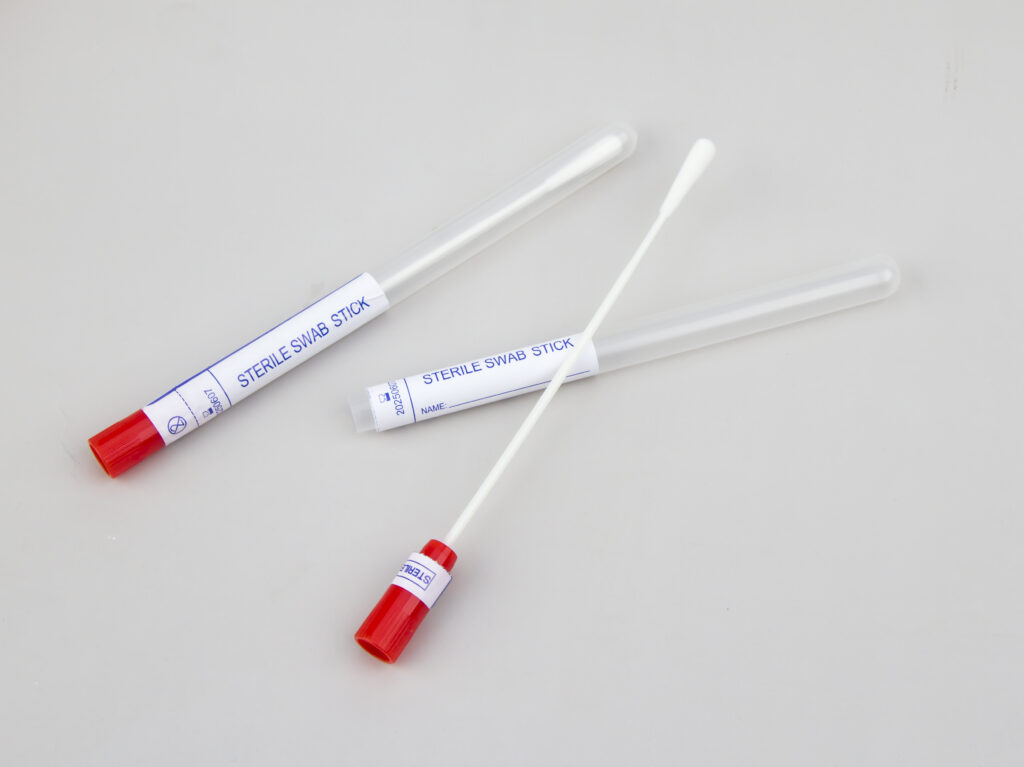
Swab tip size is one of the most important details in specimen collection swab design. A swab tip that is too large may be uncomfortable or unsuitable for the collection site. A swab tip that is too small may not provide enough sampling surface for the intended workflow.
For medical buyers, laboratories, distributors, and procurement teams, choosing the right swab tip size helps match the product to the collection site, testing method, tube system, and end-user requirements.
Why Does Swab Tip Size Matter?
The swab tip is the part that contacts the collection site or specimen. Its size affects contact area, user comfort, sample uptake, sample release, and compatibility with transport tubes or extraction systems.
Tip size should not be selected only by appearance. Buyers should consider the intended collection site, specimen type, material, shaft design, and workflow requirement before ordering.
What Is Swab Tip Size?
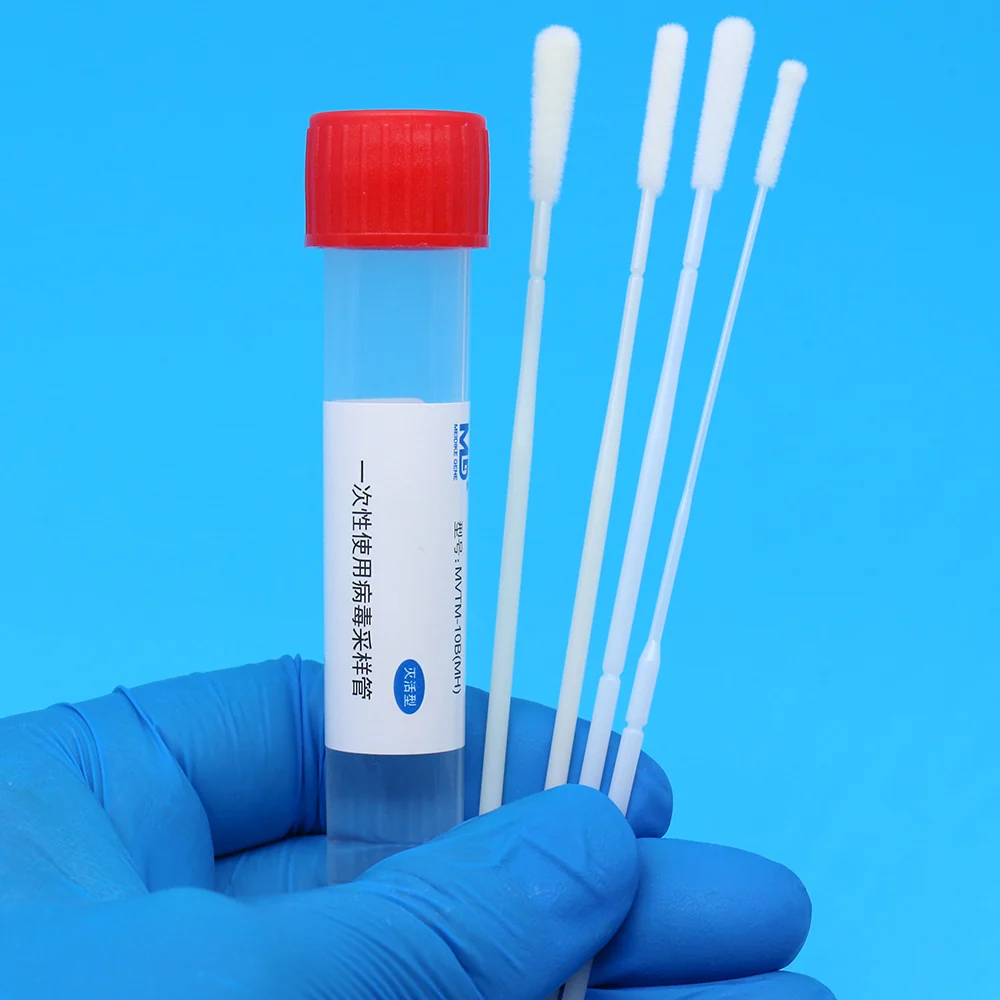
Swab tip size usually refers to the diameter, length, and shape of the sampling tip. Some swab tips are small and narrow, while others are larger and broader.
Tip size is often related to the intended application. Nasopharyngeal swabs usually require small tips. Nasal swabs may use small or medium tips. Throat swabs may use a different tip shape, and large-headed flocked swabs are designed with a broader sampling surface.
Small Swab Tips
Small swab tips are commonly used when the collection site is narrow or sensitive. They are often selected for nasal or nasopharyngeal sampling workflows where comfort, flexibility, and controlled handling are important.
A small tip can help the swab fit the intended collection site, but buyers should still check whether the tip provides enough sampling surface for the required workflow.
Medium Swab Tips
Medium swab tips are used in many routine specimen collection workflows. They may provide a practical balance between sampling surface and user comfort.
Medium tips may be suitable for nasal swabs, general medical swabs, laboratory swabs, or other routine sampling applications depending on the material and shaft design.
Large Swab Tips
Large swab tips provide a broader sampling surface. They may be useful when the collection site allows a larger tip and the workflow benefits from more surface contact.
Large-headed flocked swabs are an example of this design. They are not suitable for every collection site, but they can be useful when a broader flocked sampling surface is preferred.
Tip Size for Nasal Swabs
Nasal swabs are designed for nasal cavity specimen collection. The tip should be soft, appropriately sized, and suitable for the intended nasal sampling method.
If the tip is too large, it may reduce comfort and make collection difficult. If the tip is too small, it may not match the customer’s expected collection performance. Buyers should confirm whether the swab is intended for anterior nasal, mid-turbinate, or another nasal workflow.
Tip Size for Nasopharyngeal Swabs
Nasopharyngeal swabs usually require a smaller tip and a thin flexible shaft because the collection site is deeper and narrower than basic nasal collection.
Buyers should check tip diameter, tip length, shaft flexibility, total swab length, and breakpoint position before ordering nasopharyngeal swabs in bulk.
Tip Size for Throat Swabs
Throat swabs are designed for oropharyngeal specimen collection. The tip should allow controlled contact with the target area while maintaining practical handling for the user.
Some throat swabs use a single-tip design, while others use a double-tip design. Buyers should confirm tip structure, shaft length, sterility, packaging, and compatibility with the intended workflow.
Tip Size for Large-Headed Flocked Swabs
Large-headed flocked swabs are designed with a broader flocked tip. This can provide more sampling surface when the collection site and workflow are suitable.
However, a large-headed swab should not be used for narrow or sensitive collection sites unless the product is specifically designed for that application. Buyers should match the tip size to the real collection scenario.
How Tip Material Affects Tip Size Selection
Tip material and tip size should be considered together. A nylon flocked tip, polyester tip, foam tip, rayon tip, and cotton tip may behave differently even when they look similar in size.
Nylon flocked tips are often selected when sample release is important. Polyester tips may be used for routine medical or laboratory sampling. Foam tips may be selected when cushioning or absorbency is needed. The best material depends on the workflow.
Swab Tip Size and Sample Release
A larger tip does not always mean better sample release. Sample release depends on tip material, fiber structure, surface design, medium compatibility, and the testing workflow.
For example, a flocked swab may release samples differently from a traditional fiber swab. Buyers should not judge performance by tip size alone.
Swab Tip Size and User Comfort
User comfort is especially important for nasal and nasopharyngeal swabs. A tip that is too large or too stiff may create poor user experience, even if the swab looks acceptable in a catalog.
For throat swabs, comfort also matters, but shaft length and handling control are equally important. The complete swab design should be reviewed together.
Swab Tip Size and Tube Compatibility
If the swab tip needs to be placed into a collection tube, transport tube, or extraction tube, tip size must be compatible with the tube opening and internal space.
Buyers should also check shaft length, breakpoint position, cap closing performance, and transport medium volume. A swab with the right tip but the wrong breakpoint may still fail in real use.
How to Choose the Right Swab Tip Size
To choose the right swab tip size, buyers should start with the collection site and testing workflow. The swab should fit the target site, support proper handling, and match the tube or transport system.
Before ordering, buyers should confirm tip diameter, tip length, tip material, shaft material, shaft flexibility, total swab length, breakpoint position, sterility, packaging, and documentation.
Questions Buyers Should Ask Suppliers
Before bulk ordering, buyers can ask: What is the tip diameter? What is the tip length? What material is used for the tip? What is the shaft material? Is the shaft flexible or rigid? Is there a breakpoint? What tube size is recommended? Is the swab sterile? Can samples be provided for testing?
These questions help buyers avoid ordering a swab that looks correct but does not fit the actual workflow.
Common Mistakes When Choosing Swab Tip Size
One common mistake is choosing a larger tip because it appears to collect more sample. In practice, the right tip size depends on collection site and workflow, not size alone.
Another mistake is ignoring tube compatibility. A swab tip may collect well, but if it does not fit the transport tube or extraction tube, it may create handling problems.
Buyers should request samples and test them with the actual tube, collection kit, or customer workflow before confirming mass production.
Related Swab Options
Nasal swab
Designed for nasal cavity specimen collection with a soft and suitable tip size.
Nasopharyngeal swab
Designed for deeper upper respiratory collection with a smaller tip and flexible shaft.
Double-tip throat swab
Designed for oropharyngeal collection workflows where a dual-tip structure is preferred.
Large-headed flocked swab
Provides a broader flocked sampling surface for suitable collection sites.
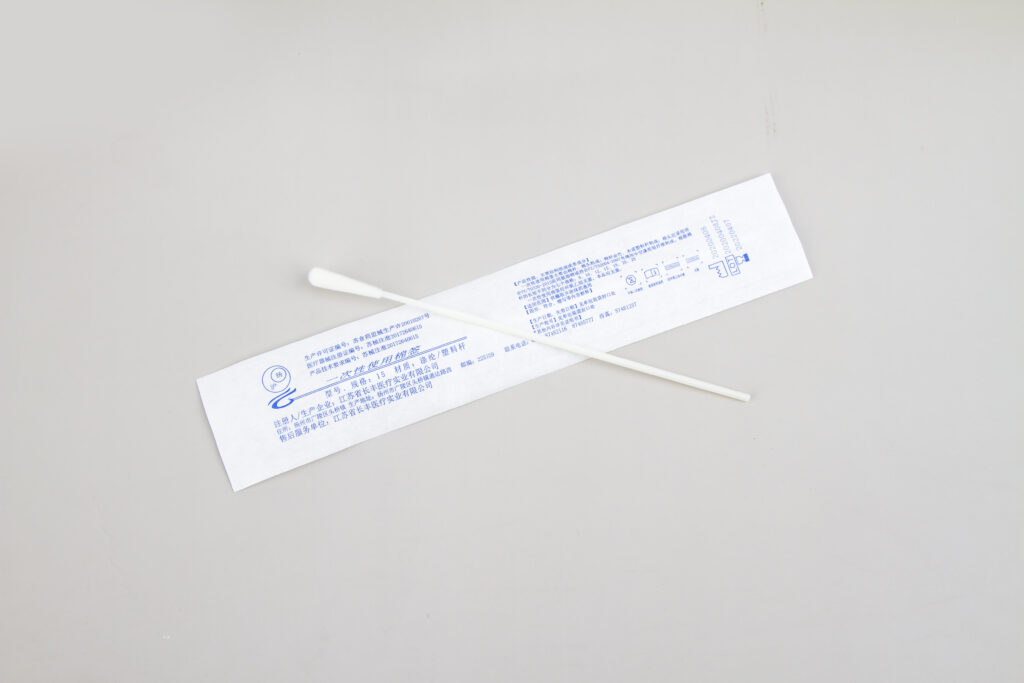
Polyester fiber swab with sheath
Uses a polyester fiber tip and includes a protective sheath for cleaner handling before use.
Conclusion
The right swab tip size depends on the collection site, specimen type, material, shaft design, tube compatibility, and testing workflow. Small tips are often used for narrow or sensitive sites, medium tips are common in routine workflows, and large-headed swabs may be selected when a broader sampling surface is suitable.
For buyers, tip size should be evaluated together with tip material, shaft flexibility, breakpoint, sterile packaging, shelf life, and supplier documentation.
Changfeng Medical supplies sampling swabs for diagnostic, clinical, and laboratory applications, including nasal swabs, large-headed flocked swabs, polyester fiber swabs with sheath, media-coated swabs, and double-tip throat swabs. Contact us to discuss swab specifications, tip sizes, packaging options, and bulk supply solutions for your market.
FAQ
Why does swab tip size matter?
Swab tip size affects collection site fit, comfort, sample uptake, sample release, and tube compatibility.
What swab tip size is used for nasal swabs?
Nasal swabs usually use small or medium soft tips depending on the intended nasal sampling workflow.
What swab tip size is used for nasopharyngeal swabs?
Nasopharyngeal swabs usually require a smaller tip and a thin flexible shaft for deeper upper respiratory collection.
Are large-headed flocked swabs suitable for nasal sampling?
Not always. Large-headed flocked swabs should only be used when the collection site and workflow are suitable for a broader tip.
Does a larger swab tip collect more sample?
Not necessarily. Collection and release depend on tip material, structure, collection site, and testing workflow, not only tip size.
What should buyers check before choosing swab tip size?
Buyers should check tip diameter, tip length, material, shaft flexibility, breakpoint, tube compatibility, sterility, packaging, and documentation.