
Medical Swab Materials Compared: Nylon, Polyester, Rayon, and Cotton

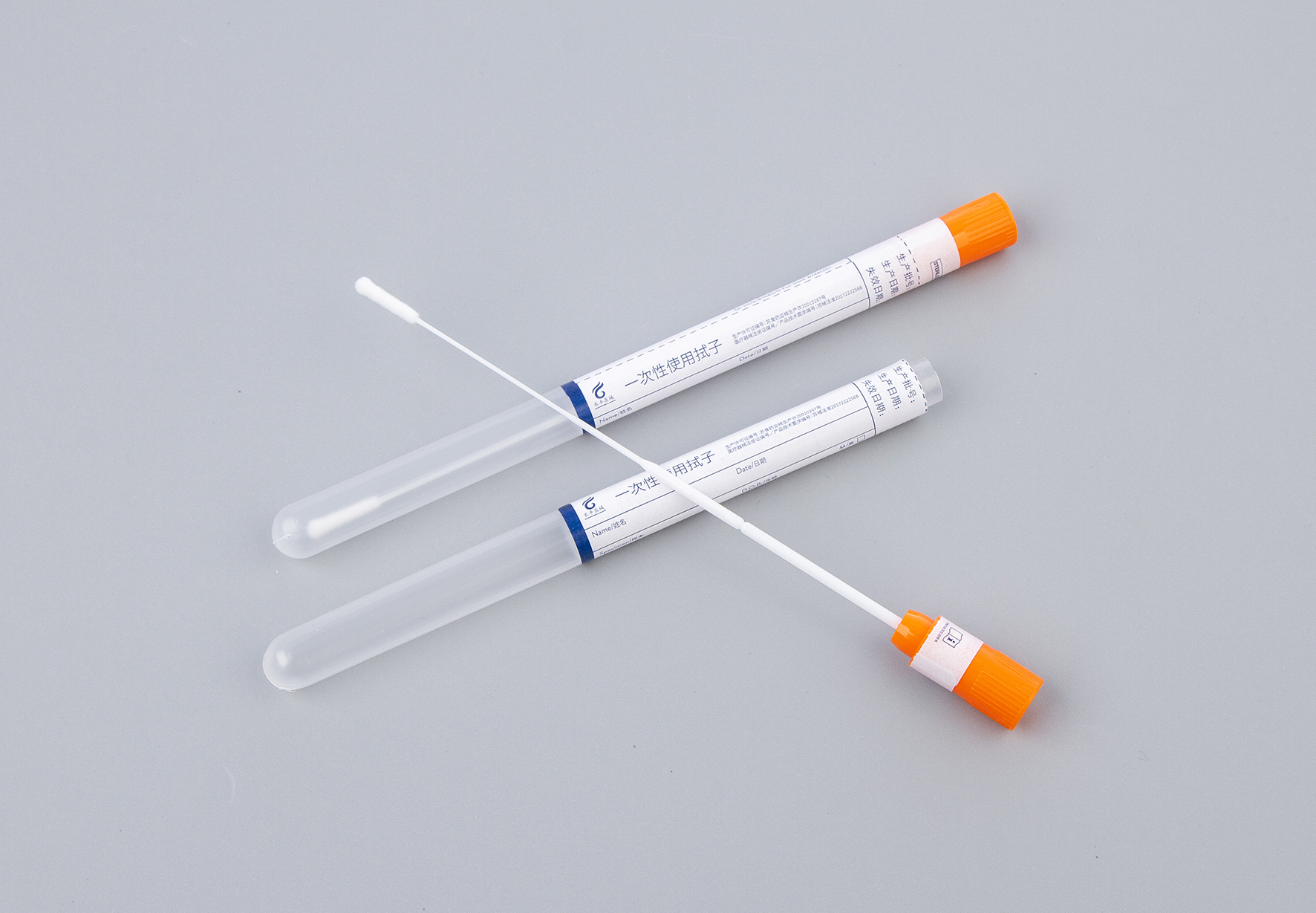
The material your swab is made from directly impacts sample collection efficiency, nucleic acid recovery, test compatibility, and diagnostic accuracy. If you’re evaluating swab suppliers or trying to understand why different products perform differently in your lab, understanding the properties of nylon, polyester, rayon, and cotton will help you make informed choices based on your specific testing requirements.
Why Swab Material Matters
Swab materials differ in their fiber structure, absorption characteristics, sample release properties, and chemical composition. These differences affect three critical performance factors:
- Sample collection: How much specimen material the swab can pick up from the sampling site
- Sample retention: How the collected material is held within the fiber structure during handling and transport
- Sample release: How efficiently the specimen transfers from the swab into transport medium or extraction buffer
A material that excels at absorption may trap samples within its fibers, reducing recovery during extraction. Conversely, a material with poor absorption might not collect sufficient sample in the first place. The ideal swab material balances collection and release for your specific application.
Nylon Flocked Swabs
Structure and Design
Nylon flocked swabs use short nylon fibers—typically 2-4 mm in length—arranged perpendicular to a molded plastic core through electrostatic flocking. This creates a brush-like structure with thousands of fiber ends oriented outward, maximizing surface contact area.
The vertical fiber arrangement creates open channels between fibers, allowing specimens to move in and out of the structure easily. Unlike wound or wrapped swabs, there is no dense internal core where samples can become trapped.
Performance Characteristics
Nylon flocked swabs excel in sample release efficiency. Research comparing DNA recovery from different swab types found that flocked nylon swabs released approximately 1,240 ng of DNA into extraction buffer, compared to 184 ng from cotton swabs under identical conditions.
The open fiber structure facilitates rapid sample transfer when the swab is agitated in liquid medium. This makes nylon flocked swabs particularly effective for molecular diagnostics where maximum nucleic acid recovery is essential.
Nylon is chemically inert and does not contain substances that inhibit PCR or other enzymatic reactions. The material is hydrophilic, meaning it readily absorbs aqueous specimens, which is advantageous when sampling moist mucosal surfaces.
Best Applications
- Viral molecular diagnostics (influenza, SARS-CoV-2, RSV, HPV)
- Bacterial and fungal nucleic acid testing
- Nasopharyngeal and oropharyngeal specimen collection
- Any application requiring high sample recovery and PCR compatibility
- Low-abundance target detection where sensitivity is critical
Limitations
Nylon flocked swabs cost more than traditional cotton or rayon swabs due to the specialized manufacturing process. The flocking equipment and electrostatic application technique represent significant capital investment for manufacturers, which translates to higher unit prices.
While nylon is generally compatible with most diagnostic assays, you should still validate specific products with your test platform, as manufacturing variations between suppliers can affect performance.
Polyester Swabs
Structure and Design
Polyester swabs can be manufactured in either flocked or spun-fiber configurations. Flocked polyester swabs share the same vertical fiber arrangement as nylon flocked swabs. Spun polyester swabs use longer fibers wound around a shaft, creating a more traditional swab appearance.
Polyester is a synthetic polymer that can be engineered for different properties depending on the specific formulation and processing methods used.
Performance Characteristics
Polyester shares many advantages with nylon for molecular diagnostics. It does not contain PCR inhibitors, releases samples efficiently when in flocked form, and maintains consistent performance across manufacturing lots when produced under proper quality controls.
Polyester fibers are less hydrophilic than nylon, meaning they absorb less water. For liquid specimens this is not a significant disadvantage, but for sampling drier surfaces or tissues, nylon may perform slightly better in direct comparisons.
The primary advantage of polyester is cost. Polyester fiber is generally less expensive than nylon, making it an economical option for high-volume testing programs where budget constraints matter.
Best Applications
- Molecular diagnostics where cost per test is a priority
- Large-scale screening programs requiring thousands of swabs
- Viral and bacterial nucleic acid testing
- Applications where nylon and polyester have been validated as equivalent
Limitations
Performance differences between polyester products from different manufacturers can be more variable than with nylon. Quality control during polyester fiber production and swab assembly significantly impacts the final product’s consistency.
If you’re switching from nylon to polyester or between polyester suppliers, perform validation testing rather than assuming equivalent performance.
Rayon Swabs
Structure and Design
Rayon is a semi-synthetic fiber made from regenerated cellulose. It’s produced by chemically treating wood pulp or cotton linters to create a viscous solution that is then extruded into fibers and wound onto swab shafts.
Rayon swabs typically use a spun or wrapped fiber construction rather than flocking. The fibers are longer and create a denser structure than flocked synthetic swabs.
Performance Characteristics
Rayon is highly absorbent—even more so than cotton—which makes it effective at collecting liquid specimens. It’s soft and non-abrasive, so it causes minimal trauma to delicate tissues during sampling.
However, rayon’s high absorbency can work against sample release. The fiber structure tends to retain moisture and collected material, which can reduce nucleic acid recovery in molecular testing applications. Studies comparing sample release efficiency have generally found rayon swabs to perform between cotton and synthetic flocked swabs.
Rayon is compatible with many bacterial culture applications because its moisture-retention properties help keep collected organisms viable during transport to the laboratory.
Best Applications
- Bacterial culture from non-sterile sites
- Specimen collection when swabs will be directly inoculated onto culture media
- Applications where soft, non-abrasive contact is important
- Transport in moist environments where keeping bacteria viable is the priority
Limitations
Rayon is less ideal for molecular diagnostics compared to nylon or polyester. Sample release is lower, and the cellulose-based material may introduce substances that could interfere with some enzymatic reactions, though this is product-dependent.
Rayon fibers can shed or fragment during handling, particularly if the swab is vigorously agitated. Fiber residues in specimens could potentially interfere with downstream processing.
Cotton Swabs
Structure and Design
Cotton swabs are made from natural cotton fibers wound or wrapped around a shaft, which may be wooden, plastic, or wire. The fiber structure is dense, with many internal layers that create an absorbent matrix.
Cotton has been used for specimen collection for decades and remains widely available. However, it has largely been replaced by synthetic materials for molecular diagnostics due to performance and compatibility concerns.
Performance Characteristics
Cotton is highly absorbent and collects aqueous specimens effectively. In environmental surface sampling studies, cotton swabs have demonstrated collection efficiency as high as 96.5%, showing that the material is capable of picking up target organisms or cells.
The challenge with cotton is sample release. The dense, layered fiber structure traps collected material within the swab. When you try to recover the sample by vortexing or agitating the swab in liquid medium, much of the specimen remains bound to the fibers.
Clinical studies have documented this problem quantitatively. In one HPV detection study, cotton swabs released an average of 96,727 cells per milliliter into transport medium, while flocked swabs released 425,544 cells per milliliter. This difference directly impacted diagnostic sensitivity—cotton swabs detected 29.7% HPV positivity compared to 38.1% with flocked swabs.
Cotton can also introduce PCR inhibitors. Cotton fibers contain natural compounds from plant cell walls, and residues from cotton processing may remain on the fibers. While not all cotton swabs inhibit PCR, the risk is higher than with synthetic materials.
Cotton fibers shed easily, which can contaminate specimens with visible particulates that may interfere with automated liquid handling systems or analytical instruments.
Best Applications
- Bacterial culture when swabs will be directly plated onto media
- Non-critical environmental sampling where cost is the primary concern
- Applications where cotton swabs have been specifically validated and approved
Limitations
Cotton is the least suitable material for molecular diagnostics. Low sample release, potential PCR inhibition, and fiber shedding make it a poor choice for nucleic acid testing unless you have validated a specific cotton product for your application and confirmed adequate performance.
Wooden-shaft cotton swabs are particularly problematic because wood can leach substances that inhibit enzymatic reactions. If you must use cotton, choose plastic-shafted products and validate them thoroughly.
Material Selection Matrix
| Material | Sample Collection | Sample Release | PCR Compatible | Cost | Best For |
|---|---|---|---|---|---|
| Nylon Flocked | Excellent | Excellent | Yes | Higher | Molecular diagnostics, viral detection |
| Polyester Flocked | Excellent | Excellent | Yes | Moderate | High-volume molecular testing |
| Rayon | Very Good | Moderate | Variable | Low-Moderate | Bacterial culture, direct inoculation |
| Cotton | Very Good | Poor | Risky | Low | Culture-only applications |
How to Choose the Right Material for Your Lab
Start by identifying your primary testing application. If you run molecular diagnostics—PCR, RT-PCR, or other nucleic acid amplification tests—choose nylon or polyester flocked swabs. The investment in better materials pays off through improved sensitivity, fewer repeat tests, and more reliable results.
If you perform bacterial culture and your lab will directly inoculate swabs onto culture media, rayon or cotton may be adequate and more economical. However, if you’re extracting specimens from swabs before plating, synthetic materials will still deliver better sample recovery.
For labs running both molecular diagnostics and culture, consider standardizing on synthetic flocked swabs for all applications. This simplifies inventory management, reduces the risk of using the wrong swab type, and ensures optimal performance across your test menu.
Don’t base your decision solely on cost. Calculate total cost per reportable result, factoring in reagent costs, repeat testing, and the consequences of false negatives. A swab that costs twice as much but delivers 30% better sample recovery may reduce your overall cost per test.
Validation Is Always Required
Regardless of which material you choose, validate the specific product with your test methods, extraction protocols, and detection platforms. Performance varies between manufacturers even when using the same base material, so don’t assume that all nylon swabs or all polyester swabs are equivalent.
Your validation should include:
- Compatibility testing to confirm no PCR inhibition
- Sample recovery assessment compared to your current standard
- Lot-to-lot reproducibility verification
- Clinical performance evaluation using patient specimens when possible
Document your validation findings and maintain them in your quality management system to support regulatory inspections and accreditation audits.
Frequently Asked Questions
Can I mix different swab materials in the same testing batch?
Not recommended. Different materials release samples at different rates, which can introduce variability in your results. Standardize on a single validated swab type for each test to maintain consistency and comparability across specimens.
Are foam swabs different from the materials discussed here?
Yes, foam swabs use open-cell polyurethane foam rather than fibers. Foam swabs have their own performance characteristics and are used in specific applications, particularly environmental monitoring and surface sampling. They’re less common in clinical diagnostics than fiber-based swabs.
Does the shaft material matter as much as the tip material?
Shaft material matters for PCR compatibility. Wooden shafts can leach inhibitory substances. Plastic shafts (polystyrene or polypropylene) are inert and preferred for molecular diagnostics. The shaft material doesn’t significantly affect sample collection or release, but it does impact test compatibility.
How can I tell what material a swab is made from?
Check the product labeling, packaging, or technical data sheet from the manufacturer. If this information isn’t clearly stated, request material specifications from your supplier. Don’t guess based on appearance alone—some materials look similar but perform very differently.
Are more expensive materials always better?
Not always, but usually for molecular diagnostics. Nylon and polyester flocked swabs cost more because they’re manufactured with specialized equipment and deliver measurably better sample recovery. For applications where sample release isn’t critical, less expensive materials may be adequate. Match the material to your application requirements, not just to your budget.
Can I switch materials without revalidation if I’m not changing suppliers?
No. Even within the same supplier’s product line, switching from one material to another (for example, from nylon to polyester) constitutes a method change. You must verify that the new material performs equivalently with your test systems before using it for patient testing.
Do synthetic materials have a longer shelf life than natural materials?
Generally yes. Synthetic materials like nylon and polyester are chemically stable and less susceptible to degradation from humidity, temperature fluctuations, or microbial growth compared to cotton or rayon. However, actual shelf life depends on packaging, storage conditions, and manufacturer specifications.
Which material is best for pediatric sampling?
Material softness matters less than swab size and design for pediatric use. All the materials discussed can be manufactured in smaller tip sizes appropriate for children. Nylon and polyester flocked swabs in pediatric sizes offer the same sample recovery advantages as adult sizes while being gentler on delicate tissues.
Choose the Right Material for Better Results
Nylon and polyester flocked swabs deliver the best performance for molecular diagnostics through superior sample release, PCR compatibility, and consistent manufacturing quality. Rayon and cotton swabs remain useful for bacterial culture applications but should not be your first choice for nucleic acid testing.
Evaluate materials based on your specific testing requirements, validate candidates in your lab, and factor in total cost per result rather than just unit price. The right material choice will improve diagnostic accuracy and may reduce overall testing costs through fewer repeats and better sensitivity.
Need technical guidance on selecting swab materials for your laboratory? Our team can provide material specifications, performance data, and samples for validation testing.