
Swab Shaft Design: Breakpoint Position, Shaft Flexibility, and Transport Tube Compatibility in Kit Assembly

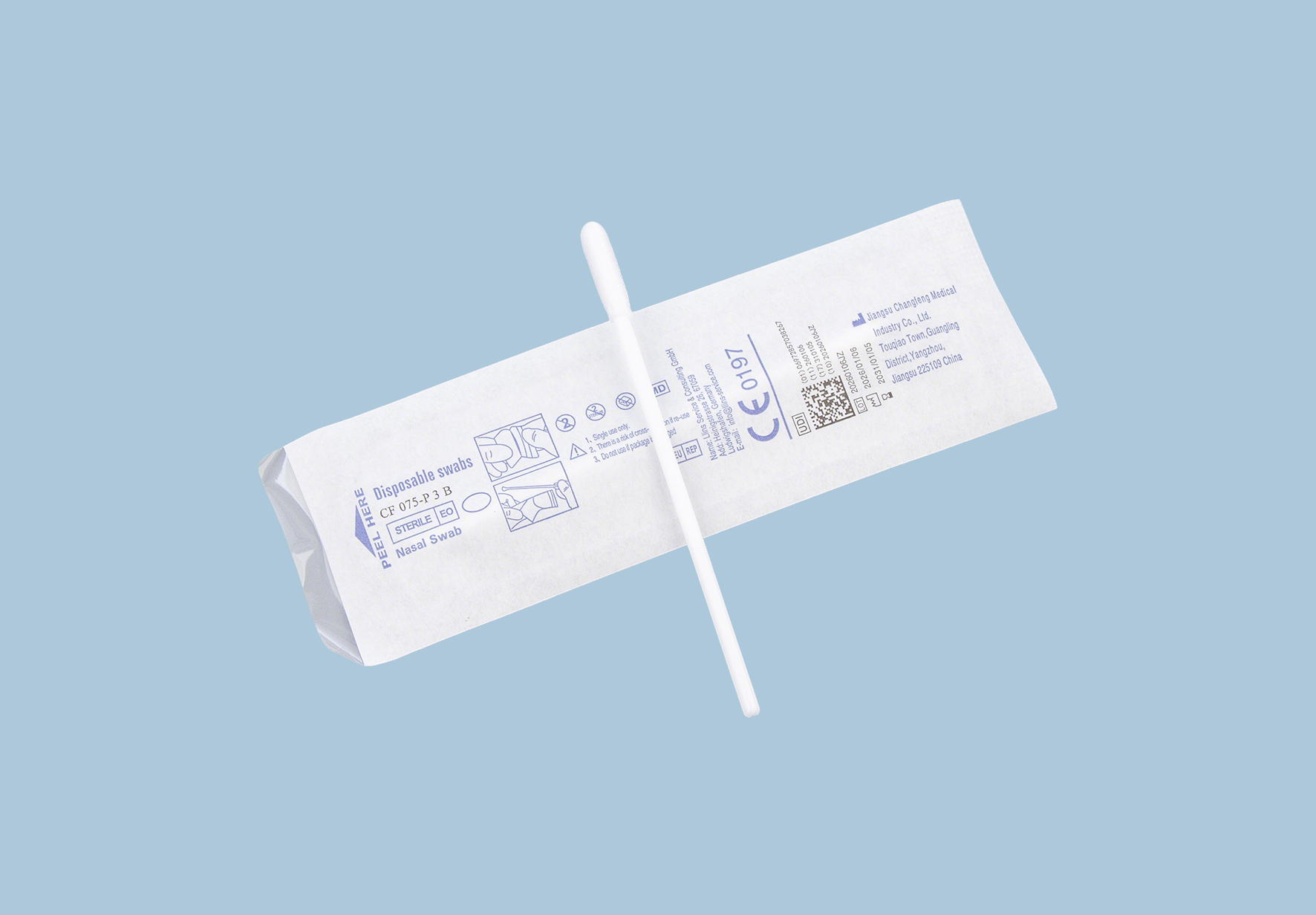
Swab tip material and sterility get most of the attention in sourcing conversations. Shaft design gets considerably less — often reduced to an overall length measurement on the spec sheet and nothing more. That’s a problem, because shaft geometry determines how well a swab fits into a kit, how the sample transfers from swab to tube, and whether the collection process produces consistent results across different operators and settings.
For OEM kit assemblers and distributors building product lines that include swab-tube configurations, understanding the shaft variables — breakpoint position, flexibility, and tube compatibility — is what separates a kit that works reliably from one that generates field complaints.
What a Breakpoint Actually Does
A breakpoint is an engineered stress concentration in the swab shaft — typically a scored notch or a deliberate reduction in cross-section — that allows the swab to be snapped cleanly at a defined position. The user inserts the swab, collects the sample, places the tip into the transport tube, and snaps the shaft at the breakpoint so the tube can be capped. No scissors, no contamination from handling the tip, no variable break position.
The functional requirement sounds simple. In practice, breakpoint engineering involves several interdependent variables: the position of the break relative to the tube opening, the force required to snap the shaft, the consistency of that force across a production batch, and whether the shaft breaks cleanly without splintering or leaving a burr that could compromise the cap seal.
Breakpoint position is specified in millimeters from the tip end of the swab and must match the depth of the transport tube. Common configurations are 80 mm and 95–100 mm, corresponding to the two standard tube lengths in wide use. If a swab with an 80 mm breakpoint is paired with a 100 mm tube, the shaft protrudes above the cap line and the tube cannot be closed — a failure mode that is obvious once a batch is assembled but costly to catch if it surfaces in field testing. This is why breakpoint specification must be confirmed against the exact tube SKU in the kit, not against a generic “standard tube” assumption.
Shaft Flexibility and Sampling Site
Shaft flexibility is the variable that most directly affects patient experience and sample quality in nasopharyngeal and deep nasal collection. A shaft that is too rigid causes discomfort and increases the chance that the operator stops short of the target anatomy — the nasopharynx, in respiratory virus testing, sits at a depth and angle that requires gentle curve navigation through the nasal passage. A shaft that is too flexible provides insufficient control and may fold before reaching the target site.
Most NP swabs use a polypropylene or nylon shaft engineered to a specific stiffness: firm enough to advance without folding, flexible enough to follow the nasal anatomy without causing epistaxis or significant pain. The shaft taper — a gradual reduction in diameter from handle end to tip — contributes to flexibility distribution along the length. Swabs designed for anterior nasal collection (which does not require the same depth of penetration) can use stiffer shafts with less taper, which is part of why anterior nasal swabs are easier to design for self-collection applications.
For throat collection, shaft flexibility matters in a different way. The swab needs to reach the posterior pharynx without triggering a strong gag reflex, which means controlled flex under lateral pressure while the patient opens their mouth. This is an ergonomic design challenge, not just a materials specification — the shaft diameter, material, and length work together.
When sourcing swabs for a kit, confirm that the shaft flexibility specification matches the intended sampling site. Substituting an anterior nasal swab design into a NP collection application because it has the same outer dimensions will produce complaints about patient comfort and, potentially, lower sample yield from operators who do not fully advance the swab to the target anatomy.
Transport Tube Compatibility Is a System Problem
The swab and the transport tube are designed to function as a system, and compatibility failures are common when components are sourced separately. The relevant parameters are: tube inner diameter vs. swab shaft outer diameter, tube depth vs. breakpoint position, cap type (capture cap vs. standard cap), and medium volume relative to tip absorption capacity.
Capture caps — a design where the cap has an internal structure that catches and holds the broken swab tip below the cap line — simplify the downstream lab workflow by allowing direct tube handling without the broken shaft fragment floating loose. This design is not universal; some configurations use standard caps and rely on the broken shaft fragment sinking below the medium surface or being removed manually. For high-throughput laboratory automation, capture caps are strongly preferred, and kit developers targeting lab customers should confirm that the swab-tube system is validated for the intended cap type.
Medium volume relative to tip absorption also matters. A flocked tip that absorbs approximately 40–50 µl of sample should be paired with a medium volume (typically 1–3 ml in viral transport media) that is sufficient to elute the sample into a concentration range compatible with the downstream assay. Underfilling the tube concentrates the eluted sample — useful for low-viral-load applications but potentially problematic for assays with defined sensitivity ranges. Overfilling dilutes the sample below detection thresholds. These parameters are usually set by the assay manufacturer, but kit assemblers need to confirm that the swab’s absorption capacity is matched to the medium volume and tube configuration they are packaging.
Validating the Assembly Configuration
For OEM kit manufacturers, the swab-tube-cap system needs to be validated as an assembly, not as individual components. The practical checklist for qualification:
Breakpoint snap force: Test across the production tolerance range. The force should be consistent enough that operators don’t encounter unexpected resistance — inconsistent snap force is an ergonomic complaint that generates field feedback quickly. Confirm that the snap produces a clean break with no shaft splintering into the tube.
Shaft fit in tube: The broken shaft fragment should not bridge the tube diameter and block the cap from seating. Confirm the fragment sinks below the medium surface or is retained by the capture cap as designed.
Cap seal integrity post-assembly: After snapping and capping, confirm that the cap seals correctly without the shaft fragment interfering with the sealing surface. This is particularly important for screw-cap configurations where a fragment lodged in the thread can compromise the seal.
Elution yield from assembled configuration: Measure elution efficiency using the swab, medium, tube, and cap combination as assembled in the final kit — not individual component measurements from the supplier’s data sheet.
Suppliers who offer swab-tube matched systems — where both components are validated together — reduce the qualification burden significantly. For kit assemblers without internal laboratory validation capacity, this is worth a significant premium over sourcing components from separate vendors and assembling the system from scratch.
OEM Customization Points
For distributors and kit manufacturers working with OEM swab suppliers, the shaft specification is often where customization is available. Breakpoint position can frequently be adjusted to match a specific tube configuration. Shaft color coding — by collection site, gauge, or kit type — is available from most serious manufacturers and simplifies kitting and field use. Custom IFU printing on the packaging and matched multilingual labeling become important once a kit enters regulatory review in multiple markets.
The shaft design conversation is also the right place to discuss production consistency — not just the nominal specification but the tolerance band. A breakpoint position specified at 80 mm ± 3 mm is a different product from one specified at 80 mm ± 0.5 mm. For automated kitting lines and high-volume distribution, tighter tolerances reduce rejection rates at assembly and should be confirmed in the supplier’s quality documentation.
Changfeng Medical’s sampling swab range includes configurations with matched breakpoint options for standard transport tube lengths. OEM customization on breakpoint position, shaft color coding, and packaging format is available. ISO 13485, CE, and MDSAP documentation on request.