
Quincke vs. Pencil Point Spinal Needles: What the Tip Design Actually Changes for Your Patients and Your Procurement

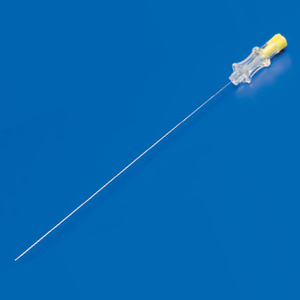
Ask most anesthesiologists which spinal needle they prefer and you will get a fast answer — but ask them to explain the mechanism behind that preference and the response gets more complicated. The difference between a Quincke bevel and a pencil-point tip is real and consequential, yet procurement decisions often get made on familiarity or price without anyone reviewing what the evidence actually says. That matters because the tip geometry you stock affects post-dural puncture headache rates, dural repair dynamics, and in some settings, the procedural learning curve for junior clinicians.
What Each Tip Design Actually Does to the Dura
A Quincke bevel cuts through the dura mater — the mechanism is essentially the same as any sharp needle entering tissue. The cut is clean and the entry is fast, which is why the design has been the baseline for spinal anesthesia since the early twentieth century. The practical cost is a circular or oval dural defect that can persist long enough to allow cerebrospinal fluid to leak into surrounding tissue, reducing intracranial pressure and producing the characteristic postural headache that improves when the patient lies flat.
A pencil-point needle — whether it uses a Whitacre or Sprotte configuration — separates dural fibers rather than cutting them. The tip is blunt and conical; the injection port is a lateral aperture behind the tip rather than an end opening. Because the fibers are pushed apart rather than severed, they have a greater tendency to close after withdrawal. The dural defect is smaller in effective diameter even when the nominal gauge is identical to a Quincke needle at the same gauge. This is the physical basis for the lower PDPH rates associated with pencil-point designs.
The Numbers Behind PDPH
Post-dural puncture headache incidence varies substantially by needle gauge and tip geometry. With 22G Quincke needles, published complication rates have been reported at around 6 to 8 percent, while 25G or 27G pencil-point needles in routine spinal anesthesia typically show rates below 2 percent. The mechanism is consistent: finer gauge leaves a smaller defect regardless of tip type, but the pencil-point geometry provides an additional reduction independent of gauge.
For high-volume obstetric departments where spinal anesthesia for cesarean section is routine, even a 3 to 4 percentage point reduction in PDPH incidence translates to a meaningful number of patients who avoid what can be a severely debilitating complication requiring blood patching. For ambulatory surgical centers where the patient is expected to mobilize quickly after the procedure, the benefit of a lower-risk tip design is similarly practical rather than theoretical.
Where Quincke Still Has a Role
Pencil-point designs have limitations that are worth being honest about. The blunt conical tip requires more controlled insertion force, and in patients with significant ligamentous calcification or obesity where tissue resistance is high, the tactile feedback is different from a sharp bevel — less distinct dural pop, less reliable flow confirmation in some cases. There is also the training dimension: anesthesiologists trained primarily on Quincke needles may find the pencil-point technique less intuitive at first, and in low-volume settings that difference in insertion confidence can be procedurally relevant.
For diagnostic lumbar puncture where CSF flow rate and sample volume matter more than PDPH risk, some practitioners still prefer the end-opening Quincke design for the speed and volume of fluid delivery. And in markets where price sensitivity is high and procedural training infrastructure is limited, standardizing on Quincke at finer gauges can be a defensible clinical and economic choice.
Procurement Implications: What to Think About Before Standardizing
When a hospital or distributor is evaluating which spinal needle SKUs to carry, the tip design question is rarely addressed head-on in the tender document. Instead, it shows up indirectly in gauge specifications, application categories, and sometimes in formulary decisions driven by a senior anesthesiologist’s preference. A procurement manager who understands the underlying clinical logic is better positioned to structure the category correctly — specifying pencil-point variants for obstetric and elective surgical volumes where PDPH minimization is a priority, while retaining Quincke options for diagnostic and price-sensitive applications.
From a stock management standpoint, the two tip types are not interchangeable. Stocking both requires clear SKU differentiation — gauge, length, tip type, and hub color coding — to prevent mix-ups in a busy OR. ISO 6009 defines color coding by gauge, but tip type identification is manufacturer-specific, which means a distributor sourcing from multiple suppliers needs to verify that their labeling scheme is consistent across the product mix.
A Note on OEM Kit Configuration
For kit assemblers building anesthesia procedure packs, the spinal needle component selection often drives the clinical positioning of the entire kit. A combined spinal-epidural kit built around a fine-gauge pencil-point spinal needle is a premium product with a specific clinical audience — obstetrics, orthopedics, urology — whereas a kit built around a standard Quincke needle is positioned for general use. The tip design choice feeds directly into how the kit is marketed, what documentation it requires, and which hospital formularies it competes for. Getting the specification right at the sourcing stage avoids the downstream cost of respecification mid-contract.
Changfeng Medical manufactures a range of disposable spinal anesthesia needles in both Quincke and pencil-point configurations, available in gauges from 22G to 27G with EO sterilization and CE certification. For specification sheets or OEM inquiries, contact the export team at changfengmed.com/contact.