
Building a Combined Spinal-Epidural Kit: Component Specifications, Regulatory Requirements, and What OEM Buyers Should Clarify Before Signing

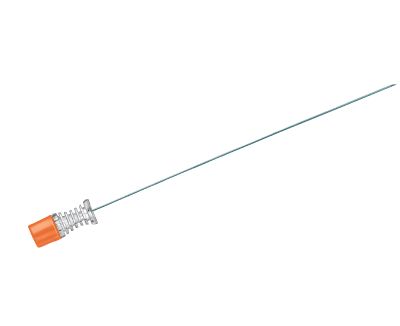
Combined spinal-epidural anesthesia has become a standard technique for obstetric procedures and a growing range of lower limb orthopedic surgeries. The clinical appeal is straightforward: spinal anesthesia provides rapid, dense block onset, while the epidural catheter allows the effect to be extended or titrated for longer procedures or postoperative analgesia. The kit that makes this technique possible — combining a Tuohy epidural needle, a fine-gauge spinal needle, an epidural catheter, filter, connectors, and ancillaries in a single sterile pack — is a more complex procurement and regulatory object than it might appear from the outside.
What a Standard CSE Kit Contains
A combined spinal-epidural kit assembled for clinical use typically includes a Tuohy epidural needle (most commonly 16G or 18G, 80mm to 100mm length depending on patient population), a fine-gauge spinal needle long enough to pass through the Tuohy lumen and extend beyond the tip into the subarachnoid space, an epidural catheter with radiopaque stripe and graduated markings, a low-resistance bacterial filter, luer-lock connectors, loss-of-resistance syringe, drapes, and skin cleaning components. Some configurations include an epidural catheter fixation device.
The component that most often creates specification problems is the spinal needle — specifically its length relative to the Tuohy needle it passes through. If the spinal needle does not extend far enough beyond the Tuohy tip (typically 10mm to 15mm is the target), the clinician cannot achieve reliable subarachnoid placement while keeping the Tuohy in the epidural space. If the spinal needle extends too far, there is risk of nerve root contact or inappropriate depth of injection. Getting this dimensional relationship right requires the kit manufacturer or assembler to specify both components together rather than sourcing them independently and assuming they will fit.
Regulatory Classification and What It Means for the Kit Manufacturer
In the EU under MDR, a combined anesthesia kit is classified as a Class IIa medical device under rule 8 (invasive devices intended to administer medicines). The entity that places the assembled kit on the market as a finished product is the legal manufacturer and bears full technical file responsibility — even if every component inside the kit was sourced from certified third-party suppliers. This is the same regulatory dynamic that affects swab kit assemblers and IVD kit manufacturers: buying components from compliant suppliers does not transfer the regulatory burden to those suppliers.
For the anesthesia kit specifically, the technical file must cover the biocompatibility of all patient-contact components, the sterilization validation for the complete kit (including the most difficult-to-sterilize component determining the EO cycle parameters), the dimensional validation of needle-through-needle fit, and shelf-life data for the assembled configuration. If the Tuohy needle and spinal needle come from different suppliers, you need biocompatibility data from both — and you need to verify that EO residual limits are met for the assembled kit, not just for each component individually.
The Cost Structure of Assembling Your Own CSE Kit
Kit assemblers often move toward building their own CSE kits after distributing third-party branded kits for several years, motivated by margin improvement and the ability to configure the pack content for their specific market. The economics require honest accounting. Component cost is generally the largest variable — the Tuohy needle and spinal needle together represent 40 to 60 percent of component cost depending on gauge and tip specification, with the catheter and filter adding another 20 to 30 percent. Packaging (double peel pouch, outer carton, IFU per MDR Article 10 requirements) adds further cost that is easy to underestimate when planning from a component BOM.
Regulatory cost is the number most often underestimated. If you are placing the kit on the EU market as a Class IIa device under MDR, you need a notified body involved in your conformity assessment. The technical file preparation and NB review typically takes 12 to 18 months from a standing start and costs in the range that makes only meaningful volume commercially viable. For markets where MDR does not apply — ASEAN, MENA, Latin America — the barrier is lower, which is why many regional distributors building their own kits target non-EU markets first and add EU compliance once volume justifies the investment.
What to Clarify with Your Needle Supplier Before Finalizing Kit Design
Several specification questions need answers before you can finalize a CSE kit design with a component supplier. First, the dimensional fit: confirm the exact length from the Tuohy needle hub to the distal tip under normal clinical assembly, and verify that the spinal needle in the configuration you are considering extends the required distance beyond the Tuohy tip without risk of hub interference. This requires a physical test, not just a spec sheet comparison.
Second, biocompatibility documentation. You need ISO 10993-compliant biological evaluation reports for all patient-contact materials — needle alloy, hub material, catheter material, filter membrane, connector materials. Ask whether these are product-specific or rely on material-level data, and whether they were conducted for the gauge and surface finish you are specifying (surface finish affects extractables).
Third, change notification obligations. If your supplier changes needle alloy, hub formulation, or manufacturing process mid-contract, that change may require you to update your technical file and in some markets re-notify your regulatory authority. Your supply agreement should specify minimum notice periods — 90 days is the typical ask — and should define which changes trigger mandatory notification versus which can be handled through routine supplier communication.
Fourth, EO sterilization compatibility. If you are assembling the kit yourself and sterilizing it as a unit, you need to confirm that all components withstand your sterilization process parameters. EO residual limits vary by material and by regulatory jurisdiction, and some catheter materials and filter membranes have specific EO exposure limits that constrain cycle design.
Changfeng Medical supplies individual anesthesia needle components — Tuohy epidural needles, spinal needles in multiple gauges and tip configurations, and accessory components — to kit assemblers and distributors across more than 50 countries. CE certified and ISO 13485 compliant. For component specifications and OEM supply terms, contact us at changfengmed.com/contact.