
Nasal Swabs for Diagnostic Testing: What Buyers and Distributors Should Know

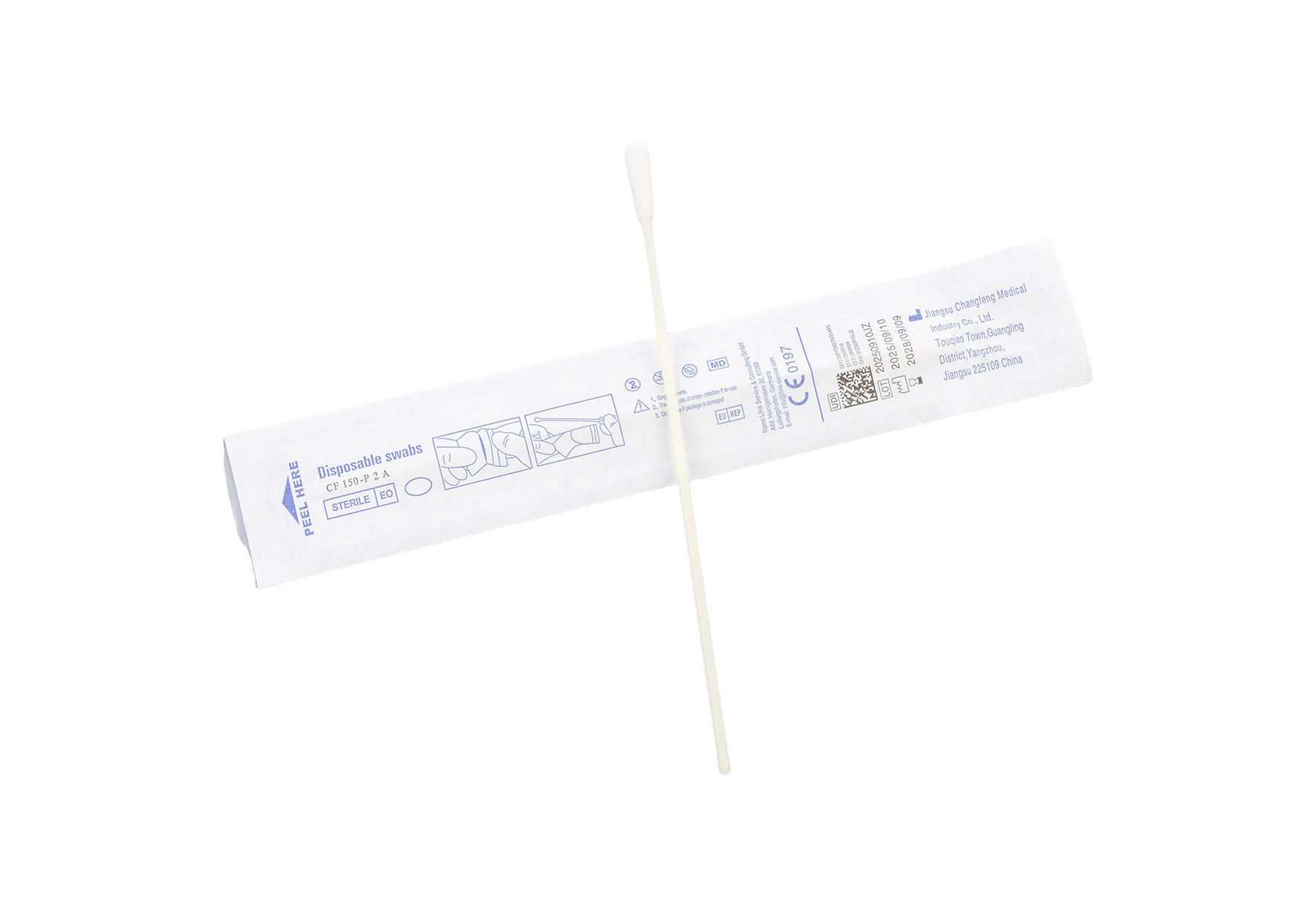
Most people encounter nasal swabs as patients — a brief, mildly uncomfortable moment during a flu test or COVID screening. From the other side of the supply chain, the picture looks quite different. For distributors, diagnostic kit manufacturers, and procurement teams, nasal swabs are a high-volume, quality-sensitive consumable where the wrong supplier can quietly undermine testing accuracy across thousands of samples.
This article covers the basics of how nasal swabs work, the differences between swab types, and what actually matters when you’re evaluating a manufacturer.
How a nasal swab works
The mechanics are simple: a flexible shaft carries a sampling tip into the nasal cavity, where it collects mucus and epithelial cells. Those cells are then eluted — released from the tip into a transport medium or directly onto a test strip — for downstream analysis.
The key performance variable is elution efficiency: how completely the sample transfers from the swab tip into the test medium. A swab that holds onto the specimen rather than releasing it cleanly will depress the sensitivity of whatever assay it’s paired with. This is why tip construction matters so much more than most buyers initially expect.
Flocked vs. fiber-wound: the practical difference
Traditional fiber-wound swabs — the kind with a cotton or polyester tip wrapped around the shaft — work by absorbing the specimen deep into the fiber matrix. The problem is getting it back out. Elution rates for conventional swabs typically sit well below 50%, which means a significant portion of the collected sample never reaches the analyzer.
Flocked swabs solve this by replacing the wrapped fiber with perpendicular nylon strands applied directly to the tip. The structure is more like a brush than a sponge: samples sit near the surface of the tip rather than being absorbed into the core, so they transfer more completely when the swab contacts transport medium. For PCR testing and lateral flow assay kits, where sensitivity is critical, flocked swabs have largely become the standard.
Polyester fiber swabs remain a practical option for applications where sensitivity requirements are more forgiving, or where cost pressure is the primary constraint.
What to verify before you commit to a supplier
Regulatory documentation is the obvious starting point — CE marking for EU markets, relevant ISO certifications, sterilization validation records. But a few things get less attention than they deserve:
Breakpoint consistency. Swabs used with transport tubes need a clean, reliable break at the correct point on the shaft. Inconsistent breakpoints cause contamination issues and workflow interruptions at the lab level.
Tip geometry. Nasal swabs have smaller, more flexible tips than nasopharyngeal swabs. If a supplier is offering the same tip design for both applications, that’s worth questioning.
Sterility assurance. EO sterilization is standard for individually packaged swabs. Ask for the SAL (sterility assurance level) documentation — it should be 10⁻⁶.
Stability of supply. During COVID, swab supply chains broke down globally within weeks. A manufacturer’s capacity, raw material sourcing, and production redundancy are worth understanding before a shortage makes these questions urgent.
A note on China-based manufacturing
The assumption that Chinese medical consumables mean lower quality has become increasingly outdated. The manufacturers that have invested in ISO 13485 quality systems, CE MDR certification, and MDSAP compliance are operating to the same standards as facilities in Europe or North America — at significantly lower cost structures.
Changfeng Medical, based in Yangzhou, is one example. Their nasal swabs (Model SZ001) are produced under ISO 13485 with CE MDR and MDSAP certification, individually packaged and EO sterilized, and available with OEM customization for labeling and packaging. They supply directly to distributors and diagnostic kit manufacturers, with flexible MOQ for initial trial orders.
The practical advantage of working with a manufacturer at this level isn’t just price — it’s documentation. An experienced export team that understands what EU or US regulatory submissions require is a real operational benefit, not just a sales point.
Getting samples and pricing
If you’re evaluating nasal swabs for your product line or procurement needs, the right starting point is always a sample order with your target assay. Supplier claims about elution efficiency are useful context; your own testing with your specific reagent system is the only data that actually matters for qualification.
Request samples or pricing from Changfeng Medical →
Also available from Changfeng Medical: Double-tip Throat Swab · Large-headed Flocked Swab · Polyester Fiber Swab with Sheath