
gFOBT vs. FIT: Two Technologies, Two Different Collection Bottles

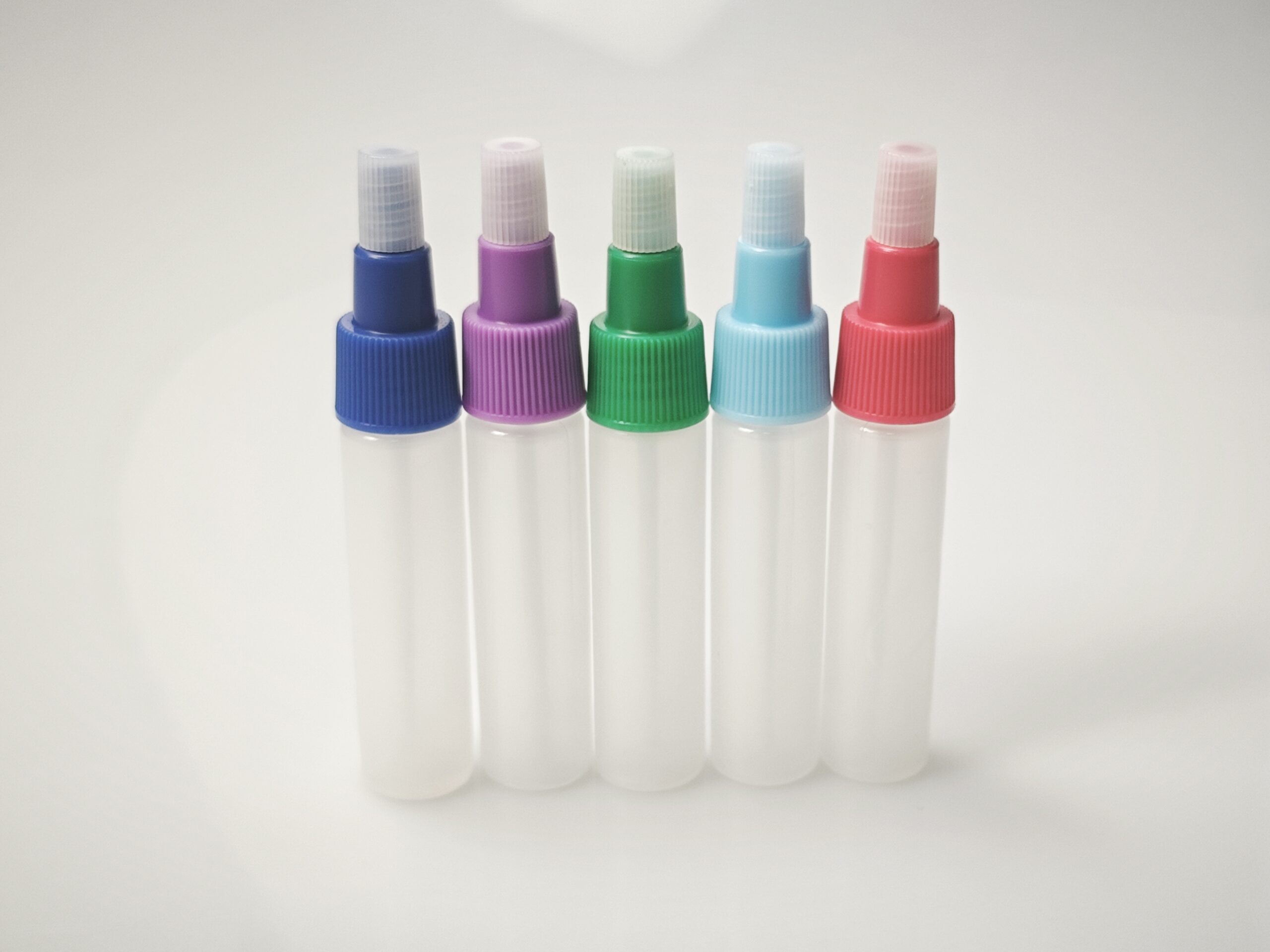
If you’re sourcing FOB collection bottles for a diagnostic kit or screening program, the first question isn’t about cap color or buffer volume. It’s about which test technology you’re supporting — because gFOBT and FIT have fundamentally different requirements, and the bottles are not interchangeable.
This distinction gets collapsed too often in procurement conversations. Here’s what actually separates the two.
The technology gap
Guaiac-based fecal occult blood testing (gFOBT) has been around since the 1970s. It works through a chemical reaction: guaiac, a plant-derived resin, changes color when it contacts heme — the iron-containing component of hemoglobin. The test doesn’t distinguish between human and animal hemoglobin, which is why patients using gFOBT kits are typically asked to avoid red meat for several days before testing. It detects any blood in the GI tract, including from the upper GI, where bleeding from sources like ulcers or aspirin use can produce false positives.
Fecal immunochemical testing (FIT) uses antibodies that bind specifically to human globin — the protein component of hemoglobin. It doesn’t react to dietary heme or to blood from the upper GI tract, because globin gets digested before it reaches the lower colon. This makes FIT both more specific for lower GI bleeding and simpler for patients, with no dietary restrictions.
The clinical evidence is clear. A Cochrane review of 63 studies covering more than 3.7 million patients found FIT to be more sensitive than gFOBT for detecting colorectal cancer and advanced adenomas, with similar specificity. Major gastroenterology bodies, including the US Multi-Society Task Force on Colorectal Cancer, now recommend FIT over gFOBT. Most national screening programs that have evaluated both are in the process of transitioning or have already transitioned to FIT.
What this means for the collection bottle
The chemistry difference translates directly into different collection bottle requirements.
For gFOBT: The traditional format uses a card-based system — patients smear a small stool sample onto a paper card treated with guaiac, which is then developed with hydrogen peroxide in the lab. Bottle-format gFOBT collection exists but is less common. The key requirement is that the collection medium doesn’t introduce peroxidase activity that would interfere with the guaiac reaction. Contamination control is critical.
For FIT: The collection bottle format is the standard. The bottle contains a liquid buffer that stabilizes hemoglobin during transport and preserves the antigenic integrity of the globin protein — which the antibody-based assay needs to be intact to detect. This is where buffer formulation becomes a technical specification rather than a commodity detail.
The stability window matters a lot. Hemoglobin degrades over time, especially at elevated temperatures. A FIT sample collected by a patient at home in summer, posted, and processed three days later has been through conditions that a poorly formulated buffer won’t survive. Studies have shown that hemoglobin degradation in suboptimal collection buffers can reduce apparent hemoglobin concentration by more than 50% over 72 hours at room temperature — the difference between a positive and a negative result on a borderline sample.
Buffer formulation, fill volume accuracy, and cap seal integrity are therefore not just manufacturing specs — they’re clinical performance variables.
Quantitative vs. qualitative: another split
Within FIT, there’s a further distinction that affects bottle specification.
Qualitative FIT gives a yes/no result — above or below a fixed hemoglobin threshold. These are typically used in rapid lateral flow formats and point-of-care settings.
Quantitative FIT measures the actual hemoglobin concentration in the sample, reported in nanograms per milliliter. Quantitative results allow screening programs to set their own positivity threshold, calibrated to their colonoscopy capacity. The UK NHS Bowel Cancer Screening Programme uses a quantitative FIT with an adjustable threshold that lets them manage referral volumes.
For quantitative FIT, sample volume consistency is critical — because the result is a concentration, which depends on the ratio of sample to buffer. A probe that transfers variable amounts of stool will produce variable concentrations independent of the actual hemoglobin level. This is why quantitative FIT collection bottles have tighter specifications on probe geometry and sample uptake volume than qualitative formats.
Choosing the right bottle for your application
For kit manufacturers and procurement teams, the practical takeaway is straightforward:
If you’re building a qualitative FIT kit for point-of-care or pharmacy use, the primary requirements are buffer stability, cap seal reliability, and patient usability. The volume tolerance can be somewhat broader.
If you’re supplying to a quantitative FIT screening program — particularly one running on automated laboratory analyzers — probe geometry, sample volume consistency, and buffer lot-to-lot stability are critical specifications. These programs run calibration curves that assume a defined sample-to-buffer ratio, and variation in collection volume shifts results systematically.
If you’re still working with gFOBT — either because your market hasn’t transitioned or because you’re building a kit for a specific regulatory context — the bottle requirements are different again, centered on contamination control and avoiding interference with the guaiac reaction.
Changfeng Medical produces FOB collection bottles for FIT-based applications, available in configurations suited to both qualitative and quantitative testing formats. Multiple cap colors support multi-sample collection protocols. Buffer formulation, fill volume, and probe specifications are available for review as part of the supplier qualification process.
Contact Changfeng Medical for technical documentation and samples →
Also from Changfeng Medical: Nasal Swab · Double-tip Throat Swab · Urine Collection Products