
Common Mistakes When Selecting Medical Swabs for Laboratory Use

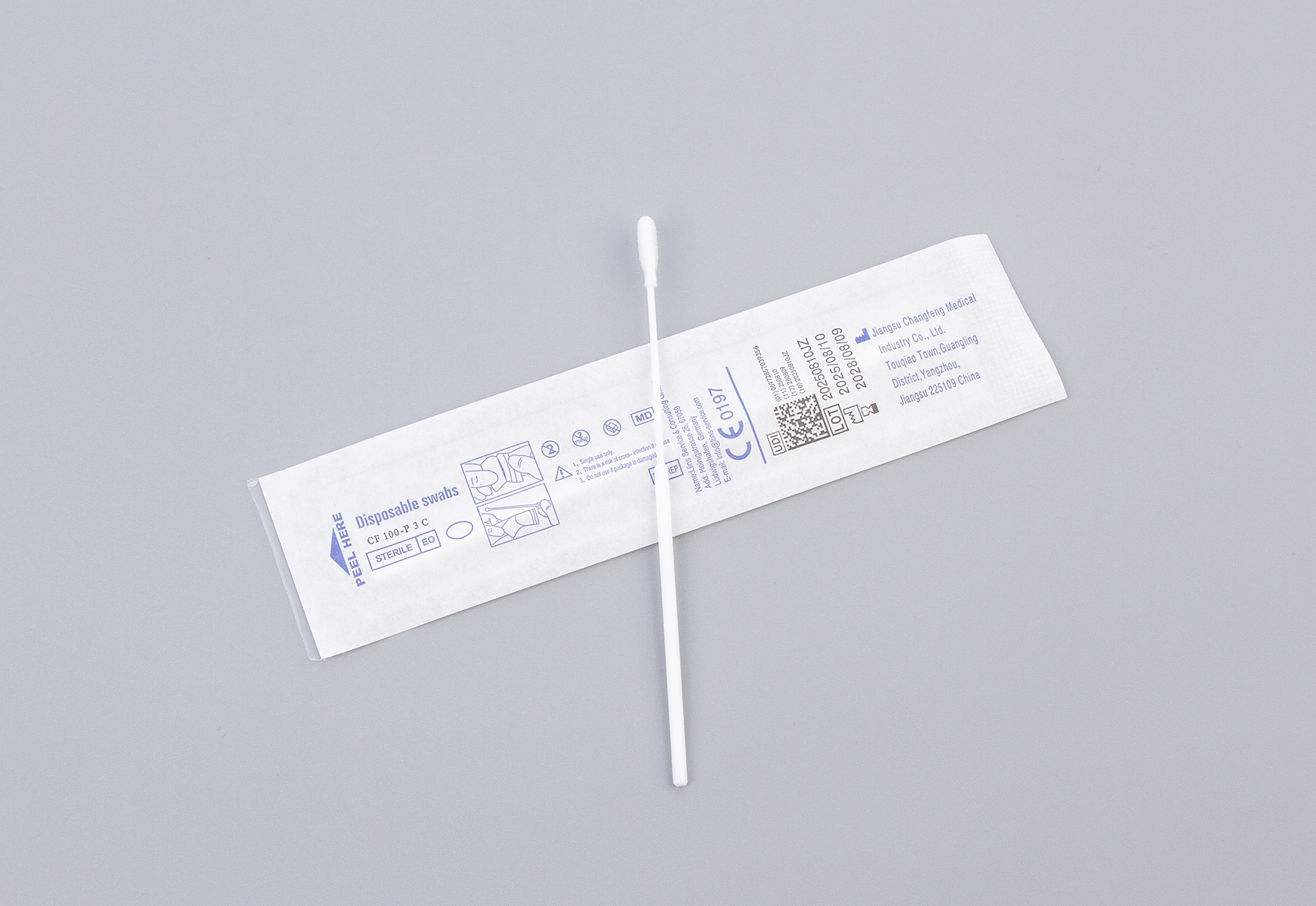
Selecting medical swabs seems straightforward until you discover that your test sensitivity has dropped, your PCR results show unexpected inhibition, or your staff complains that swabs don’t fit your transport tubes. If you’re responsible for laboratory purchasing decisions, avoiding common swab selection mistakes will save you from quality problems, wasted budget, and the disruption of switching products mid-contract. Here are the errors that cost labs the most time and money.
Assuming All Flocked Swabs Are Identical
The Mistake
You see that flocked swabs perform better than cotton swabs in molecular diagnostics, so you purchase flocked swabs from a new supplier based on price alone, assuming they’ll perform the same as your current product because they’re both described as “nylon flocked swabs.”
Why This Fails
Flocking is a manufacturing process, not a product specification. Two flocked swabs can differ in fiber material (nylon vs polyester), fiber length (2mm vs 4mm), fiber density (fibers per square millimeter), adhesive type, core material, surface treatments, and quality control standards. These variations produce measurable performance differences.
Research comparing different flocked swab products found significant variation in DNA recovery efficiency between manufacturers. One product released 1,240 nanograms of DNA while another released substantially less under identical test conditions. If you switch suppliers without validation, you may see changes in your cycle threshold values, detection rates, or test failure rates.
The Fix
Treat each swab product as unique, even if descriptions sound similar. When evaluating alternatives, request samples and perform side-by-side comparisons using your actual test methods. Measure Ct values, nucleic acid recovery, and detection rates. Don’t switch suppliers based solely on cost or marketing claims without validating performance in your laboratory.
Choosing Swabs Before Confirming Tube Compatibility
The Mistake
You order swabs with excellent performance specifications but discover after delivery that the breakpoint is positioned incorrectly for your transport tubes. The swabs either don’t fit inside the tubes with caps closed, or they sit too low, wasting tube volume and potentially failing to maintain contact with transport medium.
Why This Fails
Breakpoint location varies between swab models. Standard transport tubes are typically 12-13 centimeters tall, but there’s enough variation that a breakpoint designed for one tube brand may not work with another. If swabs don’t fit properly, staff must improvise by breaking shafts at unintended locations, which creates splinters, inconsistent specimen positioning, and quality system violations.
The Fix
Before placing large orders, request swab samples and physically test them with your actual transport tubes. Insert the swab, snap at the breakpoint, and verify that the tube cap closes properly with the swab tip submerged in medium at the correct depth. Confirm that the break is clean without splintering. If you’re changing tube suppliers, revalidate swab compatibility rather than assuming your current swabs will still fit.
Ignoring Test Manufacturer’s Specimen Requirements
The Mistake
You purchase swabs without checking whether your molecular diagnostic test kit specifically requires or recommends certain swab types. Later, you discover your test’s instructions for use (IFU) specify synthetic flocked swabs, and the cotton or rayon swabs you bought aren’t validated for that assay.
Why This Fails
Test manufacturers validate their assays using specific specimen collection devices. When they establish performance claims—sensitivity, specificity, limit of detection—those claims apply only to validated collection methods. Using non-validated swabs may reduce sensitivity, increase false negative rates, or introduce inhibition that wasn’t identified during test development.
During regulatory inspections or accreditation audits, you may be required to demonstrate that your specimen collection procedures follow manufacturer specifications. Using non-validated swabs constitutes a deviation that must be justified through your own validation studies.
The Fix
Review the IFU for every test you perform before selecting swabs. Note whether the manufacturer specifies material (synthetic vs cotton), design (flocked vs wound), sterility, or particular product brands. If your preferred swab isn’t listed in the IFU, contact the test manufacturer to confirm whether it’s acceptable or perform your own validation comparing it to the manufacturer’s recommended swabs.
Switching Suppliers Without Validation Testing
The Mistake
Your current swab supplier increases prices, so you switch to a cheaper alternative without performing validation testing. You assume that if both products look similar and have similar specifications on paper, they’ll perform identically in your lab.
Why This Fails
Manufacturing quality, materials sourcing, process controls, and validation rigor vary significantly between suppliers. Products with identical written specifications can differ in PCR inhibition, sample release efficiency, lot-to-lot consistency, sterility assurance, and physical durability.
Clinical laboratories operating under ISO 15189, CAP, or CLIA accreditation must validate or verify any changes to specimen collection devices before implementing them in patient testing. Switching swabs without validation violates quality management requirements and can lead to accreditation deficiencies.
The Fix
Treat supplier changes as method modifications requiring verification testing. Collect paired specimens using both your current and candidate swabs from the same patients. Compare nucleic acid recovery, Ct values, detection rates, and test failure rates. Test for PCR inhibition by spiking swabs with known amounts of target nucleic acid. Evaluate at least three production lots to assess consistency. Document all testing and obtain quality management approval before switching.
Prioritizing Unit Cost Over Total Cost Per Result
The Mistake
You select the cheapest swabs available to reduce per-test costs without considering how swab performance affects overall laboratory expenses. You save money on swabs but lose more through increased repeat testing, lower detection rates, and wasted reagents.
Why This Fails
Swab cost is a small fraction of total test cost. For molecular diagnostics, reagents, labor, instrument time, and overhead typically account for 80-90% of cost per test. A swab that costs 30% less but recovers 40% less nucleic acid may require repeat collections, additional testing, or produce false negatives that delay diagnosis and treatment.
Poor sample release efficiency means you’re paying full price for reagents and instrument time while analyzing suboptimal specimens. If inferior swabs cause your test failure rate to increase from 2% to 5%, the cost of repeating that additional 3% of tests likely exceeds any savings from cheaper swabs.
The Fix
Calculate total cost per reportable result, not just swab cost. Factor in the value of avoiding repeat collections, improving first-pass detection rates, and reducing invalid results. A swab that costs $0.50 instead of $0.30 but improves detection by 10% delivers better value when test reagents cost $15-30 per reaction. Make procurement decisions based on performance and total economic impact, not unit price alone.
Failing to Specify Sterility Requirements
The Mistake
You order swabs without clearly specifying whether sterile or non-sterile products are needed, or you use non-sterile swabs for applications that require sterility, assuming “clean” is good enough.
Why This Fails
Sterile and non-sterile swabs are not interchangeable. Sterile swabs undergo terminal sterilization and are individually packaged to maintain sterility until use. They’re required for bacterial and fungal culture, sterile site sampling, and any application where microbial contamination could compromise results or patient safety.
Non-sterile swabs are manufactured under clean conditions but contain low levels of environmental organisms. Using them for bacterial culture introduces contaminants that make it impossible to distinguish patient pathogens from swab-borne organisms. This produces unreliable results and quality failures.
For viral molecular testing from non-sterile sites like the nasopharynx, non-sterile swabs may be acceptable if validated by your test manufacturer. However, regulatory standards and laboratory accreditation requirements often default to sterile swabs for clinical specimens unless non-sterile use is explicitly justified.
The Fix
Define sterility requirements for each test type before ordering swabs. For bacterial culture, fungal culture, or sterile site sampling, sterile swabs are mandatory. For viral PCR from non-sterile sites, check your test IFU—if non-sterile swabs are allowed and you’ve validated their use, they may be acceptable. Document your sterility requirements in standard operating procedures and ensure purchasing specifications clearly state whether sterile or non-sterile products are needed.
Neglecting Lot-to-Lot Verification
The Mistake
You validate a swab product once during initial selection, then continue ordering it for years without monitoring lot-to-lot performance. You assume that if the first lot worked well, all future lots will be identical.
Why This Fails
Manufacturing processes drift over time. Raw material suppliers change. Quality control practices vary. Even reputable manufacturers can experience lot-to-lot variability in fiber density, adhesive application, shaft material, or sterility assurance if process controls are inadequate.
If you don’t monitor incoming swab quality, you may not notice gradual performance degradation until staff report unexplained test failures or your proficiency testing results decline. By then, you’ve potentially compromised weeks or months of patient results.
The Fix
Establish incoming acceptance criteria for swabs and perform periodic verification testing on new lots. Visual inspection should check for proper breakpoint location, intact packaging, correct labeling, and absence of visible defects. For critical applications, perform functional testing on a sample of swabs from each new lot—test for PCR inhibition, measure sample recovery, or compare Ct values to your historical baseline. Document all incoming inspection and verification activities.
Overlooking Staff Training on Collection Technique
The Mistake
You purchase high-quality swabs but don’t train staff on proper collection technique. Different swab designs require different handling—flexible nasopharyngeal swabs need specific insertion angles, breakpoint-equipped swabs require correct snapping technique, and flocked swabs may perform differently than the cotton swabs your staff is accustomed to.
Why This Fails
Even the best swab delivers poor specimens if used incorrectly. Nasopharyngeal swabs inserted at the wrong angle don’t reach the nasopharynx. Swabs that aren’t rotated against mucosa collect insufficient cells. Breakpoints broken incorrectly produce splintered shafts or improper tube sealing. Flocked swabs that aren’t agitated sufficiently in transport medium don’t release samples completely.
Poor collection technique introduces pre-analytical variation that undermines test accuracy. If different staff members collect specimens using inconsistent methods, your results become less reproducible even though the analytical phase is standardized.
The Fix
Provide hands-on training when introducing new swab types. Demonstrate proper insertion depth and angle for nasopharyngeal swabs. Show staff how to rotate swabs for optimal mucosal contact. Practice breakpoint snapping technique to achieve clean breaks. Create visual aids or quick reference cards showing correct collection procedures. Observe new staff during supervised collections until competency is demonstrated. Update training whenever you change swab products.
Mixing Swab Types Within the Same Test Protocol
The Mistake
To manage inventory or reduce costs, you allow staff to use whatever swabs are available—cotton one day, flocked synthetic the next—assuming that if all swabs are “approved for respiratory specimens,” they can be used interchangeably.
Why This Fails
Different swab materials and designs produce different amounts of recovered nucleic acid. Cotton swabs typically release less than half the sample that flocked synthetic swabs release. If you mix swab types within the same testing batch or across different patient visits, you introduce uncontrolled variability that makes it impossible to compare results meaningfully.
When tracking viral load changes over time in individual patients, using different swab types at different visits can produce apparent viral load changes that actually reflect swab performance rather than clinical status. This misleads clinicians and compromises patient care decisions.
The Fix
Standardize on a single validated swab type for each test. Update your standard operating procedures to specify the exact swab product, including manufacturer and model number. Train staff to use only the specified swab for each test type. If you must maintain multiple swab types for different applications, clearly label them and store them separately to prevent mix-ups. Document in your quality management system why specific swabs are assigned to specific tests.
Ignoring Storage and Expiration Requirements
The Mistake
You order large quantities of swabs to get volume discounts but don’t check shelf life or storage requirements. Six months later, you discover that swabs have expired, packaging has deteriorated in your hot storage room, or sterility can no longer be assured.
Why This Fails
Sterile swabs have defined expiration dates that reflect sterility assurance over time. Using expired sterile swabs violates quality standards and invalidates sterility claims. Even if swabs remain physically intact, sterility assurance degrades beyond the manufacturer’s validated shelf life.
Storage conditions matter. High heat can degrade plastic components, affect adhesives that bond fibers to shafts, or compromise packaging seals. Humidity can affect paper-plastic pouches or promote microbial growth on non-sterile swabs. Direct sunlight can degrade some polymer materials.
The Fix
Check expiration dates before ordering and calculate realistic consumption rates. Order quantities you’ll use within the shelf life, balancing volume discounts against the risk of waste. Store swabs in cool, dry areas away from direct sunlight and heat sources. Implement first-in-first-out inventory rotation. Inspect packaging regularly for damage or deterioration. Discard expired products immediately and document the disposal. If you discover you’ve used expired swabs, investigate the impact through your quality system and determine whether retesting is needed.
Frequently Asked Questions
How much validation testing is required when switching swab suppliers?
At minimum, test for PCR compatibility (no inhibition), compare sample recovery to your current swabs using clinical specimens or reference materials, verify lot-to-lot consistency across multiple production lots, and confirm physical specifications like breakpoint location and packaging integrity. Document all testing and obtain quality management approval before implementation.
Can I skip validation if the new swab is “equivalent” to my current one?
No. Equivalence claims are the manufacturer’s assertion, not verified fact. Different manufacturers use different materials, processes, and quality controls. The only way to confirm performance in your laboratory is to test it with your methods, specimens, and instruments.
What if I discover I’ve been using the wrong swabs for months?
Initiate a quality event investigation immediately. Assess the extent of the problem—how many specimens were affected, which tests, what time period. Determine whether test performance was compromised by reviewing Ct values, failure rates, and detection patterns. Consult with your medical director and quality manager about whether results need to be recalled or patients retested. Document root cause analysis and implement corrective actions to prevent recurrence.
Is it worth paying more for “premium” swabs?
Premium swabs that deliver measurably better sample recovery, lower test failure rates, and more consistent lot-to-lot performance are worth the investment for high-stakes molecular diagnostics. Calculate the total cost per reportable result including reduced repeat testing and better detection sensitivity. For low-complexity applications where sample recovery is less critical, mid-tier products may be adequate.
How do I know if my current swabs are causing problems?
Monitor your Ct values, detection rates, and test failure rates over time. Unexplained increases in Ct values may indicate reduced sample collection or release. Declining detection rates compared to historical baselines or proficiency testing may reflect inadequate swab performance. Staff complaints about swab quality or physical problems (breakpoints that don’t snap cleanly, tips that fall off) signal quality issues.
What documentation should I keep for swab procurement?
Maintain certificates of analysis for each lot, sterility documentation for sterile swabs, regulatory clearances (510(k), CE mark), validation study results, supplier quality agreements, incoming inspection records, and records of any quality issues or corrective actions. This documentation supports regulatory inspections, accreditation audits, and root cause investigations.
Should I standardize swabs across all tests or use different products for different applications?
Standardization simplifies inventory, reduces training complexity, and eliminates the risk of using the wrong swab type. However, if some tests genuinely benefit from specialized swabs (e.g., bacterial culture might work fine with rayon while molecular tests need synthetic flocked), maintaining separate inventories may be justified. Prioritize simplicity unless there’s a clear performance advantage to using multiple products.
How can I convince management to approve higher-quality swabs?
Present data showing total cost per result, not just unit cost. Demonstrate how better swabs reduce repeat testing, improve detection rates, and prevent quality failures that lead to retesting or regulatory findings. Calculate the cost of test reagents and labor wasted on suboptimal specimens. Show that a modest increase in swab cost delivers significant savings in overall laboratory operations.
Avoid These Mistakes for Better Laboratory Performance
Swab selection directly affects test accuracy, laboratory efficiency, and quality system compliance. Avoid the common mistakes of assuming all flocked swabs are identical, ignoring tube compatibility, skipping validation when changing suppliers, prioritizing unit cost over performance, and neglecting lot-to-lot verification.
Treat swab procurement as a critical quality decision, not a commodity purchase. Validate products before use, document your selection rationale, train staff properly, and monitor performance over time. The effort you invest in thoughtful swab selection pays off through better results, fewer quality problems, and more efficient operations.
Need guidance on establishing swab selection criteria and validation protocols for your laboratory? Our technical team can provide recommendations based on your specific testing requirements and help you avoid these costly mistakes.