
FOB Sampling Bottles and the Quiet Shift in Colorectal Cancer Screening

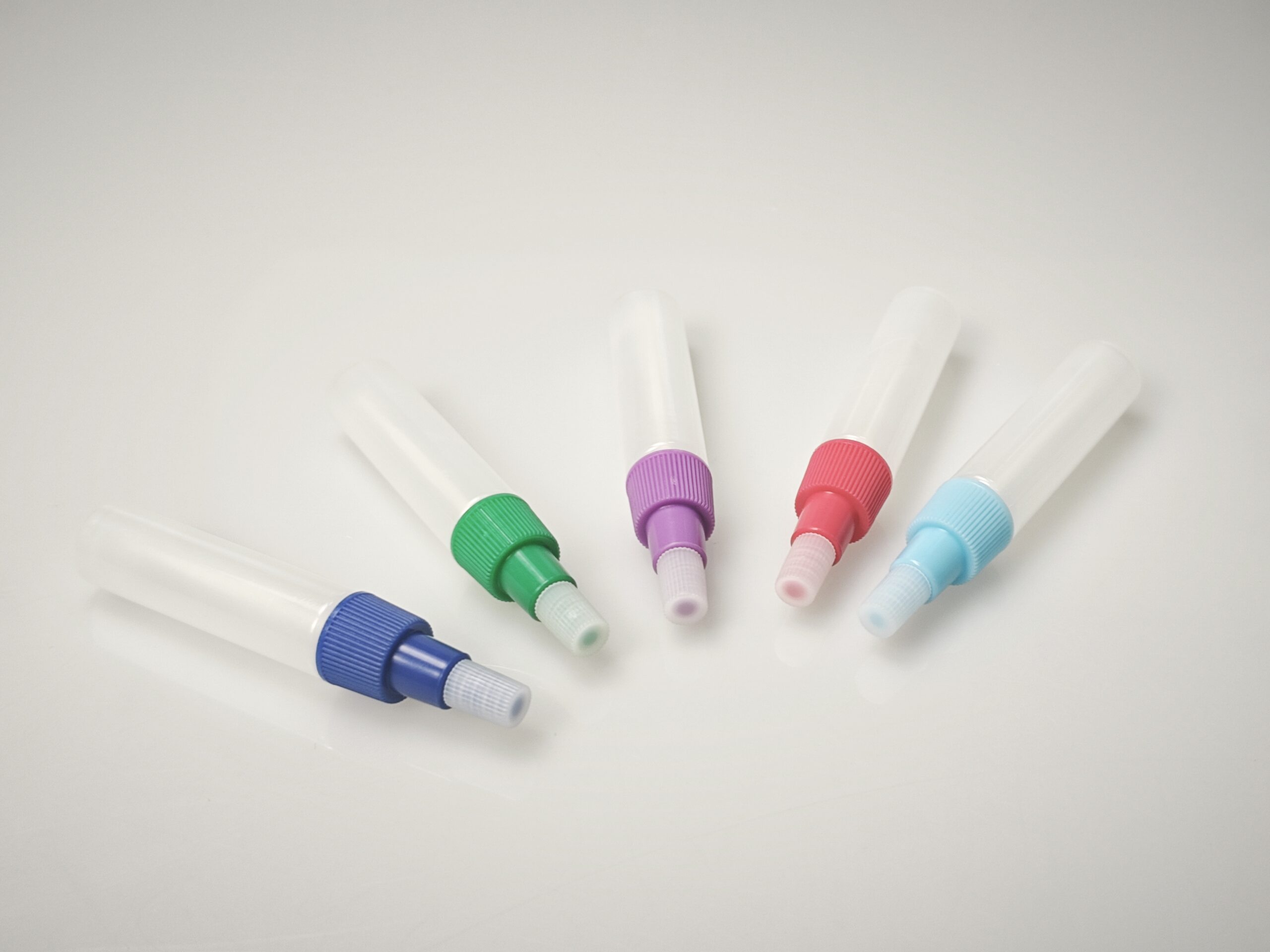
Colorectal cancer is one of the most preventable cancers in the world — if caught early. The catch is that early-stage colorectal cancer almost never produces symptoms. By the time someone notices something wrong, the disease is often well advanced. This is precisely why fecal occult blood (FOB) testing exists, and why the humble FOB sampling bottle is a more consequential piece of equipment than it appears.
What FOB testing actually does
The fecal occult blood test looks for traces of blood in stool that are invisible to the naked eye. Small amounts of bleeding from polyps or early-stage tumors in the colon get mixed into stool during normal bowel movements — the test detects this before any other symptom appears.
Two main technologies dominate the market. The guaiac-based test (gFOBT) uses a chemical reaction to detect heme in stool. The fecal immunochemical test (FIT) uses antibodies to detect human hemoglobin specifically, which gives it better specificity for lower GI bleeding and fewer dietary restrictions for the patient. FIT has increasingly replaced gFOBT in national screening programs across Europe, Australia, Japan, and much of Asia — largely because it performs better and is easier for patients to complete correctly at home.
Both formats depend entirely on the quality of the sample collection step. Which is where the bottle comes in.
Why the collection bottle matters more than it looks
An FOB sampling bottle is a simple device: a plastic tube with a preservative buffer inside, a screw cap, and a sampling probe or applicator attached to the cap. The patient collects a small stool sample, inserts it into the buffer solution, and sends the sealed bottle to a lab.
Simple in principle. But the failure modes are worth understanding:
Preservative integrity. The buffer inside the tube stabilizes hemoglobin and prevents bacterial degradation of the sample during transport. If the seal is compromised — through a leaking cap, inadequate fill volume, or a poorly designed closure — sample quality degrades before it reaches the lab. A degraded sample produces false negatives, which is the worst outcome in a cancer screening context.
Sampling probe design. The probe needs to transfer a reproducible, adequate sample volume. Too little sample and the assay doesn’t have enough material to work with. Too much and the buffer concentration changes. The geometry of the probe — its length, tip design, and how it seals into the cap — directly affects this.
Cap reliability. In a screening program where patients are collecting samples at home without clinical supervision, the cap needs to close securely and intuitively, every time. A cap that requires force to close, or that patients aren’t sure is properly sealed, is a patient compliance problem.
Color coding. In multi-sample collection protocols — where patients collect samples from different bowel movements over consecutive days — color-coded caps are a standard practice for reducing collection errors. It’s a design detail that matters at scale.
The screening program context
FOB testing isn’t primarily a clinical product — it’s a public health product. The biggest buyers are national and regional colorectal cancer screening programs that distribute test kits to entire population cohorts, typically everyone aged 45 and over.
In the UK, the NHS sends FIT kits to over 4 million people annually. Similar programs run across Germany, France, the Netherlands, Australia, and Taiwan. In China, the National Cancer Center has been progressively expanding colorectal cancer screening coverage as part of broader health infrastructure development.
For the suppliers feeding these programs, the procurement requirements are distinct from typical hospital supply chains. Volume is high and predictable. Regulatory requirements are stringent — CE IVDR for EU markets, TGA for Australia, and various national standards elsewhere. Documentation for tender submissions typically includes stability data, method validation reports, and compatibility data showing the collection buffer performs with the specific assay the screening program uses.
Batch consistency matters enormously. A screening program that switches suppliers mid-cycle risks introducing variability into their assay baseline. Procurement teams at this level are not just buying a bottle — they’re buying a validated component of a clinical system.
What Changfeng Medical offers in this category
Changfeng Medical produces FOB sampling bottles for FIT-based testing, available in multiple cap configurations and color options to support multi-sample collection protocols. The design uses a stable collection buffer compatible with mainstream FIT analyzers, with a sealed probe cap that provides a reliable sample transfer volume.
Produced under ISO 13485 with CE MDR certification, the product line is suitable for both clinical distribution and integration into branded screening kit programs. OEM customization — including labeling, packaging configuration, and buffer volume specification — is available for distributors building their own branded kit.
If you’re evaluating FOB collection components for a screening program tender or a diagnostic kit product line, Changfeng Medical’s team can provide technical documentation and sample lots on request.
Also from Changfeng Medical: Nasal Swab · Double-tip Throat Swab · Urine Collection Products