How Swab Design Affects Sample Quality in Molecular Diagnostics

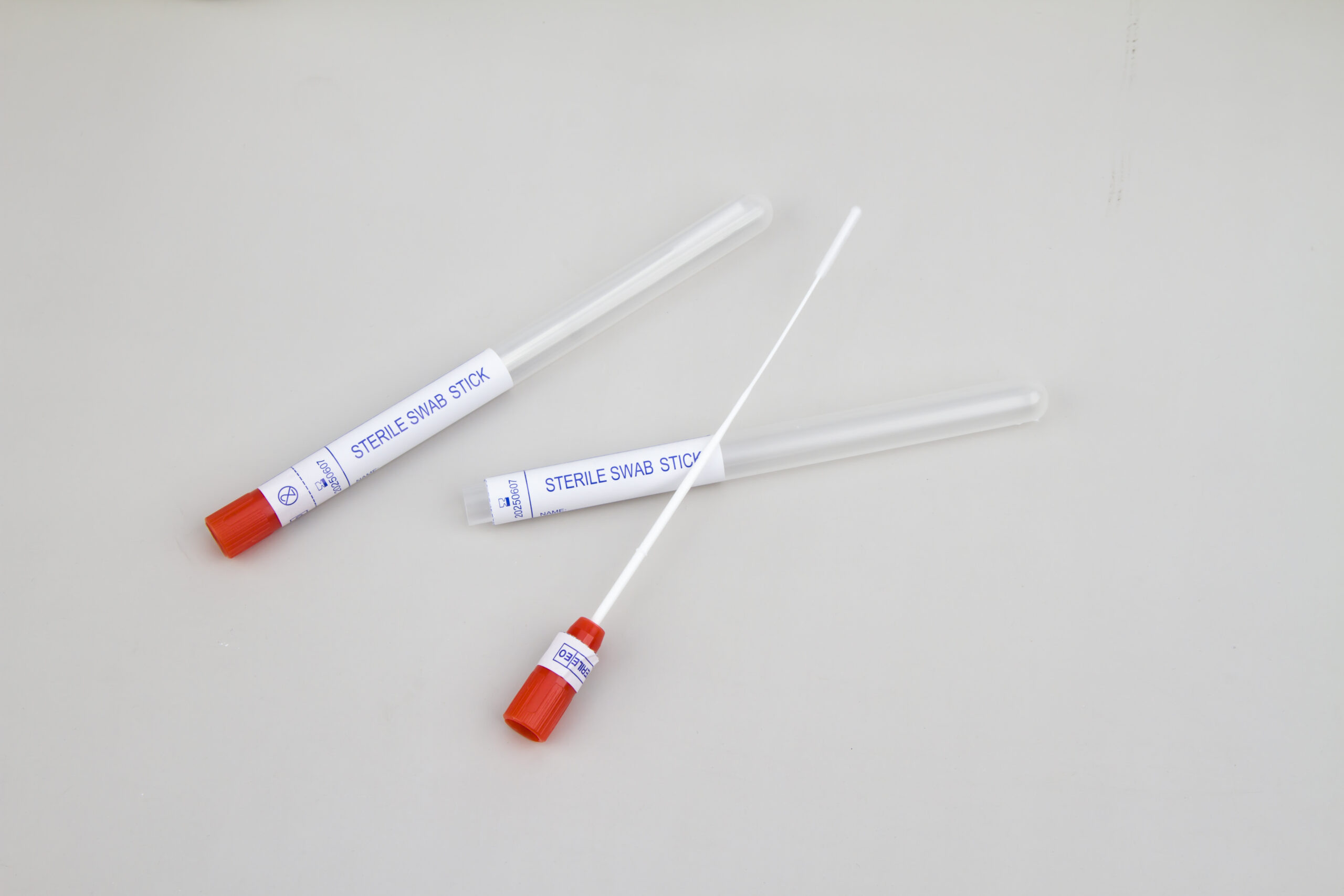
When your lab runs molecular diagnostics, the physical design of your specimen collection swab directly impacts how much nucleic acid reaches your test system. If you’re experiencing inconsistent results, low viral loads, or unexpected test failures, the problem might not be your reagents or instruments—it could be your swabs. Understanding how fiber arrangement, shaft design, tip geometry, and breakpoint engineering affect sample collection and release will help you select swabs that deliver consistent, high-quality specimens.
Fiber Architecture: Flocked vs Wound Construction
Flocked Swab Design
Flocked swabs use electrostatic application to stand short synthetic fibers—typically 2-4 millimeters long—perpendicular to a molded plastic core. This creates a brush-like structure with thousands of fiber ends oriented outward. The spacing between fibers forms open channels that allow specimens to move in and out of the structure easily.
The vertical fiber orientation means that collected cells, viral particles, and secretions contact fiber ends rather than wrapping around fiber shafts. When you agitate the swab in transport medium or extraction buffer, samples release rapidly because there’s minimal surface area for specimens to adhere to and no internal fiber matrix to trap material.
Research quantifying this difference found that flocked swabs released approximately 1,240 nanograms of DNA into extraction buffer, while traditional wound swabs released only 184 nanograms under identical conditions. This six-fold difference in recovery translates directly to test sensitivity—more target nucleic acid in your reaction means lower cycle threshold values and better detection of low-abundance pathogens.
Wound Swab Design
Traditional wound or wrapped swabs use longer fibers—often several centimeters—wound around a central shaft in layers. This creates a denser, more absorbent structure where fibers cross over each other repeatedly, forming an internal matrix.
The layered construction makes wound swabs excellent at absorbing liquid. They can soak up secretions effectively during collection. However, this same property becomes a liability during sample release. Specimens penetrate deep into the fiber layers and become physically trapped. When you try to recover the sample, much of it remains bound within the internal structure.
Environmental sampling studies have documented this effect. In one comparison, cotton wound swabs achieved 96.5% collection efficiency from test surfaces but released only a fraction of collected material into liquid medium. The swabs picked up the target organisms successfully but failed to deliver them to the analytical system.
Tip Geometry and Surface Contact
Tip Size and Shape
The tip must be appropriately sized for the anatomical site you’re sampling. Nasopharyngeal swabs require narrow tips—typically 2-3 millimeters in diameter—that fit comfortably through the nostril and can navigate the nasal passage. Larger tips cause discomfort and may not reach the nasopharynx.
Oropharyngeal swabs can use larger tips—4-6 millimeters in diameter—because the posterior pharynx is more accessible. Larger tips contact more mucosal surface area, potentially collecting more specimen material per swab.
Tip shape also matters. Rounded or tapered tips minimize trauma to delicate mucosa during sampling. Sharp or irregular edges can cause discomfort, bleeding, or tissue damage, which not only affects patient experience but can introduce blood or cellular debris that may interfere with downstream testing.
Fiber Density
The number of fibers per unit area affects sample collection capacity. Higher fiber density provides more surface contact points for specimen adherence. However, if density becomes too high, the space between fibers narrows, reducing fluid penetration and making sample release more difficult.
Manufacturers optimize fiber density based on the intended application. Swabs designed for molecular diagnostics balance sufficient fiber coverage for effective collection with adequate spacing for efficient release. Quality control during manufacturing ensures consistent fiber density across production lots.
Shaft Design and Material
Flexibility and Strength
Nasopharyngeal swabs require flexible shafts that can navigate the curved nasal passage without causing trauma. The shaft must bend to follow anatomical contours but remain stiff enough that the operator maintains control during insertion and rotation.
Shaft flexibility comes from material selection and shaft geometry. Polystyrene and polypropylene shafts can be engineered to provide the right balance of flexibility and rigidity through control of polymer formulation, wall thickness, and cross-sectional shape.
Insufficient flexibility makes swabs uncomfortable and difficult to insert correctly. Excessive flexibility makes them hard to control—the swab may buckle during insertion or fail to reach the target site.
Shaft Material and PCR Compatibility
Wooden shafts should be avoided for molecular diagnostics. Wood can leach substances that inhibit PCR and other enzymatic reactions. Studies have identified wooden swab components as sources of amplification inhibition, leading most laboratories to standardize on plastic-shafted swabs for nucleic acid testing.
Plastic shafts made from polystyrene or polypropylene are chemically inert and do not interfere with molecular assays. These materials are also more consistent in manufacturing, reducing lot-to-lot variability.
Shaft Length
Shaft length must be adequate to reach the target anatomical site while leaving enough external length for the operator to grip comfortably. Nasopharyngeal swabs typically require 15 centimeters or more total length to reach the posterior nasopharynx in adults while providing sufficient handle length.
Pediatric swabs use shorter lengths appropriate for children’s anatomy. Using adult-length swabs in pediatric patients provides no advantage and may increase the risk of improper insertion depth or difficulty controlling the swab.
Breakpoint Engineering
Purpose and Function
The breakpoint is a pre-scored section of the shaft that allows the swab to snap cleanly at a predetermined location. After specimen collection, you insert the swab into a transport tube, snap the shaft at the breakpoint, and seal the tube with the swab tip submerged in transport medium.
This design serves multiple purposes. It ensures the specimen remains in contact with preservative medium during transport and storage. It prevents contamination that could occur if the swab projected out of an unsealed tube. It also standardizes the swab length across all specimens, which can simplify automated processing.
Breakpoint Location and Tube Compatibility
The breakpoint must be positioned so that when the shaft snaps, the remaining portion fits inside your transport tube with the cap closed. Standard transport tubes are typically 12-13 centimeters tall, so breakpoints are usually located 3-4 centimeters from the swab tip.
Mismatched breakpoint height and tube dimensions create problems. If the breakpoint is too high, the swab won’t fit in the tube, forcing staff to improvise by breaking the shaft at an unintended location or leaving tubes improperly sealed. If the breakpoint is too low, excess shaft length wastes tube volume and may interfere with tube closure.
When evaluating swab suppliers, verify that breakpoint dimensions match your transport tube specifications. Request samples and physically test the fit before committing to large orders.
Clean Break Performance
A well-designed breakpoint snaps cleanly with moderate finger pressure, producing a smooth break without splintering or leaving sharp edges. Poor breakpoint design requires excessive force to snap, may produce jagged breaks, or can fail to separate completely, leaving the shaft partially attached.
Splinter formation during breaking can contaminate the specimen or create injury hazards for laboratory staff. Inconsistent break location across a production lot indicates poor manufacturing quality control.
Surface Treatment and Coating
Hydrophilic Treatments
Some synthetic fiber swabs receive surface treatments to enhance hydrophilicity—the ability to absorb aqueous specimens. Untreated nylon and polyester fibers are naturally somewhat hydrophobic, meaning they don’t readily absorb water-based samples.
Surface treatments modify the fiber’s chemical properties to improve fluid uptake. This can enhance initial specimen collection, particularly from moist mucosal surfaces. However, the treatment must not interfere with sample release or introduce substances that inhibit downstream testing.
Not all flocked swabs receive hydrophilic treatment, and treatment methods vary between manufacturers. If you’re comparing swabs from different suppliers and notice performance differences, surface treatment may be a contributing factor.
Avoiding Contaminants
Manufacturing processes must prevent contamination of swab surfaces with substances that could interfere with molecular testing. Potential contaminants include residual processing chemicals, mold release agents from plastic molding, adhesives used to attach fibers or tips, and environmental particulates.
Quality manufacturers implement clean room production, validated cleaning processes, and lot testing to ensure swabs are free of PCR inhibitors, nucleases, and microbial contamination. Request certificates of analysis and quality documentation from your supplier to verify these controls are in place.
Packaging Design
Individual vs Bulk Packaging
Sterile swabs for clinical diagnostics are individually packaged in peel pouches that maintain sterility until use. The packaging must provide an effective microbial barrier, be easy to open without contaminating the swab, and display lot numbers and expiration dates clearly.
Bulk packaging—multiple swabs in a single bag or container—reduces cost and waste but is only appropriate for non-sterile applications. Bulk-packed swabs require careful handling to prevent cross-contamination during removal from the container.
Packaging Materials
Packaging materials must not interact with the swab or shed particles that could contaminate specimens. Paper-plastic composite pouches are common for sterile swabs because they withstand sterilization processes and provide reliable seals.
Packaging should protect swabs from physical damage during shipping and storage. Bent or broken swabs are unusable and increase costs through waste. Inspect incoming shipments for packaging integrity and handle swab containers carefully to prevent damage.
Quality Consistency Across Manufacturing Lots
Why Lot-to-Lot Variation Matters
Even when using the same swab model from the same manufacturer, performance can vary between production lots if manufacturing controls are inadequate. Variations in fiber density, fiber length, adhesive application, shaft material, or surface treatment can affect sample collection and release.
For clinical laboratories, lot-to-lot inconsistency introduces unwanted variability in test results. You may notice changes in cycle threshold values, detection rates, or test failure rates when switching to a new swab lot.
Supplier Quality Management
Select suppliers with robust quality management systems that control critical manufacturing parameters and perform lot release testing. Request information about their quality controls, including:
- In-process monitoring of fiber density, length, and adhesion
- Lot release testing for sterility (if applicable), functional performance, and absence of inhibitors
- Certificates of analysis for each production lot
- Validated manufacturing processes with documented process controls
- Traceability systems that allow tracking from raw materials through finished products
Establish acceptance criteria for incoming swab lots. If your laboratory quality system includes incoming inspection, test key parameters such as shaft breakpoint location, tip dimensions, and packaging integrity. For critical applications, consider performing periodic performance verification using clinical specimens or reference materials.
Design Trade-offs and Selection Criteria
No single swab design optimizes all parameters simultaneously. Flocked swabs deliver superior sample release but cost more than wound swabs. Highly flexible shafts are comfortable for patients but can be harder for operators to control. Larger tips collect more specimen but may not fit through narrow anatomical passages.
Prioritize design features based on your specific application requirements:
- For molecular diagnostics where sensitivity is critical: Choose flocked synthetic fiber swabs with validated PCR compatibility, even if unit cost is higher
- For nasopharyngeal sampling: Prioritize appropriate shaft length, flexibility, and small tip diameter
- For high-volume screening programs: Balance performance with cost, but don’t sacrifice quality to the point where test sensitivity suffers
- For pediatric applications: Select appropriately sized swabs rather than using adult designs
Frequently Asked Questions
Can I use the same swab for multiple anatomical sites?
Not recommended. Swabs are designed with specific tip sizes, shaft lengths, and flexibility appropriate for particular sampling sites. Using a nasopharyngeal swab for oropharyngeal sampling works but is not optimal. Using an oropharyngeal swab for nasopharyngeal sampling likely won’t reach the target site. Use purpose-designed swabs for each specimen type.
Why do some flocked swabs perform better than others?
Flocking is a manufacturing process, not a product specification. Fiber material, fiber length, fiber density, adhesive type, core material, surface treatments, and quality controls all vary between manufacturers. Two products both described as “flocked nylon swabs” may perform quite differently. Always validate specific products rather than assuming all flocked swabs are equivalent.
How can I tell if my swabs have good quality control?
Request quality documentation from your supplier including certificates of analysis, manufacturing process validation summaries, and quality system certifications (ISO 13485 or equivalent). Perform incoming inspection on sample lots. Monitor test performance metrics—if you notice sudden changes in Ct values or detection rates when switching swab lots, quality control may be inadequate.
Do more expensive swabs always perform better?
Not always, but usually for molecular diagnostics. Higher prices often reflect better materials, more sophisticated manufacturing, tighter quality controls, and validation studies. However, price alone doesn’t guarantee performance. Validate swabs based on measured performance, not cost. A moderately priced swab that meets your requirements is better than an expensive swab that doesn’t.
Can I modify swabs to fit my tubes?
Breaking swabs at unintended locations can produce splintered edges, inconsistent tip positions, and quality system non-conformances. If swabs don’t fit your transport tubes properly, find swabs with correctly positioned breakpoints rather than improvising. Work with your supplier to identify compatible products or consider changing tube sizes.
What should I do if swabs arrive damaged?
Document the damage with photos, quarantine the affected lot, and contact your supplier immediately. Do not use damaged swabs for patient testing. Review your receiving procedures to identify whether damage occurred during shipping or from improper handling after receipt. Establish clear acceptance criteria for incoming swab shipments.
How often should I revalidate swabs?
Revalidate when changing suppliers, switching to a different swab model, or if you notice performance changes. If using the same product from the same supplier, periodic verification testing (annually or when lot performance raises concerns) is appropriate. Document all validation and verification activities in your quality management system.
Are there industry standards for swab design?
Various standards address specimen collection swabs, including ISO standards for medical devices and CLSI guidelines for specimen collection and handling. However, these standards provide general requirements rather than detailed design specifications. Rely on product validation, manufacturer documentation, and your own performance testing rather than assuming compliance with standards guarantees adequate performance.
Optimize Sample Quality Through Better Design
Swab design directly determines how much target nucleic acid reaches your test system. Flocked fiber architecture, appropriate tip geometry, proper shaft flexibility, correctly positioned breakpoints, and consistent manufacturing quality all contribute to reliable specimen collection and efficient sample release.
Don’t treat swabs as commodity items where the cheapest option wins. Evaluate design features against your specific testing requirements, validate candidate products in your laboratory, and select suppliers with documented quality management systems. The right swab design improves diagnostic sensitivity and reduces costly repeat testing.
Need technical specifications on swab design features for your molecular diagnostics applications? Our team can provide detailed product documentation, design comparisons, and samples for validation testing.