How to Choose a Swab for PCR Testing: A Technical Guide for Labs

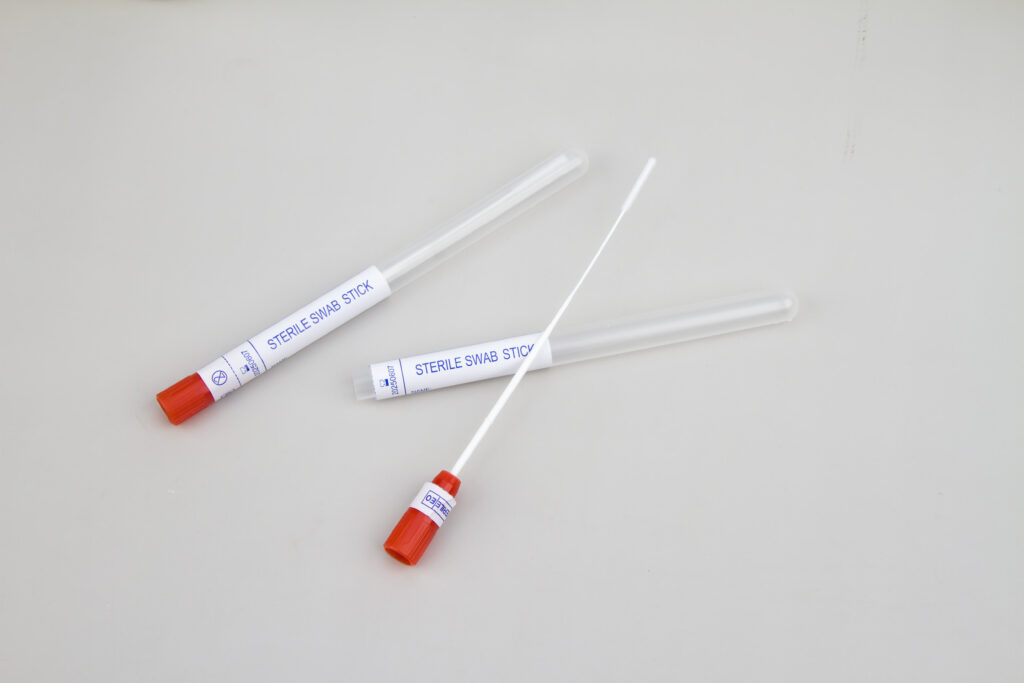
When your lab runs PCR or other nucleic acid amplification tests, the swab you choose directly affects sample quality, test sensitivity, and result reliability. If you’re selecting swabs for molecular diagnostics, you need to verify that your swabs won’t inhibit amplification, that they collect and release sufficient target material, and that they’re compatible with your extraction and detection protocols.
Why Swab Selection Matters for PCR
PCR testing requires adequate amounts of nucleic acid to reach the detection threshold. A swab that collects too little sample, traps collected material in its fibers, or introduces inhibitory substances can produce false negatives or invalid results.
Health Canada’s guidance on swab safety and effectiveness specifically identifies two major failure modes: swabs that inhibit PCR reactions, and swabs that fail to collect or release sufficient sample. Both issues can compromise diagnostic accuracy, and both are preventable through proper swab selection and validation.
Material Compatibility: What Works and What Doesn’t
Not all swab materials are suitable for molecular diagnostics. Some materials can interfere with enzymatic reactions or introduce contaminants that affect amplification.
Recommended Materials
Synthetic fibers such as nylon flocked swabs and polyester swabs are widely used for PCR testing because they do not contain PCR inhibitors and release samples efficiently. These materials have been validated across multiple test platforms for respiratory virus detection, sexually transmitted infection testing, and other molecular diagnostic applications.
Rayon swabs are also used in some molecular testing protocols, though performance varies by manufacturer and product design.
Materials That May Cause Problems
Cotton swabs can introduce complications. Cotton fibers may shed into samples during handling, and some cotton products contain residues from processing that can inhibit PCR. That said, not all cotton swabs fail in molecular diagnostics—cotton swabs with plastic shafts have been successfully validated for certain viral detection protocols when paired with appropriate transport media and extraction methods.
Calcium alginate and wooden-shaft swabs are generally not recommended for molecular testing. Calcium alginate can interfere with nucleic acid extraction, and wooden shafts may leach substances that inhibit amplification.
Sample Collection and Release Efficiency
Your swab must do two things well: collect target cells or pathogens from the sampling site, and release them into your transport medium or extraction buffer.
Flocked swabs with vertically arranged synthetic fibers excel at both tasks. The open structure allows specimens to move easily between fibers during collection and facilitates complete release when the swab is agitated in liquid medium. Research comparing flocked swabs to traditional wound swabs found that flocked designs released significantly more DNA into extraction buffer, which translates to better PCR sensitivity.
Traditional wrapped-fiber swabs, including many cotton designs, can trap collected material within their internal structure. If your lab has experienced unexpectedly low viral loads or borderline-positive results despite strong clinical suspicion, inadequate sample release may be contributing to the problem.
Validating Sample Release in Your Lab
You can assess sample release performance by testing swabs against a reference standard using clinical specimens or spiked samples. Compare the cycle threshold (Ct) values or quantitative results between your current swab and candidate alternatives. Lower Ct values or higher recovered RNA/DNA concentrations indicate better sample release.
Swab Design and Sampling Site
The anatomical site you’re sampling determines the appropriate swab length, tip size, and shaft flexibility.
Nasopharyngeal Swabs
Nasopharyngeal (NP) swabs require sufficient length to reach the posterior nasopharynx—typically 15 cm or longer for adults. The shaft must be flexible enough to navigate the nasal passage without causing trauma, but rigid enough to maintain control during sampling. The tip should be small enough to enter the nostril comfortably but large enough to contact mucosal surfaces effectively.
For respiratory virus detection, NP swabs generally provide higher viral loads than anterior nasal or throat swabs, which can improve PCR sensitivity.
Oropharyngeal Swabs
Oropharyngeal (OP) swabs are shorter and have larger tips designed for sampling the posterior pharynx and tonsillar areas. They’re easier for patients to tolerate than NP swabs, but may collect lower viral loads for certain respiratory pathogens.
Anterior Nasal and Mid-Turbinate Swabs
These shorter swabs are less invasive and can be used for self-collection in some testing programs. Sample quality may be lower than NP specimens, so verify that your test’s analytical sensitivity is sufficient for the expected viral loads from these sites.
Breakpoint Design
Many swabs used for PCR testing feature a pre-determined breakpoint that allows the shaft to snap cleanly, leaving the tip submerged in transport medium inside a sealed tube. This design prevents contamination during transport and ensures the specimen remains in contact with the medium. Verify that the breakpoint is located at the correct height for your transport tubes.
Transport Medium and Storage
The swab is only part of the specimen collection system. Your transport medium must preserve nucleic acids during the interval between collection and testing.
Viral Transport Medium (VTM)
VTM contains protein stabilizers, antibiotics, and antifungals to maintain viral viability and prevent bacterial overgrowth. It’s widely used for respiratory virus PCR testing, including influenza, SARS-CoV-2, and RSV.
Universal Transport Medium (UTM)
UTM supports a broader range of organisms, including bacteria, viruses, chlamydia, mycoplasma, and ureaplasma. It’s commonly used in multi-pathogen testing panels.
Dry Swabs
Some test protocols permit dry swab transport, where the swab is placed in an empty sterile tube without medium. This approach works when samples will be processed quickly, but nucleic acid stability may be reduced compared to wet transport. Confirm that your test manufacturer allows dry swab collection before adopting this method.
Storage Conditions
Follow your test’s storage requirements carefully. Many viral specimens can be held at 2-8°C for 48-72 hours, but longer delays may require freezing at -70°C or colder. Some transport media are stable at room temperature, while others must be refrigerated. Verify storage limits with your test’s instructions for use (IFU).
Validating Swabs for Your PCR Platform
Even if a swab is marketed for molecular diagnostics, you should verify its performance with your specific test system, extraction method, and specimen types.
What to Test
- PCR compatibility: Confirm that the swab does not introduce inhibitors. Test by spiking swabs with known concentrations of target nucleic acid, processing them through your standard extraction and amplification workflow, and comparing Ct values to control samples without swabs.
- Sample recovery: Compare the amount of nucleic acid recovered from the candidate swab versus your current standard using patient specimens or reference materials.
- Reproducibility: Test multiple swabs from different lot numbers to verify consistent performance across manufacturing batches.
- Clinical performance: If possible, collect paired samples using both your current and candidate swabs from the same patients, and compare detection rates and Ct values.
Regulatory and Quality Requirements
Swabs used in diagnostic testing must meet applicable regulatory standards. In the United States, specimen collection swabs are typically Class I or Class II medical devices. In the European Union, they fall under the In Vitro Diagnostic Regulation (IVDR). Request certificates of analysis, sterility validation, and any available performance data from your supplier.
Your laboratory’s quality management system should document swab specifications, supplier qualification, and ongoing lot acceptance criteria. If you change swab suppliers or switch to a different swab model, treat it as a method modification and perform appropriate verification studies.
Common Mistakes to Avoid
Assuming All Flocked Swabs Are Identical
Flocked swabs vary by fiber type, fiber density, tip shape, shaft material, and manufacturing process. Performance differences between brands can be significant. Don’t assume that switching from one flocked swab to another will produce identical results without validation.
Ignoring Swab Lot Variability
Even within the same product line, manufacturing variability can affect performance. Establish specifications with your supplier and test incoming lots periodically, especially if you notice changes in Ct values or detection rates.
Using Swabs Beyond Their Intended Sampling Site
A swab designed for nasopharyngeal sampling may not perform well for vaginal, rectal, or wound specimens. Use swabs validated for your specific anatomical site and specimen type.
Overlooking Transport Medium Compatibility
Some swabs perform differently depending on whether they’re used with VTM, UTM, saline, or dry transport. Validate the complete collection system—swab plus medium—rather than testing components separately.
Practical Selection Checklist
When evaluating swabs for PCR testing, work through this checklist:
- Confirm the swab material is compatible with nucleic acid amplification (synthetic fibers preferred)
- Verify the swab design matches your sampling site (NP, OP, nasal, other)
- Check that shaft length, flexibility, and tip size are appropriate
- Ensure the swab is sterile and individually packaged
- Confirm breakpoint location matches your transport tube dimensions
- Verify compatibility with your transport medium
- Request product specifications, regulatory certifications, and performance data
- Perform internal validation testing before implementing in routine use
- Document swab specifications in your laboratory procedures
- Establish lot acceptance criteria with your supplier
Frequently Asked Questions
Can I use the same swab for bacterial culture and PCR?
Not necessarily. Swabs designed for bacterial culture often use materials or transport media that preserve bacterial viability but may not be optimal for nucleic acid recovery. If you need to perform both culture and PCR from the same specimen, collect two separate swabs or use a transport medium validated for both applications.
Do I need different swabs for RNA viruses versus DNA viruses?
The swab itself doesn’t distinguish between RNA and DNA viruses, but your transport medium and storage conditions might. VTM is commonly used for RNA viruses like influenza and SARS-CoV-2. DNA viruses such as adenovirus or HSV can also be transported in VTM. Verify that your medium and storage protocol are appropriate for your target pathogen.
How do I know if a swab is inhibiting my PCR?
Spike a known concentration of target nucleic acid onto swabs, process them through your extraction and amplification workflow, and compare Ct values to control samples without swabs. If Ct values are consistently higher (indicating less amplification) or if you see amplification failure, the swab may be introducing inhibitors.
Can I use cotton swabs if I validate them in my lab?
Yes, if your validation demonstrates that the specific cotton swab product performs adequately with your extraction and amplification methods. Some cotton swabs have been successfully used in molecular diagnostics, but you must verify performance rather than assuming compatibility.
What’s the difference between a flocked swab and a spun-fiber swab?
Flocked swabs have short synthetic fibers arranged perpendicular to the shaft, creating an open brush-like structure. Spun-fiber or wound swabs have longer fibers wrapped around the tip, forming a denser structure. Flocked swabs generally release samples more efficiently, but both types can work for PCR if properly validated.
Should I collect one swab or two for PCR testing?
Follow your test manufacturer’s instructions. Some protocols call for a single swab placed in transport medium. Others may recommend collecting two swabs and pooling them in one tube, or collecting separate swabs for different anatomical sites. Do not deviate from validated protocols without performing your own verification.
How long can I store swab specimens before PCR testing?
Storage stability depends on the pathogen, transport medium, and temperature. Consult your test’s IFU for specific guidance. As a general rule, specimens in VTM or UTM can be refrigerated at 2-8°C for 48-72 hours. For longer storage, freezing at -70°C or below is usually required. Avoid repeated freeze-thaw cycles.
Can I switch swab suppliers without revalidating?
No. Even if the new swab appears similar, differences in materials, manufacturing, or quality control can affect performance. Treat supplier changes as method modifications and perform verification studies to confirm that the new swab meets your performance requirements.
Select the Right Swab for Reliable PCR Results
Choosing the right swab for PCR testing requires attention to material compatibility, sample collection and release efficiency, anatomical site requirements, transport medium selection, and thorough validation. Synthetic fiber swabs—particularly flocked designs—offer the best combination of sample recovery, nucleic acid release, and freedom from PCR inhibitors for most molecular diagnostic applications.
Don’t assume that any swab marketed for diagnostics will work with your specific test platform. Validate candidate swabs in your lab using your extraction methods, amplification chemistry, and specimen types. Document your selection criteria and supplier specifications to maintain consistent performance over time.
Need help selecting PCR-compatible swabs for your molecular diagnostics lab? Our team can provide technical specifications, regulatory documentation, and sample swabs for validation testing.