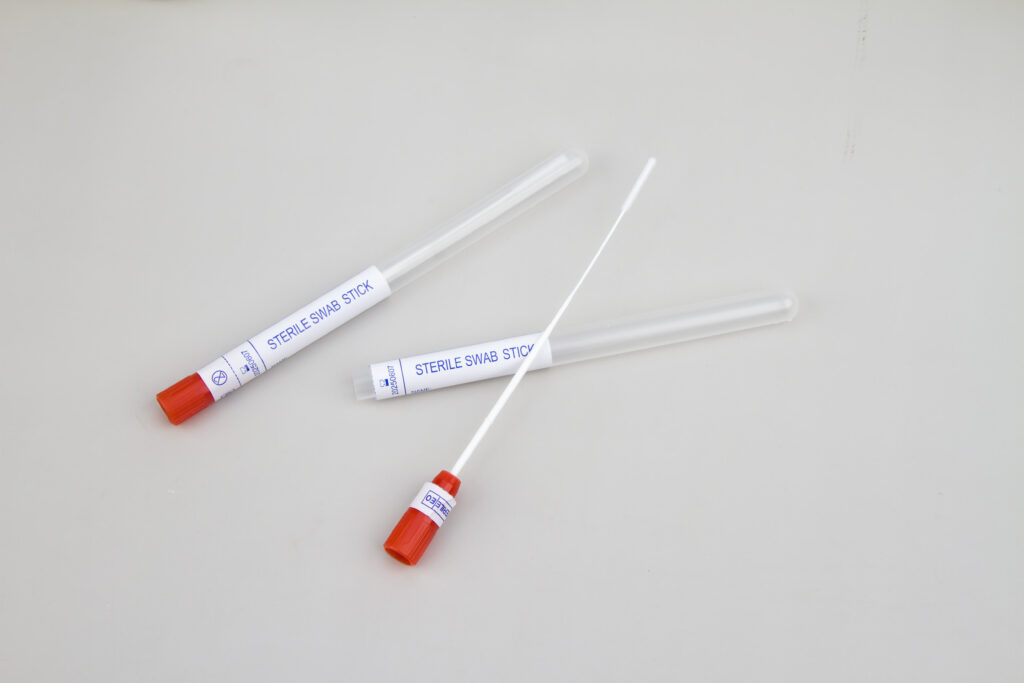
Medical Swab Breakpoint Design: Safety and Convenience Features Explained

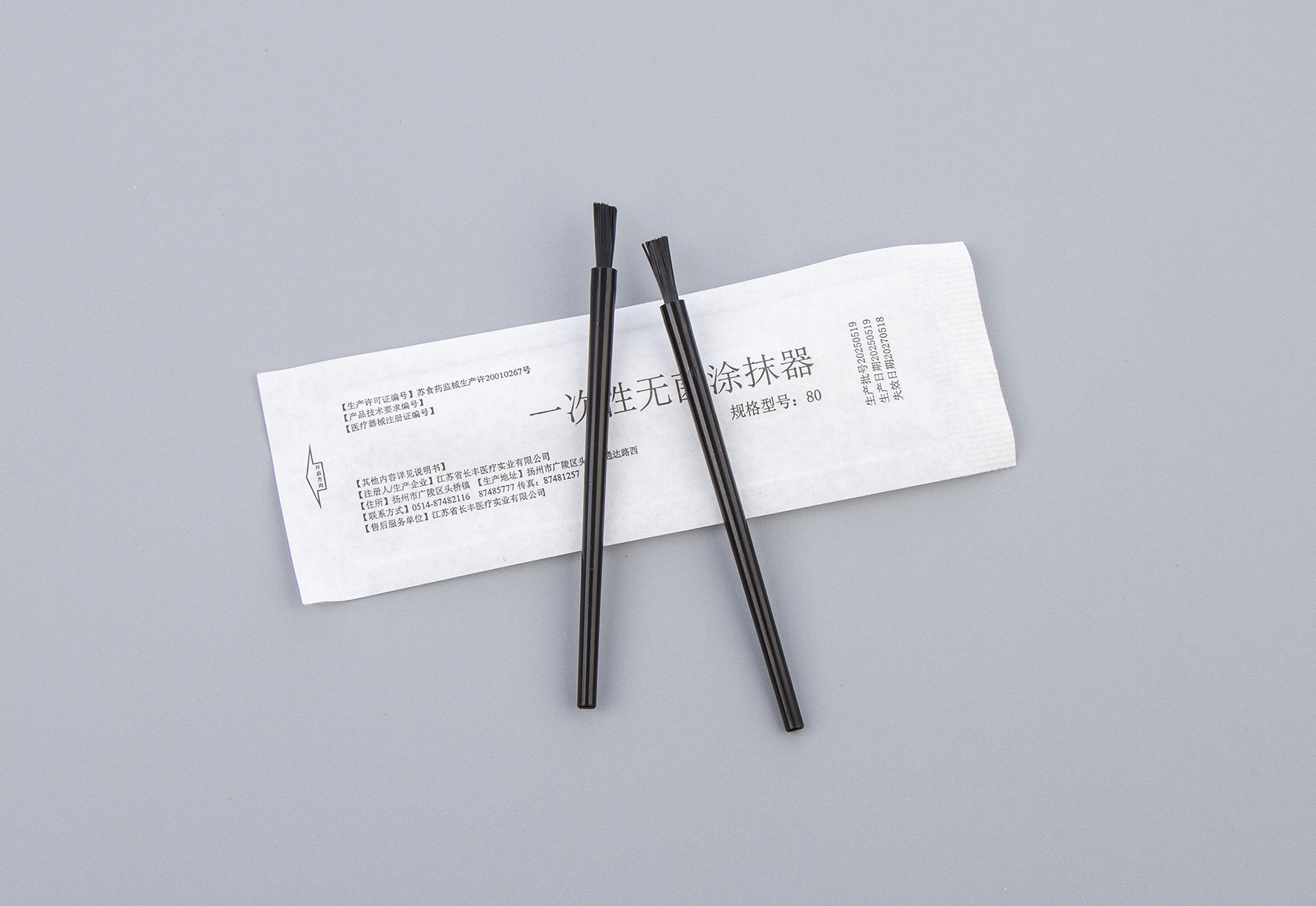
When you’re evaluating medical swabs for specimen collection protocols, the breakpoint design determines workflow efficiency, specimen integrity, and staff safety in your laboratory operations. This engineered weak point allows controlled shaft separation after collection, enabling direct specimen transfer into transport tubes without contamination risks or handling complications. Understanding breakpoint specifications, testing standards, and performance variations between manufacturers helps you select swabs that optimize your collection procedures while meeting regulatory requirements.
Understanding Breakpoint Engineering
Structural Design Principles
The breakpoint is a precisely engineered section of reduced diameter molded into the swab shaft at a predetermined distance from the tip. Standard breakpoint locations sit 30mm, 50mm, or 80mm from the swab head, corresponding to common transport tube depths and specimen collection requirements. The shaft diameter typically reduces from 2.5-3.0mm in the main body to 1.2-1.5mm at the breakpoint section.
This diameter reduction creates a controlled failure point that responds predictably to bending stress. Medical-grade polystyrene or ABS plastic used in swab manufacturing exhibits specific yield strengths—quality breakpoints are designed to fail at 2.0-3.5 kg of lateral force applied perpendicular to the shaft axis. This force range ensures the breakpoint holds during specimen collection procedures but breaks easily when you need to detach the shaft.
Manufacturing Process Impact
Injection molding creates breakpoints through precise die design that forms the diameter transition zone. The cooling rate and plastic flow characteristics during molding directly affect breakpoint consistency. Premium manufacturers use multi-cavity molds with individual cavity monitoring, ensuring each breakpoint meets dimensional tolerances of ±0.1mm in diameter and ±1.0mm in location from the swab tip.
The transition geometry matters significantly—quality breakpoints feature gradual diameter reduction over 3-5mm length rather than abrupt steps. This gradual transition distributes stress more evenly, preventing premature breakage during handling while maintaining predictable breaking characteristics. Poorly designed breakpoints with sharp transitions create stress concentration points that cause random failures during shipping or normal use.
Critical Performance Specifications
Breaking Force Requirements
Your procurement specifications should define acceptable breaking force ranges based on intended use. For nasopharyngeal swabs requiring insertion and manipulation in narrow nasal passages, specify higher breakpoint strength of 2.8-3.5 kg to prevent accidental breakage during collection. Oropharyngeal or surface swabs can use lower strength specifications of 2.0-2.8 kg since collection procedures involve less mechanical stress.
Testing protocols measure breaking force using calibrated force gauges with the swab shaft supported at standardized distances from the breakpoint. The measurement setup should replicate actual use conditions—apply perpendicular force at a controlled rate of 50-100 mm/minute until breakpoint failure occurs. Quality assurance requires testing representative samples from each production lot, with acceptance criteria typically allowing ±15% variation from the specified target force.
Break Cleanliness Standards
After breaking, the shaft ends must separate cleanly without generating plastic fragments or stringy residue that could contaminate specimens. High-quality breakpoints produce smooth fracture surfaces with minimal plastic deformation. You can assess break quality through visual inspection and particulate testing—broken shaft ends should show no loose particles when subjected to agitation testing in transport medium.
The fracture mechanism depends on plastic formulation and breakpoint geometry. Proper polystyrene grades exhibit brittle fracture characteristics at room temperature, producing clean breaks with minimal plastic flow. If you observe excessive plastic deformation, stretching, or fiber formation at broken ends, this indicates substandard plastic formulation or incorrect breakpoint dimensions that compromise specimen integrity.
Breakpoint Location Selection
Matching Transport Tube Dimensions
Your breakpoint location must align with transport tube geometry to ensure proper specimen immersion. Standard 12×75mm transport tubes require breakpoint positions 70-80mm from the swab tip, allowing the specimen-containing portion to sit completely submerged in 2-3 mL transport medium after breaking. Shorter 10×50mm pediatric tubes need 50mm breakpoints to achieve similar immersion depth.
Calculate the required breakpoint position by measuring your transport tube internal depth and subtracting 15-20mm to account for medium volume and ensure the swab tip doesn’t contact the tube bottom. For high-volume collection sites processing multiple specimen types, maintaining 2-3 standardized breakpoint positions simplifies inventory management and reduces user error compared to stocking numerous position variants.
Application-Specific Requirements
Nasopharyngeal specimen collection typically uses 150-160mm total swab length with breakpoints at 80mm from the tip, providing 70-80mm insertion depth plus sufficient handle length for controlled manipulation. The longer pre-breakpoint section supports deeper anatomical access while maintaining structural integrity during collection procedures.
Oropharyngeal swabs commonly feature 140-150mm total length with 70mm breakpoint positioning. The slightly shorter configuration reduces material costs while providing adequate reach for tonsillar and posterior pharyngeal sampling. Cervical or urogenital swabs often require 200mm total lengths with 100-120mm breakpoint positions to accommodate speculum-assisted collection procedures.
Safety Considerations in Breakpoint Design
Preventing Premature Breakage
Breakpoint strength must prevent accidental separation during specimen collection, which creates safety hazards and specimen loss. Factors contributing to premature breakage include excessive force during insertion, patient movement, or inadequate breakpoint strength specifications. Your risk assessment should evaluate collection site characteristics—pediatric patients, uncooperative individuals, or anatomically challenging collections require higher breakpoint strength specifications.
Validate breakpoint durability through simulated use testing that replicates worst-case collection scenarios. Testing protocols should include insertion into anatomical models with representative friction characteristics, rotational manipulation simulating specimen collection movements, and withdrawal under various angles. Quality swabs should complete 95% or more of simulated collections without premature breakpoint failure.
Sharp Edge Prevention
Broken shaft ends must not create sharp edges or points that could injure laboratory staff during specimen processing. Quality breakpoint design produces fracture surfaces with edge radii >0.3mm, eliminating cutting hazards. Some manufacturers incorporate rounded relief features at the breakpoint that further reduce sharp edge formation after breaking.
Conduct tactile safety testing by running fingertips over broken shaft ends—any perceived sharpness indicates inadequate breakpoint design. For high-volume processing laboratories, evaluate whether staff require cut-resistant gloves when handling broken swabs, as this indicates suboptimal breakpoint safety characteristics that increase consumable costs and injury risks.
Breakpoint Testing and Validation
Incoming Inspection Protocols
Implement statistically valid sampling plans for breakpoint verification when receiving swab shipments. Sample sizes should follow ISO 2859-1 acceptance sampling standards—for lot sizes of 50,000-100,000 units, inspect 125-200 swabs per lot using general inspection level II with acceptable quality limit (AQL) of 1.5% for critical defects including breakpoint failures.
Your testing setup requires calibrated force measurement equipment traceable to national standards with annual calibration verification. Document test results including breaking force measurements, break cleanliness assessments, and any observed defects. Establish action limits—individual measurements outside ±20% of specification trigger investigation, while 2 or more failures in a sample batch require lot rejection and supplier notification.
User Performance Evaluation
Beyond mechanical testing, evaluate breakpoint performance in actual use conditions. Collect feedback from specimen collection staff regarding ease of breaking, consistency across lots, and any handling difficulties. Quantitative metrics should include the percentage of swabs requiring multiple breaking attempts, incidents of incomplete separation, and reports of sharp edges after breaking.
Conduct periodic observational assessments where quality personnel observe specimen collection and processing workflows. Document the force and technique staff use to break swabs—if you notice personnel struggling, using excessive force, or employing tools to assist breaking, this indicates breakpoint specifications don’t match user needs or capabilities.
Regulatory and Standards Compliance
FDA Device Classification Requirements
Medical swabs with breakpoints fall under FDA Class I device classification when intended for specimen collection. While most Class I devices are exempt from premarket notification requirements, manufacturers must still follow quality system regulations including design controls. Your supplier should demonstrate that breakpoint design underwent formal design validation including breaking force testing, safety assessments, and user evaluation studies.
Request design verification and validation documentation confirming breakpoint performance meets intended use requirements. This should include testing protocols, acceptance criteria, and summary results demonstrating successful validation. Suppliers unable to provide this documentation may lack proper design controls, increasing risks of performance failures in your operations.
International Standard Considerations
While no specific ISO standard exclusively addresses medical swab breakpoints, ISO 23640 (Swabs for specimen collection in clinical diagnostics) provides relevant guidance on mechanical properties and safety requirements. European Medical Device Regulation (MDR 2017/745) requires risk management per ISO 14971, which should address breakpoint-related hazards including premature breakage, sharp edges, and particle contamination.
For CE-marked products, review the manufacturer’s technical documentation confirming risk analysis addressed breakpoint design. The risk management file should identify potential hazards, implemented risk controls (design specifications, testing requirements), and residual risk assessments demonstrating acceptable safety levels for intended use.
Cost-Benefit Analysis of Breakpoint Features
Workflow Efficiency Impact
Breakpoint-equipped swabs eliminate the need for scissors, cutting tools, or manual shaft breaking during specimen processing. This streamlines workflow in high-volume collection facilities—processing times decrease by 3-5 seconds per specimen compared to cutting non-breakpoint swabs. For laboratories processing 500+ specimens daily, this translates to 25-40 minutes of saved staff time per day.
Calculate labor cost savings by multiplying your average hourly staff cost by time saved annually. A facility processing 150,000 specimens yearly at $25/hour average labor cost saves approximately $1,600-2,100 annually in processing efficiency. Compare this against the price differential between breakpoint and non-breakpoint swabs—typically $0.01-0.02 per unit premium, or $1,500-3,000 for 150,000 units.
Safety and Contamination Prevention Value
Breakpoint designs reduce contamination risks compared to cutting swabs with scissors or breaking manually at non-engineered locations. Tool-based cutting requires bringing external instruments into the specimen processing area, creating cross-contamination opportunities. Manual breaking at random shaft positions produces inconsistent results with higher particle generation.
Quantify contamination prevention value by tracking specimen rejection rates due to particulate matter or processing contamination. If breakpoint swabs reduce rejection rates by even 0.5% in high-value molecular testing workflows averaging $50-100 per test, the prevented retesting costs exceed the swab price premium for most laboratory operations.
Troubleshooting Common Breakpoint Issues
Addressing Inconsistent Breaking Force
When you encounter lot-to-lot variation in breaking force, investigate manufacturing process controls. Request process capability data (Cpk values) from your supplier for breakpoint force measurements—values below 1.33 indicate inadequate process control. Compare breaking force measurements across multiple production lots, looking for trends correlating with specific production dates, shifts, or material lots.
Temperature and humidity during storage affect plastic mechanical properties. Polystyrene exhibits increased brittleness at low temperatures and reduced yield strength at elevated temperatures. If your facility experiences extreme environmental conditions, conduct breaking force testing on swabs after exposure to your actual storage conditions (temperature range, humidity levels) for 2-4 weeks to verify performance stability.
Managing Incomplete Separation Problems
Incomplete breakpoint separation where plastic strands remain connected after breaking indicates improper plastic formulation or excessive breakpoint diameter. This issue creates handling difficulties and contamination risks from plastic fragments. Document the frequency and characteristics of incomplete separations, including lot numbers and environmental conditions when problems occur.
Conduct comparative testing with reference swabs from suppliers with proven breakpoint performance. If your current supplier’s products show significantly higher incomplete separation rates (>2% versus <0.5% for quality manufacturers), this justifies supplier qualification or product substitution decisions. Request your supplier's internal reject rate data for breakpoint defects—manufacturing reject rates exceeding 1-2% suggest fundamental process or design problems.
Advanced Breakpoint Design Features
Multi-Position Breakpoint Options
Some manufacturers offer swabs with multiple breakpoint positions molded into a single shaft, providing flexibility for different tube sizes without maintaining separate inventory. These designs typically include 2-3 breakpoint locations at 50mm, 70mm, and 90mm from the tip, each marked with visual indicators or color coding.
Evaluate multi-breakpoint swabs if your facility uses multiple transport tube sizes or collection protocols requiring different immersion depths. The increased design complexity may affect overall shaft strength and breaking predictability—validate that unused breakpoints don’t create weak points causing premature failures. Price premiums for multi-breakpoint designs range from 15-25% over standard single-breakpoint swabs, so cost-effectiveness depends on your inventory management savings from reduced SKU counts.
Tear-Away vs. Snap-Break Designs
Alternative breakpoint mechanisms include tear-away perforations and snap-break collar designs. Tear-away designs use partial perforation through the shaft wall, allowing users to twist and separate the shaft with minimal force (<1.0 kg). These work well for applications requiring very easy separation but may compromise shaft strength during collection.
Snap-break collar designs incorporate a plastic collar that snaps off to separate the shaft, providing tactile feedback confirming complete separation. While these eliminate incomplete separation issues, the additional component increases manufacturing complexity and costs by 20-30%. Evaluate these alternatives if your user feedback indicates consistent problems with standard breakpoint designs or if your procedures require one-handed breaking capability.
Supplier Qualification Criteria
Manufacturing Process Assessment
When qualifying new swab suppliers, evaluate their breakpoint manufacturing controls. Request documentation of mold qualification protocols including dimensional validation, cavity-to-cavity variation studies, and preventive maintenance schedules. Quality manufacturers perform mold inspection and measurement at 50,000-100,000 cycle intervals to detect wear that affects breakpoint consistency.
Ask about plastic material specifications and incoming inspection procedures. Suppliers should test each resin lot for melt flow index, tensile strength, and impact resistance—properties that directly affect breakpoint performance. Material specifications should define acceptable ranges for these properties with receiving inspection protocols confirming each lot meets requirements before production use.
Quality Control Testing Programs
Review suppliers’ in-process and final inspection protocols for breakpoint validation. Minimum expectations include 100% visual inspection for obvious defects (missing breakpoints, excessive flash, dimensional errors) and statistical sampling for breaking force measurements. Request data showing their typical breaking force distributions and reject rates for out-of-specification units.
Suppliers should conduct periodic design verification testing beyond routine production monitoring. This includes accelerated aging studies confirming breakpoint performance remains stable throughout product shelf life (typically 2-3 years), environmental stress testing evaluating performance after temperature cycling or humidity exposure, and package integrity testing ensuring shipping conditions don’t damage breakpoints.
Procurement Specifications Development
Technical Requirement Documentation
Your procurement specifications should precisely define breakpoint requirements to ensure suppliers deliver products meeting your needs. Include these minimum elements: breakpoint location (distance from swab tip with ±2mm tolerance), breaking force range (specify both minimum and maximum acceptable values), break cleanliness requirements (no visible particles or strands after separation), and testing protocols suppliers must use for validation.
Specify environmental conditions for breakpoint performance—products should meet breaking force requirements across the temperature range of 15-30°C and humidity range of 30-80% RH. This prevents performance degradation in facilities with variable environmental controls. Include shelf life requirements confirming breakpoint properties remain within specifications throughout the stated expiration period.
Acceptance Criteria and Testing Plans
Define clear acceptance criteria for incoming inspection and ongoing lot release. Specify sample sizes using recognized statistical methods (AQL-based sampling per ISO 2859-1), testing procedures including equipment requirements and measurement techniques, and decision rules for lot acceptance or rejection based on test results.
Include provisions for supplier notification and corrective action when lots fail acceptance criteria. Your quality agreement should require root cause investigation within specified timeframes (typically 5-10 business days), corrective action plans addressing systemic issues, and verification testing confirming effectiveness of implemented corrections before resuming shipments.
Future Trends in Breakpoint Technology
Biodegradable Material Development
Environmental sustainability initiatives are driving development of swabs using biodegradable plastics including polylactic acid (PLA) and polyhydroxyalkanoate (PHA) polymers. These materials present breakpoint engineering challenges due to different mechanical properties compared to traditional polystyrene—PLA exhibits lower impact strength and greater temperature sensitivity affecting breaking force consistency.
If you’re evaluating biodegradable swab options, pay particular attention to breakpoint performance validation. Request extended environmental testing data showing breaking force stability under various storage conditions and throughout shelf life. Early-generation biodegradable swabs showed 10-15% breaking force degradation over 12-month storage periods, though current formulations demonstrate improved stability.
Integrated Safety Features
Emerging designs incorporate additional safety features beyond basic breakpoint functionality. These include color-change indicators confirming proper breaking technique, protective caps that automatically seal the broken shaft end preventing sharp edge exposure, and breakpoint designs that generate audible “click” feedback confirming complete separation.
While these advanced features address specific safety and usability concerns, they increase manufacturing complexity and costs by 25-40% over standard breakpoint swabs. Evaluate whether your facility’s incident rates, user feedback, or regulatory requirements justify the premium. High-volume public health screening programs or settings with diverse user skill levels may benefit most from enhanced safety features.
Frequently Asked Questions
What breaking force specification should I require for nasopharyngeal swabs used in COVID-19 testing?
Specify breaking force between 2.8-3.5 kg for nasopharyngeal swabs to balance collection procedure durability with easy post-collection separation. The higher force range prevents premature breakage during insertion through narrow nasal passages and during the rotation movements used to collect respiratory epithelial cells. However, avoid specifications above 3.5 kg, as excessive breaking force creates user fatigue and increases hand strain injuries in high-volume collection settings. Validate that your specified force range works across your user population—conduct ergonomic assessments with actual collection staff breaking swabs to confirm 95%+ can successfully break swabs without strain or requiring two-hand techniques. For facilities with predominantly smaller-statured staff or ergonomic concerns, consider the 2.5-3.0 kg range, though this requires more careful collection technique to prevent premature breakage.
How can I tell if breakpoint failures in received swab lots indicate manufacturing defects versus storage damage?
Systematic investigation distinguishes manufacturing defects from storage damage. First, examine whether failures occur uniformly across the entire lot or concentrate in specific package positions—damage during shipping typically affects swabs in outer packages or specific carton locations, while manufacturing defects distribute randomly. Conduct breaking force testing on swabs from multiple packages within the lot, documenting package positions and lot numbers. Manufacturing defects show consistent force measurements below specifications across all samples. Storage damage often creates bimodal distributions with some swabs meeting specifications and damaged units showing significantly reduced strength. Inspect packaging for visible damage including crushed boxes, torn overwraps, or humidity indicators showing excessive moisture exposure. Request the supplier conduct parallel testing on retained samples from the same production lot—if their results meet specifications while yours don’t, this implicates storage or shipping damage. Document storage conditions at your facility including temperature logs and humidity records, particularly any deviations from 15-30°C and 30-80% RH specifications. Submit claim documentation to suppliers within 30 days of receipt to preserve warranty coverage for manufacturing defects.
Can we modify breakpoint positions on standard swabs to fit our specific transport tubes?
No, you cannot safely modify breakpoint positions after manufacturing. Attempting to break swabs at non-engineered locations creates irregular fracture surfaces with sharp edges, generates plastic particles that contaminate specimens, and produces inconsistent shaft lengths affecting specimen immersion in transport medium. The breakpoint’s engineered diameter reduction and gradual transition geometry cannot be replicated through field modifications. Instead, work with your swab supplier to specify custom breakpoint positions matching your transport tube requirements—most manufacturers accommodate custom breakpoint locations with minimum order quantities of 50,000-100,000 units and 8-12 week lead times. Alternative solutions include switching to transport tubes compatible with standard breakpoint positions (50mm, 70mm, or 80mm from tip) or using swabs without breakpoints that you cut to desired length with dedicated sterile scissors. For facilities using multiple tube sizes, consider standardizing on one transport tube format across applications to enable single-swab-type inventory, reducing complexity and preventing mismatches between swab breakpoints and tube depths.
Why do some swabs require more force to break than others from the same lot?
Within-lot variation in breaking force stems from multiple manufacturing factors. Injection molding produces cavity-to-cavity variations in plastic cooling rates and material flow patterns—even with precision molds, breakpoint diameter may vary ±0.05-0.10mm between cavities, translating to 8-15% breaking force variation. Ambient temperature affects plastic mechanical properties—polystyrene tested at 25°C shows approximately 10% higher breaking force than identical samples tested at 30°C. This means swabs from climate-controlled storage may feel stronger than those kept in warmer areas. Your handling technique also creates apparent variation—breaking force measurements depend on exactly where you apply force relative to the breakpoint and the rate of force application. Quality manufacturers control within-lot variation to ±15% or less through process monitoring and regular mold maintenance. If you observe greater variation (some swabs breaking easily while others in the same lot require excessive force), request process capability data from your supplier. Cpk values below 1.33 indicate inadequate process control warranting supplier investigation or qualification of alternative sources. Document your observations with lot numbers, testing conditions, and quantitative breaking force measurements using calibrated equipment to support discussions with suppliers.
Is it acceptable to use swabs without breakpoints to reduce costs?
Using non-breakpoint swabs is acceptable if you implement proper cutting procedures and evaluate total cost impacts beyond unit price. You’ll need to provide sterile scissors or other cutting implements at specimen processing areas, establish procedures specifying exact cutting positions to ensure consistent specimen immersion, and train staff on contamination prevention during cutting. Factor in the 3-5 seconds additional processing time per specimen—for high-volume operations (>500 specimens daily), this labor cost often exceeds the $0.01-0.02 per unit savings from cheaper swabs. Cutting also introduces contamination risks from scissors that contact multiple specimens and generates plastic particles that may interfere with certain molecular testing platforms. Evaluate your specimen rejection rate for particulate contamination—if cutting contributes to even 0.3-0.5% increased rejections in expensive molecular tests, the retesting costs exceed swab price savings. Non-breakpoint swabs make sense for low-volume specialty applications (<50 specimens weekly), cost-sensitive screening programs using culture-based testing where particulate concerns are minimal, or as backup inventory during breakpoint swab supply shortages. Document your decision rationale including cost analysis and quality risk assessment in your laboratory quality management system.
What should I do if laboratory staff complain breakpoints are too difficult to break?
Staff complaints about difficult breakpoints require immediate investigation to prevent workarounds that compromise safety or specimen quality. First, verify breaking force specifications—measure actual force required using calibrated equipment, comparing results to your procurement specifications and industry standards (2.0-3.5 kg). If measured forces exceed 3.5 kg or your specifications, reject the lot and notify your supplier. If measurements fall within specifications but complaints persist, evaluate your user population’s capabilities—conduct ergonomic assessments observing actual breaking techniques and measuring hand grip strength for representative staff. Some users with smaller hand size or reduced grip strength struggle with forces >3.0 kg. Consider lowering your specification to 2.5-3.0 kg for future orders, though this requires validating that premature breakage doesn’t increase during specimen collection. Provide training on proper breaking technique—users should support the shaft close to the breakpoint with one hand while applying perpendicular force with the other hand rather than attempting to break with finger-thumb pinch. For elderly care facilities or settings where staff consistently struggle despite proper technique, evaluate alternative swab designs including tear-away perforations or snap-break collars that require <1.5 kg force, accepting their 15-25% price premium as a necessary ergonomic accommodation.
How do breakpoint swabs affect compatibility with automated specimen processing systems?
Breakpoint swabs integrate well with most automated systems designed for specimen decapping, aliquoting, or processing, but you must verify several compatibility factors before implementation. Confirm the automation system’s swab handling mechanisms accommodate breakpoint position tolerances—most systems expect swabs extending 5-10mm above tube closures after breaking, so your breakpoint position must place the remaining shaft at appropriate height. Some automation platforms include integrated swab-breaking mechanisms before processing—verify these mechanisms work with your swab’s breakpoint force specifications, as systems calibrated for 2.0-2.5 kg forces may struggle with 3.0-3.5 kg swabs. Test whether broken shaft ends interfere with pipetting probes, optical readers, or other system components—sharp edges or excessive shaft length above medium may cause automation errors. Request swab samples from your intended supplier and conduct full workflow testing including breaking, tube loading, automated processing, and any downstream analysis steps. Document error rates, processing times, and any handling issues during 50-100 specimen test runs. Some laboratory information systems track specimen container types—ensure your system recognizes swabs with breakpoints as acceptable collection devices to prevent rejection during accessioning. For high-throughput automated platforms processing >1,000 specimens daily, involve your automation vendor in swab selection to verify full compatibility before committing to large procurement volumes.
What documentation should I maintain regarding breakpoint swab validation and ongoing monitoring?
Comprehensive documentation supports regulatory compliance and quality management system requirements. Maintain product validation files including technical specifications from suppliers (breaking force ranges, breakpoint positions, material certifications), your evaluation protocols and acceptance criteria, validation testing results with statistical analysis demonstrating acceptable performance, and user feedback assessments confirming swabs meet workflow needs. Document your incoming inspection procedures including sampling plans, testing methods, equipment calibration records, and decision rules for lot acceptance or rejection. Retain lot-specific records for each received shipment including certificates of analysis from suppliers, your incoming inspection test results, and release decisions with dates and approver signatures. Implement ongoing monitoring documentation tracking key performance indicators—specimen rejection rates related to swab issues, user-reported complaints or incidents involving breakpoints, and any corrective actions taken with effectiveness verification. Maintain supplier qualification records including audit reports, corrective action correspondences, and periodic reassessment documentation. For FDA-regulated laboratories, these records demonstrate design validation per 21 CFR 820.30 and ongoing verification per 820.75. CLIA-regulated laboratories should document swab validation as part of method verification files per CLIA §493.1253. Retain validation and qualification records for minimum 2 years after discontinuing a swab product, or longer if specified by applicable regulations. ISO 15189-accredited laboratories should integrate breakpoint swab documentation into technical records and equipment/reagent evaluation files per standard requirements in sections 5.5 and 5.6.
Are there specific considerations for breakpoint swabs used in pediatric specimen collection?
Pediatric applications require careful breakpoint specification balancing smaller anatomical dimensions with adequate collection capability. Specify shorter total swab lengths (120-140mm versus 150-160mm for adults) with proportionally adjusted breakpoint positions—typically 50-60mm from tip versus 70-80mm for standard swabs. The shorter configuration provides adequate insertion depth for pediatric nasal passages (40-50mm typical depth) while preventing excessive insertion that causes patient discomfort or mucosal trauma. Consider slightly lower breaking force specifications (2.5-3.0 kg) for pediatric swabs since collection procedures in children generally involve less aggressive sampling technique and lower mechanical stress. The reduced force also accommodates healthcare workers with smaller hands common in pediatric nursing specialties. Evaluate swab tip dimensions carefully—pediatric nasal passages tolerate maximum 2.5-3.0mm diameter tips versus 3.0-3.5mm for adults. Smaller tips may require adjusted breakpoint diameters to maintain proportional breaking force, so verify complete specifications rather than simply ordering “pediatric” swabs without dimensional confirmation. Validate that transport tube compatibility remains appropriate—pediatric collection protocols often use smaller tube formats (10×50mm instead of 12×75mm), so breakpoint position must ensure adequate specimen immersion in reduced medium volumes (1-2 mL versus 2-3 mL for adult tubes). Conduct specific user evaluations with pediatric collection staff and preferably simulation with pediatric mannequins before large-scale deployment, as adult validation may not predict pediatric performance adequately.
How do environmental conditions during specimen collection affect breakpoint performance?
Temperature and humidity at collection sites significantly impact breakpoint mechanical properties and reliability. Polystyrene’s glass transition temperature around 95-100°C means normal collection environments (0-40°C) keep the material in its glassy state, but mechanical properties vary within this range. Cold environments (<10°C) increase plastic brittleness and breaking force by approximately 15-20% compared to 20°C—outdoor collection sites in winter, refrigerated storage, or climate-controlled medical facilities may show harder-to-break swabs. High-temperature conditions (>30°C) reduce breaking force by 10-15% and slightly increase premature breakage risk—consider this for field collection programs in tropical climates, vehicles without air conditioning, or outdoor testing sites during summer. Humidity effects are less pronounced but extended exposure to >80% RH over weeks-to-months can cause slight moisture absorption in polystyrene, affecting surface properties. For mobile collection operations or field deployment, specify breakpoint performance requirements across expected environmental ranges. Request supplier testing data confirming breaking force stability from 5-35°C if you anticipate extreme conditions. Store swabs at controlled room temperature (20-25°C) for 2-4 hours before use if arriving from significantly different storage conditions—this equilibration minimizes temperature-related variation. Document environmental conditions at collection sites in your quality records, noting any correlation between temperature extremes and breakpoint performance complaints. This data supports troubleshooting investigations and may justify specification adjustments or supplier discussions if environmental factors prove significant in your operations.