What Is a Flocked Swab Tip and Why Does It Matter?


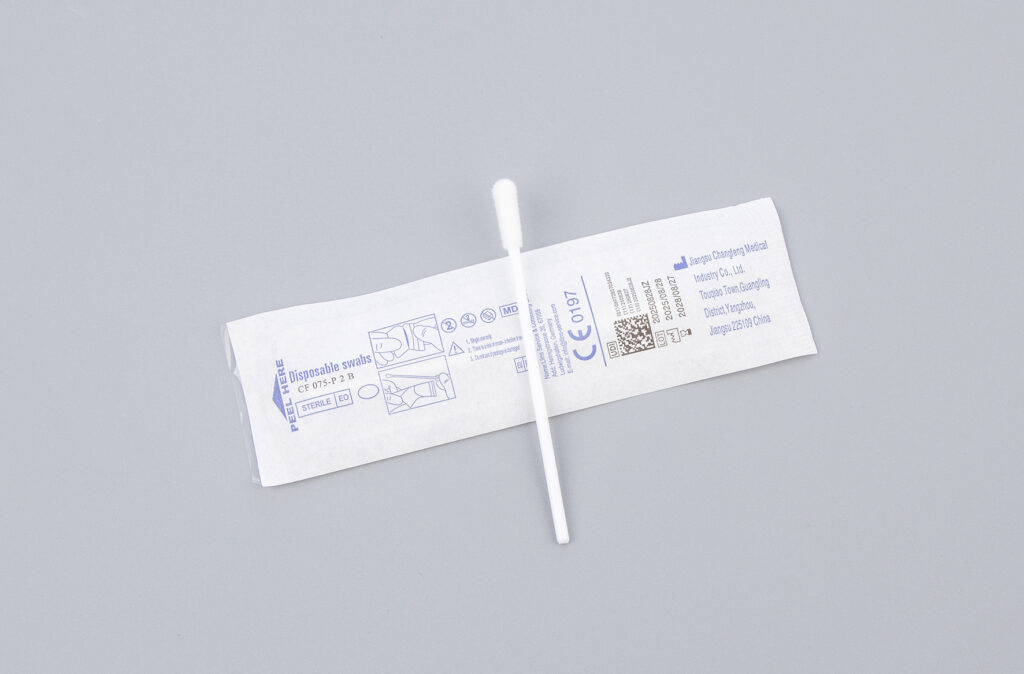
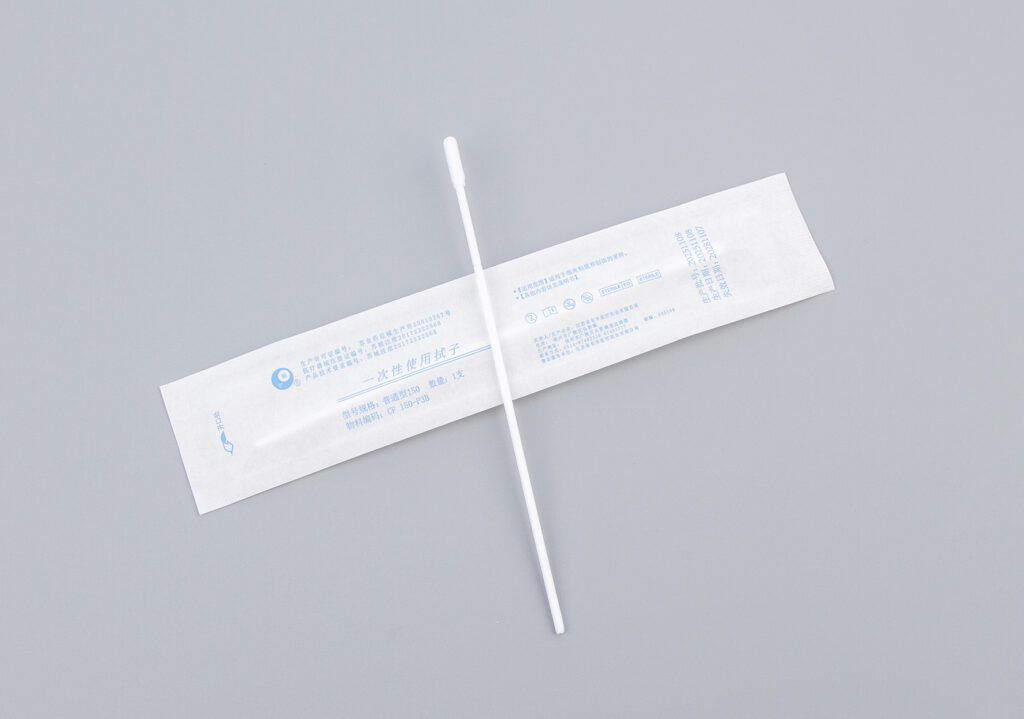
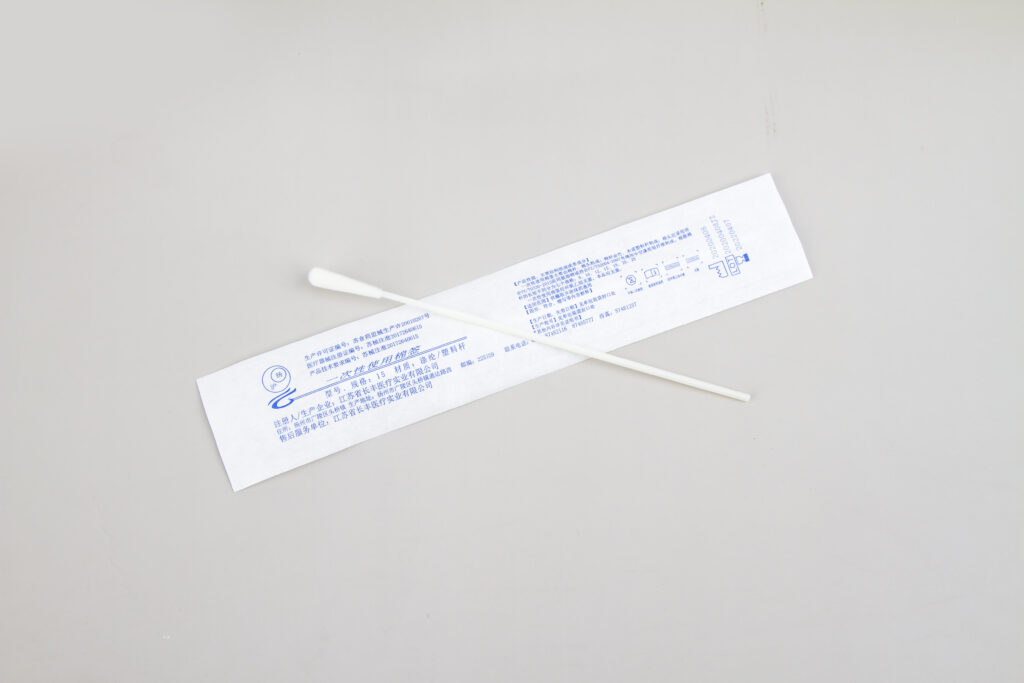
A flocked swab tip is the sampling head of a flocked swab. It is covered with short fibers that create a soft, brush-like surface for specimen collection. Compared with some traditional wrapped fiber swabs, a flocked swab tip is often selected when sample collection and sample release are important.
For medical buyers, laboratories, distributors, and procurement teams, understanding the swab tip is important because the tip directly affects collection site suitability, sample release, user comfort, tube compatibility, and customer acceptance.
What Is a Flocked Swab Tip?
A flocked swab tip is a swab tip made by attaching short fibers to the surface of the swab head. Nylon is commonly used for flocked swabs, especially in medical and diagnostic specimen collection workflows.
The fibers stand on the surface of the tip and create a uniform sampling area. This structure helps the swab contact the collection site and release collected material into transport medium, extraction buffer, or another testing system.
How Is a Flocked Tip Different from a Traditional Fiber Tip?
A traditional fiber swab may use wrapped fibers that can absorb and hold specimen inside the tip structure. A flocked swab tip uses short surface fibers, so collected material is held closer to the surface.
This difference can make flocked swabs useful for workflows where sample release is important. However, the final product choice should still follow the intended test method and customer requirement.
Why Does the Swab Tip Matter?
The swab tip is the part that contacts the collection site or sample area. Its material, size, shape, softness, and surface structure can affect how the swab collects the specimen and how it releases the specimen afterward.
A suitable swab shaft cannot make up for the wrong tip. Buyers should evaluate tip design together with shaft design, breakpoint, packaging, and tube compatibility.
Why Nylon Is Commonly Used for Flocked Swab Tips
Nylon is commonly used for flocked swab tips because it can form fine fibers on the swab surface. Nylon flocked swabs are often selected for medical, laboratory, and diagnostic collection workflows where synthetic fiber material is preferred.
Buyers should confirm the exact material with the supplier because product names may not always provide enough detail.
Sample Collection and Sample Release
Sample collection means how well the swab picks up material from the collection site. Sample release means how well the swab transfers that material into a liquid medium, extraction tube, or testing workflow.
A flocked swab tip is often selected because the surface fiber structure may support both collection and release. This is especially useful when the sample needs to move from the swab tip into another system after collection.
Flocked Swab Tip vs. Polyester Swab Tip
A flocked swab tip has short fibers on the tip surface. A polyester swab tip usually uses synthetic polyester fiber in a more traditional tip structure.
Flocked swabs may be preferred when sample release is important. Polyester swabs may be suitable for routine medical or laboratory sampling workflows when the material and design match the customer requirement.
Flocked Swab Tip vs. Foam Swab Tip
A flocked swab tip is often selected for surface collection and sample release. A foam swab tip is often selected when absorbency, cushioning, or broad surface contact is important.
Both materials can be useful, but they serve different workflows. Buyers should compare collection site, absorption, release, sterility, and packaging before choosing.
Flocked Swab Tip vs. Cotton Swab Tip
A cotton swab tip uses natural cotton fiber. A flocked swab tip usually uses synthetic fibers such as nylon. Cotton swabs may be common in general use, but they may not be suitable for some medical or diagnostic workflows.
When material compatibility and sample release matter, buyers should confirm whether a synthetic flocked swab is required by the customer or test method.
Tip Size Matters
Flocked swab tips are available in different sizes. A small tip may be suitable for narrow collection sites, while a larger tip may provide broader surface contact when the workflow allows it.
Bigger is not always better. Tip size should match the collection site, user comfort, tube opening, and transport system.
Tip Shape Matters
Tip shape affects how the swab contacts the collection site. Some flocked tips are small and rounded, while others may be longer, broader, or designed for specific sampling areas.
Buyers should confirm tip shape by reviewing samples and specifications rather than relying only on product photos.
Flocked Tip and Shaft Design
The swab tip and shaft must work together. A flocked tip may collect well, but if the shaft is too rigid, too flexible, too short, or incompatible with the tube, the product may not fit the customer’s workflow.
Important shaft details include material, total length, diameter, flexibility, and breakpoint position.
Flocked Tip and Breakpoint
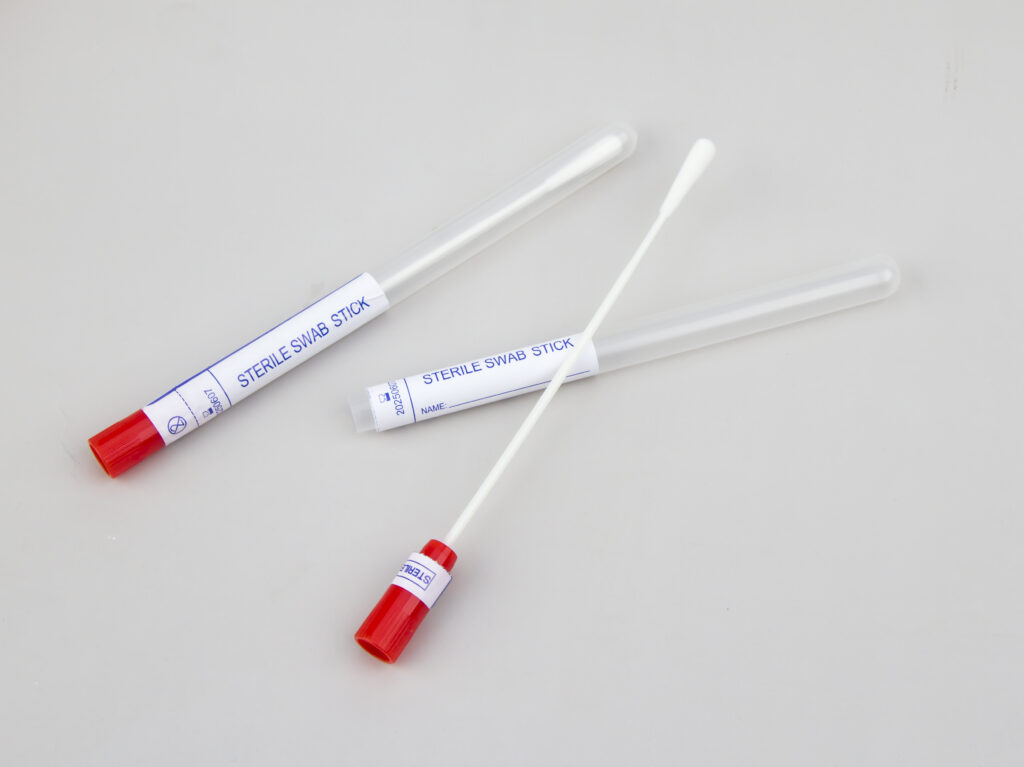
Many flocked swabs are used with tubes. A breakpoint allows the user to break the shaft after collection and place the swab tip into a tube or medium.
The breakpoint position should match the tube length and cap closing space. Buyers should test the swab and tube together before bulk ordering.
Flocked Tip and Transport Medium
When a flocked swab is used with transport medium, the tip should fit the tube and release the sample into the medium according to the workflow.
Buyers should confirm medium type, tube volume, cap sealing, storage conditions, shelf life, and compatibility with the swab material.
Sterile Packaging for Flocked Swabs
Many flocked swabs used in medical specimen collection are supplied sterile and individually packaged. The packaging helps protect the tip before use and supports cleaner handling.
Buyers should check pouch quality, sterile status, sterilization method, lot number, expiration date, shelf life, storage conditions, inner box quantity, and carton strength.
When Should Buyers Choose Flocked Swab Tips?
Buyers may choose flocked swab tips when the customer needs specimen collection with good surface contact and sample release. Flocked swabs are commonly considered for nasal swabs, respiratory sampling, molecular testing workflows, and diagnostic collection systems when compatible with the test requirement.
The final choice should follow the collection site, specimen type, laboratory protocol, and customer preference.
When May Another Tip Material Be Better?
A flocked tip is not automatically the best choice for every application. A polyester swab may be more suitable for routine sampling. A foam swab may be better when absorbency or cushioning is needed. A dry swab may be preferred when the workflow does not require transport medium.
Buyers should choose according to the real application instead of using one swab type for every customer.
What Buyers Should Check Before Ordering
Before ordering flocked swabs in bulk, buyers should check tip material, tip size, tip shape, flocking uniformity, shaft material, shaft flexibility, breakpoint position, sterile status, packaging format, tube compatibility, transport medium compatibility, shelf life, storage conditions, sample availability, and supplier documentation.
Common Mistakes When Buying Flocked Swab Tips
One common mistake is assuming that all flocked swabs are the same. Tip size, fiber density, shaft design, breakpoint position, and packaging may differ between suppliers.
Another mistake is choosing only by product photos. Buyers should request samples and test them with the actual workflow, tube, medium, or kit.
Buyers should also avoid assuming that a larger flocked tip is always better. Tip size should match the collection site and customer protocol.
How to Choose a Supplier
A reliable supplier should provide clear flocked swab specifications, stable flocking quality, sample support, sterile packaging options, and export documentation.
Before bulk ordering, buyers can ask for material information, tip dimensions, shaft dimensions, breakpoint options, sterile packaging details, shelf life, carton specifications, MOQ, lead time, and private label support.
Conclusion
A flocked swab tip is the sampling head of a flocked swab, covered with short fibers that support specimen collection and sample release. It matters because the tip affects collection site suitability, sample transfer, user handling, and compatibility with tubes or transport systems.
For buyers, flocked swab tip selection should be evaluated together with shaft design, breakpoint, packaging, sterility, transport medium, shelf life, and supplier documentation.
Changfeng Medical supplies sampling swabs for diagnostic, clinical, and laboratory applications, including nasal swabs, large-headed flocked swabs, polyester fiber swabs with sheath, media-coated swabs, and double-tip throat swabs. Contact us to discuss flocked swab specifications, packaging options, and bulk supply solutions for your market.
FAQ
What is a flocked swab tip?
A flocked swab tip is a swab tip covered with short surface fibers that help support specimen collection and sample release.
What material is used for flocked swab tips?
Nylon is commonly used for flocked swab tips, but buyers should confirm the exact material with the supplier.
Why are flocked swab tips used?
They are often used when sample collection and sample release into liquid medium or extraction systems are important.
Is a flocked swab tip better than a polyester tip?
Not always. Flocked tips may be preferred for sample release, while polyester tips may be suitable for routine sampling workflows.
Does flocked swab tip size matter?
Yes. Tip size should match the collection site, tube opening, user comfort, and workflow requirement.
What should buyers check before ordering flocked swabs?
Buyers should check tip material, tip size, flocking quality, shaft design, breakpoint, sterility, packaging, tube compatibility, shelf life, samples, and documentation.