How to Store Sterile Sampling Swabs Before Use?

Sterile sampling swabs should be stored in a way that protects the packaging, maintains product identification, and supports shelf life control before use. For medical and laboratory buyers, storage is not only a warehouse detail. It can affect product acceptance, inventory planning, and customer confidence.
A sterile swab may be well manufactured, but if the pouch is damaged, the carton is crushed, the expiration date is unclear, or storage conditions are ignored, the product may be rejected by the end user. Buyers, distributors, and laboratories should understand how storage conditions connect with sterile packaging and product quality.
Why Storage Matters for Sterile Sampling Swabs
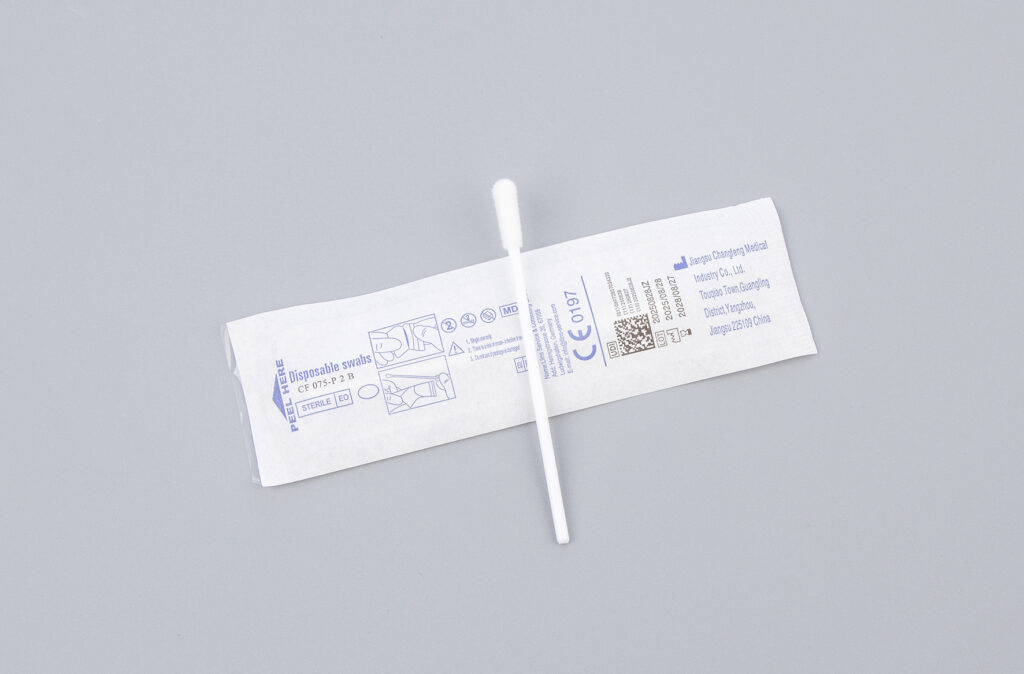
Sterile sampling swabs are commonly supplied in individual packaging to help protect the product before use. Storage conditions should help keep the pouch, label, carton, and swab in acceptable condition until the product is opened.
Good storage supports sterile barrier protection, traceability, shelf life management, warehouse control, and smoother distribution.
Follow the Supplier’s Storage Instructions
The first rule is to follow the storage instructions provided by the supplier or manufacturer. Storage requirements may differ depending on swab material, sterile packaging, transport medium, tube system, and product configuration.
Buyers should check product labels, cartons, specifications, and documentation for recommended storage conditions before placing products in inventory.
Check the Expiration Date
Sterile sampling swabs usually have an expiration date. The expiration date helps users know how long the product is expected to remain suitable under the recommended storage conditions.
For distributors, expiration date control is important because products may spend time in production, international shipping, customs clearance, warehouse storage, and final customer inventory.
Manage Shelf Life Carefully
Shelf life should be checked before bulk ordering and again when receiving goods. Buyers should confirm whether the remaining shelf life meets their sales channel, tender, or customer requirement.
A product with a low price but short remaining shelf life may not be practical for long distribution cycles.
Protect Individual Packaging
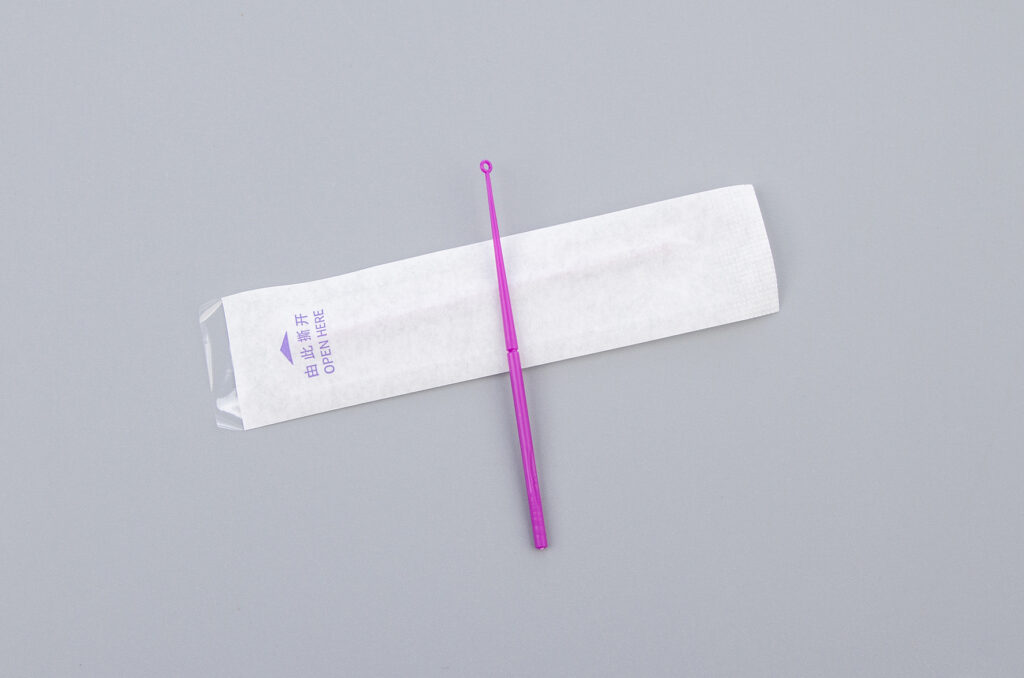
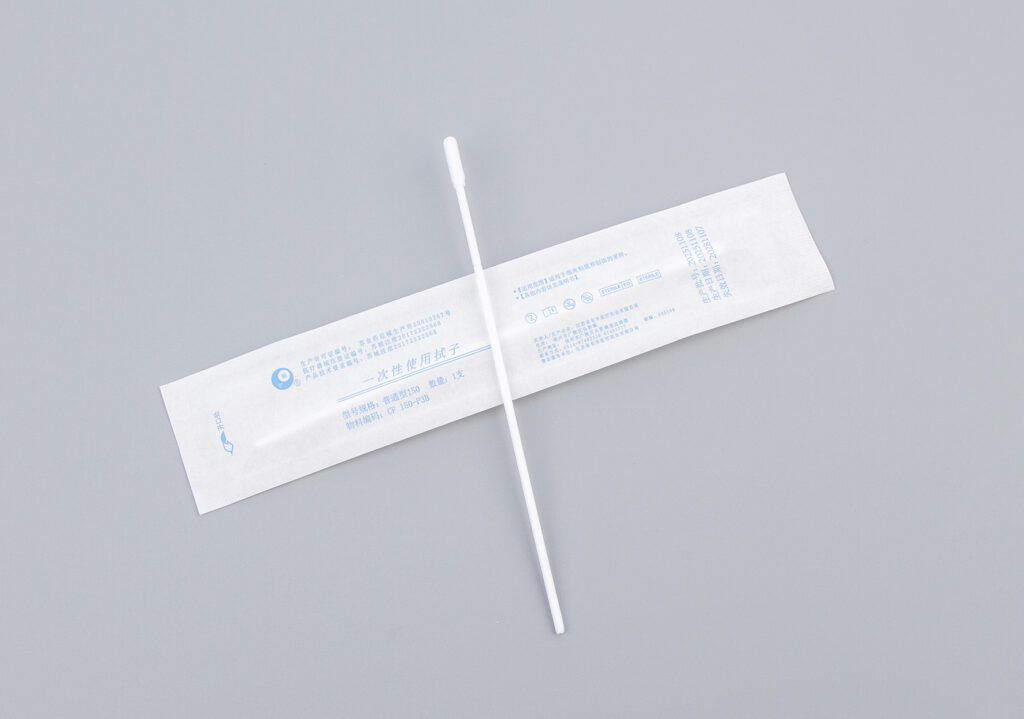
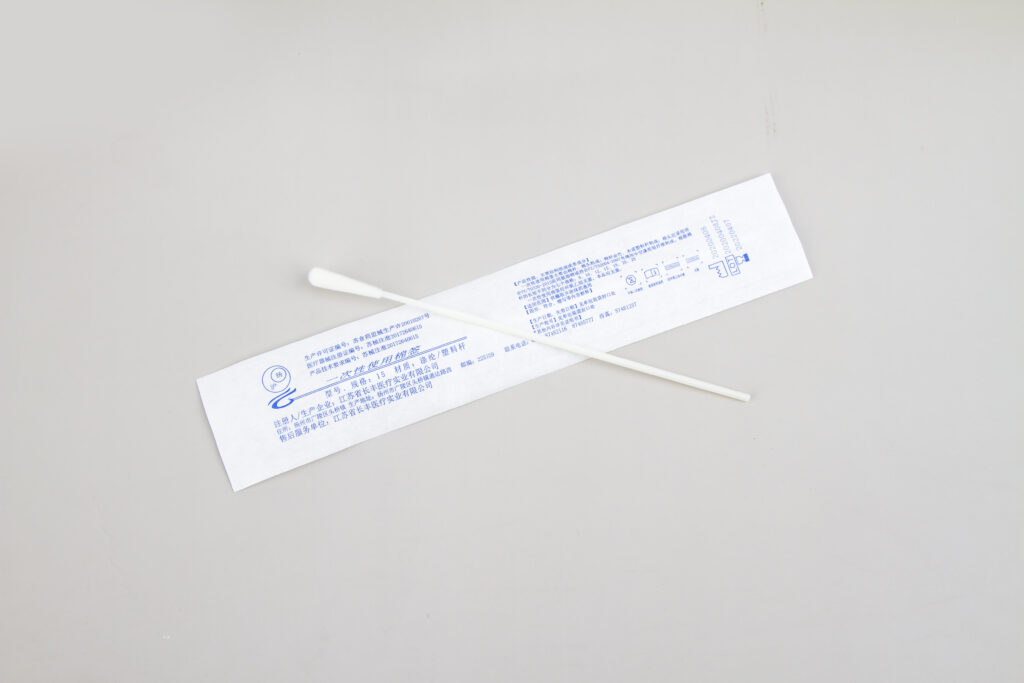
For sterile swabs, the individual pouch or wrapper is a key part of the product. It helps protect the swab before use. If the pouch is torn, punctured, wet, poorly sealed, or visibly damaged, the product may not be accepted.
Warehouse staff should avoid crushing, bending, or opening individual pouches before use. Cartons should be handled carefully during receiving, storage, picking, and shipping.
Keep Cartons Clean and Dry
Sterile sampling swabs should generally be stored in a clean and dry area according to supplier instructions. Moisture, dust, heavy pressure, or rough handling can damage cartons and packaging presentation.
For export buyers and distributors, carton condition matters because customers often inspect outer cartons, inner boxes, and individual pouches before accepting goods.
Avoid Direct Sunlight and Excessive Heat
Direct sunlight and excessive heat may affect packaging, labels, cartons, or some product components. Swabs should be stored according to the recommended temperature and environmental conditions stated by the supplier.
If the product includes transport medium or a media-coated format, storage conditions may be more specific. Buyers should confirm those requirements before warehousing the product.
Store Products by Batch and Lot Number
Lot number control is important for traceability. Products should be stored and managed by batch or lot number so buyers can track inventory, handle customer questions, and manage any quality feedback efficiently.
Lot number should be visible on the pouch, inner box, outer carton, or documentation depending on the packaging design and customer requirements.
Use First-Expired, First-Out Inventory Control
For sterile sampling swabs, first-expired, first-out inventory control is useful. Products with earlier expiration dates should generally be distributed before products with later expiration dates.
This helps reduce expired inventory and supports better warehouse management for distributors, hospitals, laboratories, and medical supply companies.
Check Packaging During Goods Receiving
When receiving sterile swabs, buyers should inspect the outer carton, inner box, pouch appearance, printed labels, lot number, expiration date, and quantity. Any visible damage should be recorded quickly.
For large orders, buyers may inspect random samples from different cartons to check packaging consistency before accepting the shipment.
Storage for Swabs with Transport Medium
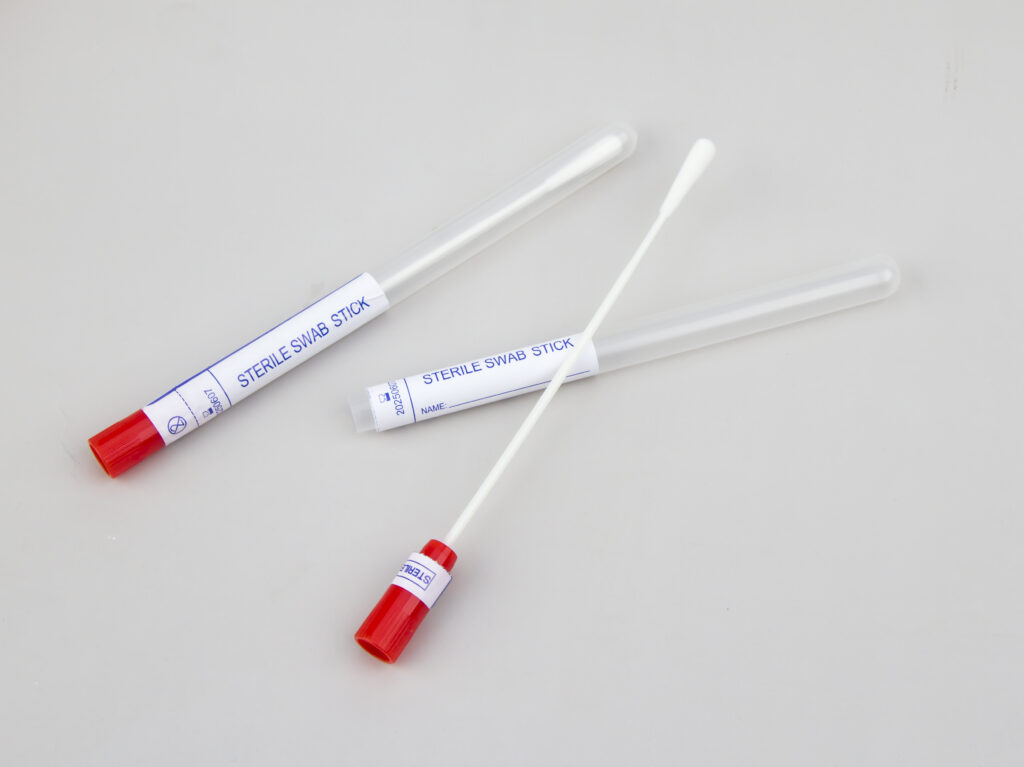
Swabs with transport medium may require more careful storage control than dry swabs. The medium, tube, cap, and packaging may have specific shelf life and temperature requirements.
Buyers should confirm the medium type, storage temperature, expiration date, tube sealing, carton orientation if needed, and handling instructions before ordering and warehousing transport swab products.
Storage for Dry Sterile Swabs
Dry sterile swabs do not include transport medium, but packaging protection and shelf life still matter. Buyers should store them according to supplier instructions and avoid damaging the sterile pouch.
Dry swabs may be easier to store than medium-based products, but they still require inventory control, clean storage, and expiration date management.
Storage for Flocked Swabs
Flocked swabs should be stored in a way that protects the flocked tip and packaging. The tip should not be compressed, contaminated, or exposed before use.
Buyers should check pouch integrity, carton strength, and product presentation, especially for individually packaged nasal swabs, nasopharyngeal swabs, and large-headed flocked swabs.
Storage for Polyester Swabs with Sheath
Polyester fiber swabs with sheath should be stored so the sheath and pouch remain intact. The sheath provides additional physical protection, but it does not replace proper outer packaging or storage control.
Buyers should check whether the sheath is firmly fitted, whether the pouch protects the product, and whether cartons prevent bending or crushing during transport.
Do Not Use Products with Damaged Packaging
If sterile swab packaging is damaged, the product may no longer be suitable for sterile workflows. Users should follow their internal procedure and supplier instructions when handling damaged packages.
For distributors, damaged packaging can also create customer complaints and returns, even if the swab itself looks unchanged.
Do Not Mix Different Batches Without Control
Mixing different batches without clear control can create traceability problems. Inventory should be organized so batch number, expiration date, and product type are easy to identify.
This is especially important when the buyer supplies hospitals, laboratories, diagnostic companies, or government purchasing programs.
Packaging Information to Keep Visible
Useful storage and inventory information may include product name, swab type, material, sterile status, lot number, expiration date, storage conditions, quantity, manufacturer information, and carton number.
For private label orders, buyers should confirm that labels and carton marks are clear enough for warehouse teams and end users.
What Buyers Should Ask Suppliers
Before ordering sterile sampling swabs, buyers can ask suppliers about recommended storage conditions, shelf life, expiration date format, packaging materials, pouch integrity, carton strength, lot number printing, inner box quantity, outer carton quantity, and whether transport medium requires special handling.
These questions help buyers plan storage, distribution, and customer delivery more accurately.
Common Storage Mistakes
One common mistake is ignoring the expiration date until products are close to expiry. Another mistake is storing cartons in areas where they may be crushed, exposed to moisture, or mixed with unrelated goods.
Buyers should also avoid opening cartons or pouches unnecessarily before use, because this can damage presentation and reduce customer confidence.
Sterile Swab Storage Checklist
A practical checklist includes checking supplier storage instructions, expiration date, shelf life, lot number, pouch integrity, carton condition, storage environment, batch organization, first-expired first-out control, and special requirements for products with transport medium.
Conclusion
Sterile sampling swabs should be stored according to supplier instructions, with attention to packaging integrity, expiration date, shelf life, lot number, carton condition, and storage environment. Good storage helps protect product presentation, traceability, and customer acceptance before use.
For buyers, storage should be considered before placing bulk orders, especially for sterile swabs, transport swabs, media-coated swabs, and private label products with long distribution cycles.
Changfeng Medical supplies sampling swabs for diagnostic, clinical, and laboratory applications, including nasal swabs, large-headed flocked swabs, polyester fiber swabs with sheath, media-coated swabs, and double-tip throat swabs. Contact us to discuss packaging, shelf life, storage requirements, and bulk supply solutions for your market.
FAQ
How should sterile sampling swabs be stored?
Sterile sampling swabs should be stored according to supplier instructions, with packaging protected from damage and inventory managed by lot number and expiration date.
Why is expiration date important for sterile swabs?
The expiration date helps users manage shelf life and avoid using products beyond the stated period under recommended storage conditions.
Can sterile swabs be used if the pouch is damaged?
Damaged sterile packaging may make the product unsuitable for sterile workflows. Users should follow internal procedures and supplier instructions.
Do swabs with transport medium need special storage?
They may have specific storage requirements depending on medium type, tube system, and product design. Buyers should confirm supplier instructions before ordering.
What is first-expired, first-out inventory control?
It means products with earlier expiration dates are distributed before products with later expiration dates to reduce expired inventory.
What should buyers check when receiving sterile swabs?
Buyers should check carton condition, pouch integrity, product labels, lot number, expiration date, quantity, and packaging consistency.