
VTM, UTM, Amies, or Dry: Choosing the Right Transport Medium for Your Swab-Based Diagnostic Kit

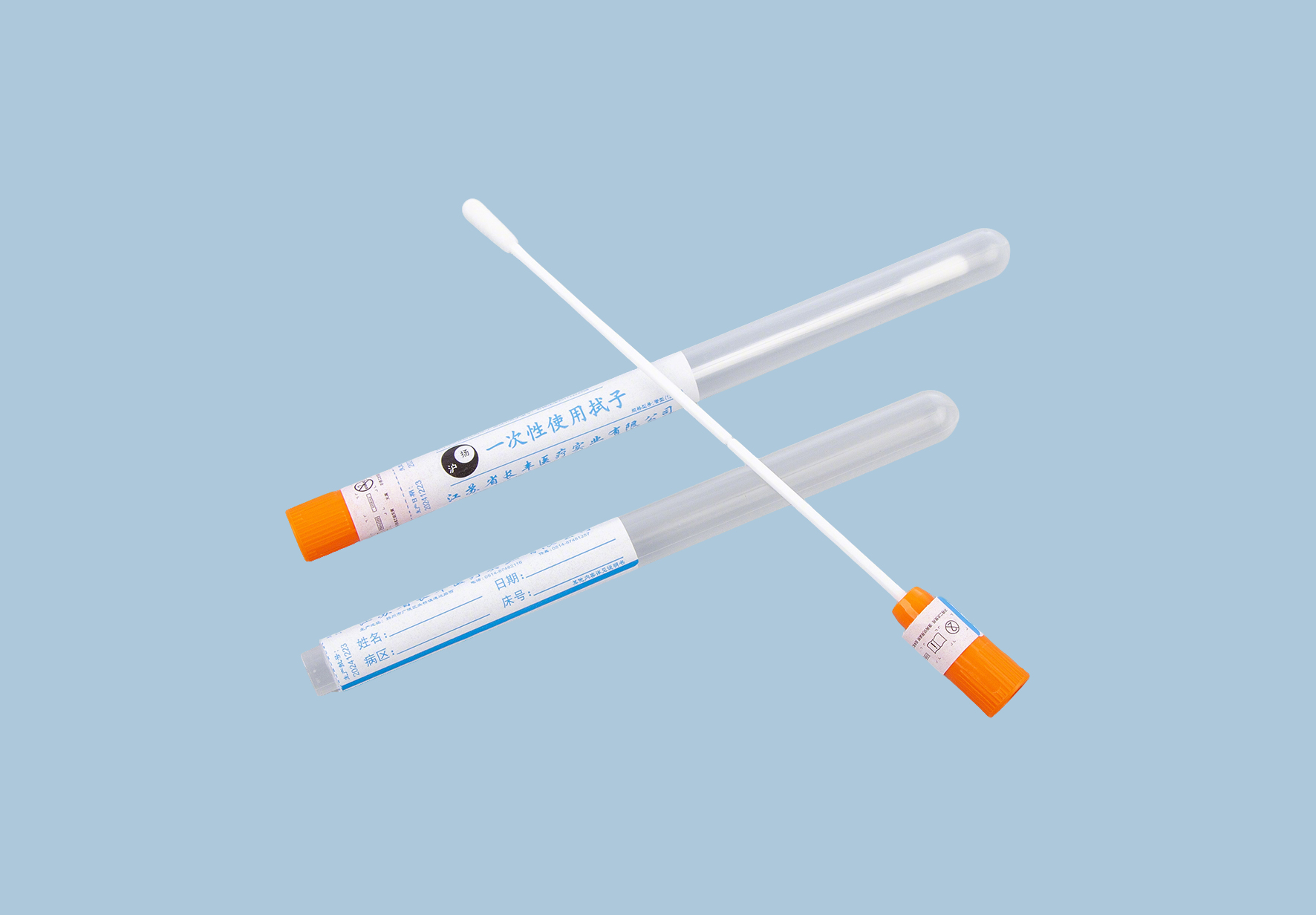
The swab collects the sample. The transport medium keeps it viable until it reaches the lab. That second step is where diagnostic failures happen most often — not from poor collection technique or substandard swab material, but from a medium that isn’t matched to the downstream assay, the pathogen, or the logistics chain the kit operates in.
For kit developers and procurement managers specifying swab collection systems, the transport medium decision is as consequential as the swab tip material decision. The two need to be evaluated together, against the specific assay and workflow the kit is designed for.
What Transport Media Actually Do
A transport medium serves three functions: it buffers the pH of the sample environment to prevent degradation, it provides protein stabilizers that protect viral particles or nucleic acids during transit, and — in formulations designed for culture — it suppresses competing bacterial and fungal growth with antimicrobial agents. The relative importance of each function depends on the downstream application. A medium optimized for viral culture needs to maintain pathogen viability. A medium optimized for PCR needs to preserve nucleic acid integrity but doesn’t need to keep intact viral particles alive. A medium designed for rapid antigen testing needs to elute the swab efficiently into a volume and concentration compatible with the assay’s detection threshold.
These are different requirements, and the same medium rarely optimizes all of them simultaneously.
Viral Transport Medium (VTM)
Classical VTM is formulated around a buffered salt solution — typically Hanks’ Balanced Salt Solution — supplemented with protein stabilizers such as bovine serum albumin or gelatin, and antimicrobial agents including gentamicin and amphotericin B to suppress bacterial and fungal overgrowth. It is designed to preserve intact viral particles during transport at refrigerated temperatures (2–8°C), making it appropriate for applications where viral culture or antigen-based testing follows collection.
Standard VTM works for PCR testing as well, but it is not optimized for it. The protein-rich formulation can introduce inhibitors into the nucleic acid extraction step depending on the extraction chemistry. For molecular testing at scale, inactivated VTM — formulations containing guanidinium or similar chaotropic agents that lyse viral particles on contact — has become a more practical choice. Inactivated VTM inactivates pathogens during sample collection, reducing biosafety requirements for sample handling, and produces a lysate that feeds directly into many automated extraction workflows without a separate inactivation step in the lab.
Universal Transport Medium (UTM)
UTM extends the scope of classical VTM to cover a broader range of pathogens: respiratory viruses, chlamydia, mycoplasma, and selected bacteria. The formulation is similar in principle but optimized for compatibility with molecular detection platforms, and validated more broadly across assay types.
For kit developers building multiplex respiratory panels — combinations detecting influenza A/B, RSV, SARS-CoV-2, and potentially strep or chlamydia from a single sample — UTM is the appropriate starting point for transport medium selection. Confirming compatibility with the specific multiplex assay platform is still necessary; “universal” refers to the range of pathogens preserved, not to assay compatibility across all PCR systems.
Amies Transport Medium
Amies medium is formulated for bacterial specimen transport. It maintains the viability of aerobic and anaerobic bacteria during transit without supporting their growth — keeping the microbial population stable for culture-based identification. It is available in gel and liquid formats; liquid Amies (as used in eSwab-style configurations) is compatible with both culture and molecular testing and has become the standard for bacteriology transport in many clinical laboratories.
Amies is not appropriate as the primary transport medium in viral respiratory testing. Conversely, VTM is not appropriate for bacteriology culture — the antimicrobial agents in VTM will suppress the bacterial population the lab needs to isolate. Mismatching medium to application is the simplest and most preventable transport failure in swab kit design, and it happens when component sourcing is driven by availability or price without reference to the downstream workflow.
Dry Swabs
Dry swab configurations — no liquid medium — are appropriate in a narrow set of circumstances, and widely misused outside of them. The legitimate use cases are: direct-to-assay rapid antigen tests where the swab tip is eluted directly into the provided buffer as part of the test procedure; point-of-care molecular platforms that use the dry swab as input to an integrated cartridge; and applications where sample stability has been validated under the specific dry storage and transport conditions.
Beyond those cases, dry swabs without transport medium provide minimal protection against sample degradation. Nucleic acid integrity decreases rapidly at ambient temperature without stabilization, and the rate of degradation is pathogen- and matrix-dependent. For any application involving delayed testing, central laboratory processing, or variable ambient temperature during transit, a liquid medium is required. Choosing a dry configuration to reduce kit cost or simplify packaging is only appropriate when the shelf life, transit conditions, and assay compatibility have been validated — not assumed.
The Decision Framework
Transport medium selection should follow from three questions: What pathogen class is being detected? What downstream assay will process the sample? What are the transit time and temperature conditions between collection and testing?
Viral respiratory pathogens destined for PCR testing at a central lab: inactivated VTM or molecular transport medium, confirmed compatible with the extraction platform. Viral pathogens where culture may be needed: viable VTM, cold chain, 24–72 hours maximum transit. Multiplex respiratory panels including bacterial targets: UTM, confirmed compatible with all assay components. Bacteriology culture: liquid Amies. Rapid antigen point-of-care with integrated buffer: dry swab, validated for the specific platform. Any configuration where the collection site is remote and transit time exceeds 48 hours at ambient temperature: validate stability data before committing to a medium formulation.
When evaluating swab suppliers, ask for documented compatibility data between the swab tip material and the transport medium in the kit configuration — not generic elution efficiency figures. The combination of tip fiber type, medium formulation, tube volume, and elution protocol is what determines performance in the actual kit, and that combination needs to be validated as a system.
Changfeng Medical’s sampling swab range is available in configurations matched to standard VTM, UTM, and dry transport formats. Technical documentation on swab-medium compatibility and elution performance is available for OEM kit qualification. ISO 13485, CE, and MDSAP certified.