
Blood Collection Tube Cap Colors: What Each Additive Does and How to Specify Them for OEM Kits

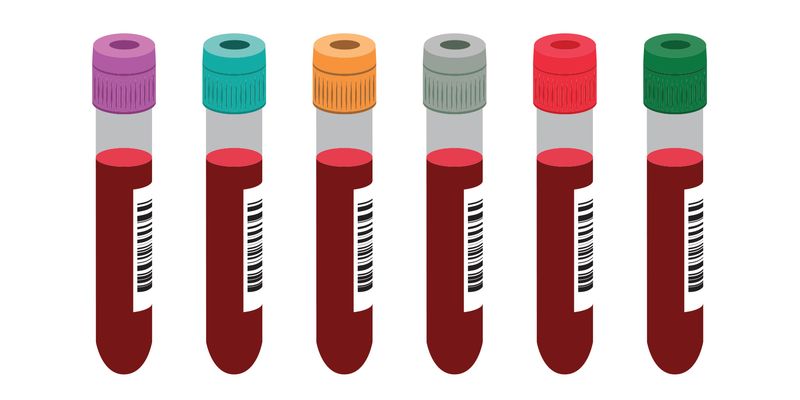
Walk into any clinical laboratory and the color-coded rack of blood collection tubes tells a clear story — to those who know how to read it. Each cap color corresponds to a specific additive chemistry, and getting that pairing right is as important for an OEM kit manufacturer as it is for a phlebotomist. Ordering the wrong tube type, or accepting a shipment where the additive formulation does not match the labeled color standard, creates downstream analytical errors that no amount of reagent optimization can fix.
This article covers the major tube types by cap color, the mechanism behind each additive, and the specification questions every procurement team should ask before finalizing an OEM blood collection kit.
The Color System and Why It Matters
The cap color convention used by most global manufacturers originates from the BD Vacutainer system but has been widely adopted as an informal industry standard. The colors are not regulated — there is no ISO or CLSI mandate that forces every manufacturer to use identical colors — but the additive-to-color mapping is consistent enough across major suppliers that procurement teams and laboratory staff rely on it as a shorthand. When you source tubes from a new supplier, the first documentation request should always be an additive-to-cap-color correspondence table, not an assumption based on color alone.
EDTA Tubes (Lavender / Purple Cap)
EDTA — ethylenediaminetetraacetic acid — is a chelating agent that binds free calcium ions, blocking the coagulation cascade and preserving whole blood in an anticoagulated state. This makes lavender-top tubes the primary choice for complete blood count (CBC), blood typing, and most hematology panels. The two most common formulations are K2EDTA (dipotassium) and K3EDTA (tripotassium). K2EDTA is preferred for many analyzers because it causes less cell shrinkage than the liquid K3 form. When specifying for an OEM kit, confirm whether the buyer’s downstream analyzer validation was performed with K2 or K3, as interchanging them without revalidation is a common source of count discrepancies.
The global vacuum blood collection tube market values EDTA tubes as the dominant product segment, accounting for roughly 37% of market share in 2026, driven by the volume of routine hematology testing performed worldwide.
Serum Separator Tubes — SST (Gold or Red-Gray Cap)
SST tubes contain two components: a clot activator (typically micronized silica or thrombin) coated on the tube wall, and an inert thixotropic separation gel at the bottom. After centrifugation, the gel migrates to form a stable barrier between the clot and the serum above it, giving laboratory staff a clean serum layer without the need to manually transfer samples. These are the workhorses of clinical chemistry — liver function tests, lipid panels, thyroid hormones, and most immunoassay panels are run on SST-derived serum.
For OEM sourcing, the gel density specification matters. The gel must have a specific gravity calibrated to sit at the serum-clot interface after standard centrifugation protocols. A gel that is too light floats into the serum fraction; one that is too dense sinks with the clot. Ask the manufacturer for their gel specific gravity range and the centrifugation parameters it was validated against.
Lithium Heparin Tubes (Green Cap)
Heparin works by activating antithrombin, which neutralizes thrombin and factor Xa, preventing clot formation. Green-top tubes yield plasma rather than serum, with a faster turnaround because there is no clot formation waiting period. This makes them well suited for emergency biochemistry — electrolytes, blood gases, and stat metabolic panels where TAT is critical.
Lithium heparin is preferred over sodium heparin for most applications because sodium adds an interfering ion to sodium assays. For OEM kits targeting point-of-care or emergency use cases, lithium heparin plasma separator tubes (PST) — which combine lithium heparin with a separation gel — offer a practical compromise between speed and ease of handling. Confirm the heparin coating method (spray-dried vs. liquid-filled) with the tube manufacturer, as spray-dried formulations generally produce more uniform anticoagulant distribution.
Sodium Citrate Tubes (Light Blue Cap)
Citrate binds calcium ions reversibly, making it suitable for coagulation testing — PT, aPTT, and fibrinogen assays — where the coagulation system needs to be intact enough to be re-activated in the analyzer. The standard citrate concentration is 3.2% (0.109 mol/L), though 3.8% tubes exist for specific legacy protocols. The fill volume is critical: light blue tubes must be filled to the line. Underfilling produces a higher citrate-to-blood ratio that artificially prolongs clotting times. This is one of the most common pre-analytical errors in coagulation testing and should be addressed in any kit assembly instruction.
Fluoride/Oxalate Tubes (Gray Cap)
Gray-top tubes contain sodium fluoride as a glycolysis inhibitor, typically combined with potassium oxalate as an anticoagulant. Fluoride blocks the enzyme enolase, halting glucose metabolism in the sample and stabilizing blood glucose values over time. Without inhibition, red blood cells continue metabolizing glucose after collection at a rate of approximately 0.1 mmol/L per hour at room temperature — enough to produce a clinically meaningful difference within two hours of draw.
For OEM kits where logistics involve extended transit from draw site to analysis — common in home-collection programs or remote diagnostic networks — glucose tube specification and fill volume compliance deserve particular attention in the kit insert documentation.
Plain Red Tubes and Clot Activator Tubes
Plain red tubes contain no additive and allow blood to clot naturally before centrifugation. They are largely being replaced by SST tubes in clinical settings, but remain relevant for specific applications such as serology, blood bank crossmatching, and some toxicology panels where gel separator interference is a concern. Clot activator tubes (red or orange cap depending on the manufacturer) add micronized silica or similar particles to accelerate clot formation without including a gel barrier, reducing TAT while avoiding gel-related interferences.
Order of Draw: Why It Belongs in Your Kit Documentation
When multiple tubes are drawn from a single venipuncture, the sequence matters. Additive carryover — trace amounts of one tube’s chemistry transferred to the needle and into the next tube — can produce analytical interference. The current standard sequence per CLSI PRE02 (8th edition, 2025) runs blood culture bottles first, followed by light blue (citrate), serum/SST, green (heparin), lavender (EDTA), and gray (fluoride/oxalate) last.
If your OEM kit includes multiple tube types, the kit insert should specify the correct draw order. This is particularly relevant for kits combining a citrate tube for coagulation with an EDTA tube for CBC — a common pairing in outpatient phlebotomy panels.
Specification Points for OEM Procurement
Several specification parameters are worth locking into a purchase agreement before the first production run. Draw volume tolerance — typically expressed as the nominal volume plus or minus 10% — should be confirmed against the analyzer’s minimum acceptable volume. Shelf life, which for vacuum tubes depends on stopper gas permeability and tube wall material, should be stated as a minimum residual vacuum guarantee at time of delivery, not just at time of manufacture. Additive concentration per unit volume should be specified numerically, not just by color label. And for any tube that includes a gel separator, the gel lot qualification data — specific gravity, temperature stability, and centrifugation protocol — should be part of the supplier’s standard documentation package.
Changfeng Medical supplies blood collection tubes and IVD consumable components for OEM and distribution customers. Specifications, certifications, and custom packaging options are available on request.