
Supplying FOB Consumables to Large-Scale Screening Programs: What Distributors and Manufacturers Need to Get Right

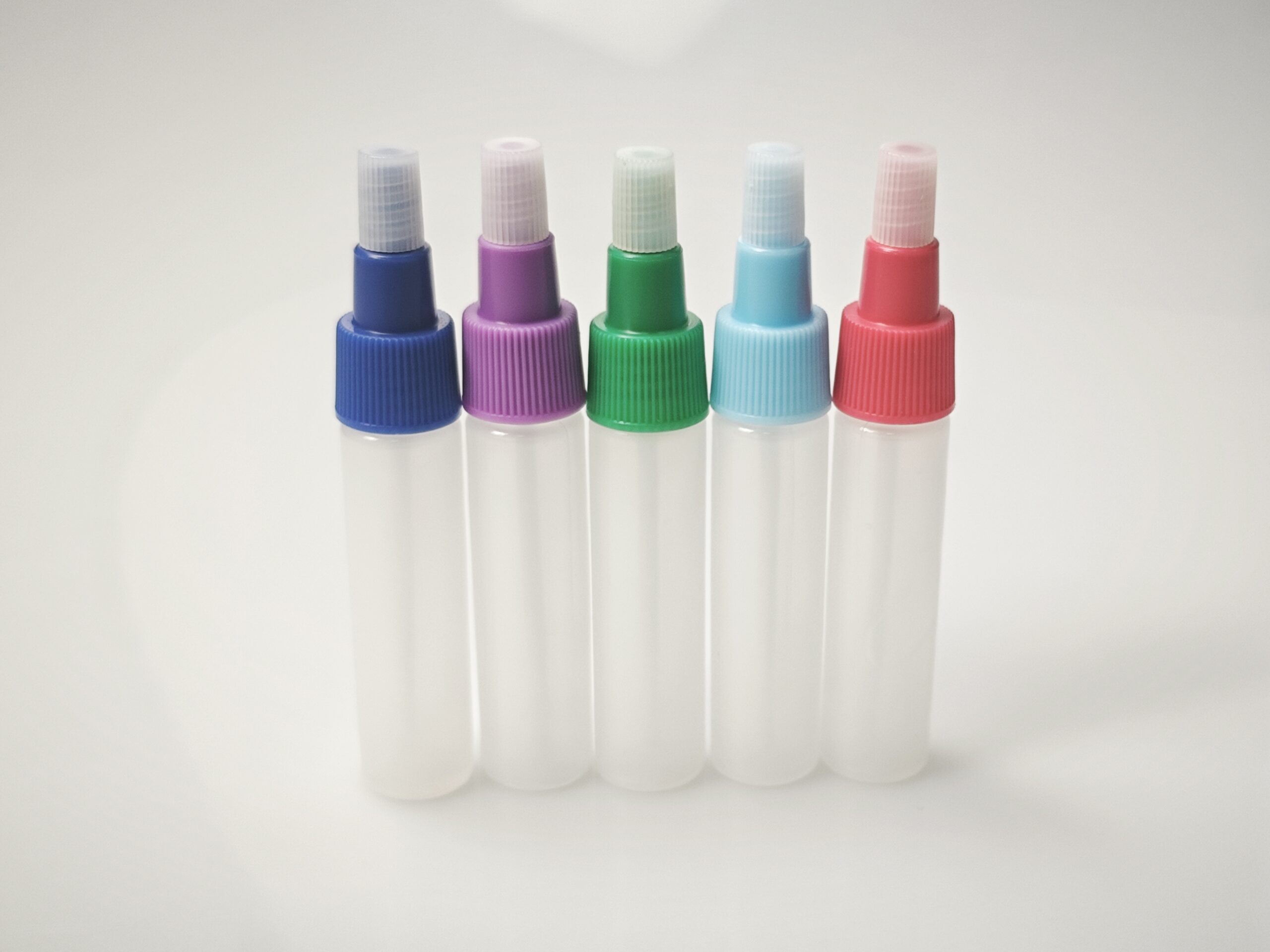
The colorectal cancer screening tests market was valued at approximately USD 1.07 billion in 2025 and is projected to reach USD 1.48 billion by 2032. Test kits and reagents account for the largest product segment, driven by high-volume workflows that depend on scalable consumables deployed across centralized laboratories and distributed collection channels. For FOB sampling bottle suppliers, this growth represents a real commercial opportunity — but serving large-scale government or hospital screening programs is operationally different from supplying smaller clinical or OEM customers.
This article looks at what distributors and component manufacturers need to have in place to compete effectively for large-scale screening program supply contracts.
How Large-Scale Programs Procure Consumables
Government-funded colorectal cancer screening programs typically procure consumables through centralized tendering processes managed by national health agencies, regional purchasing authorities, or hospital networks. The tender documents specify minimum technical requirements, required certifications, delivery schedules, and pricing structures. Suppliers that cannot meet all listed requirements are excluded from evaluation before commercial terms are even considered.
In practice, this means the qualification bar for large program supply is higher than for routine B2B sales. ISO 13485 certification is almost universally required. CE marking is required for programs in EU member states and many markets that follow EU regulatory equivalence. Some programs, particularly in Asia Pacific, require additional local market authorization from national regulators. Suppliers that hold only a factory quality certificate rather than a recognized third-party quality management system certification will not pass the technical threshold.
Asia Pacific is currently the fastest-growing region for colorectal cancer screening, driven by aging populations, rising colorectal cancer incidence, and expanding government-funded FIT programs. China, Japan, South Korea, and Australia all have active or expanding national screening initiatives. Distributors serving this region need suppliers whose documentation package can support submissions to multiple regulatory frameworks simultaneously.
Volume and Delivery Requirements
Large screening programs operate on annual invitation cycles. A national program inviting two million participants per year and targeting 60% uptake needs roughly 1.2 million sampling kits, each containing at least one FOB sampling bottle. That translates to a single-program annual order that most small component suppliers cannot fulfill without compromising lead times or quality controls.
Tender contracts typically specify maximum delivery lead times and may include penalties for late delivery. Programs that run on a seasonal invitation schedule — sending invitations in batches over several months — need suppliers who can hold buffer stock and release to a delivery schedule rather than producing to order. This requires manufacturing capacity planning and inventory management that goes beyond what many smaller FOB bottle suppliers have built.
The 2025 introduction of new US tariffs on imported medical consumables pushed procurement teams at several screening programs to reassess their supplier relationships and diversify away from single-source arrangements. This is creating openings for suppliers in markets outside the US and Western Europe, but only for those who can demonstrate supply reliability alongside competitive pricing.
Lot Consistency and Quality Documentation
Large programs that run quantitative FIT analysis need lot-to-lot consistency in sampling bottle performance, not just compliance with a broad specification range. If hemoglobin recovery shifts between lots, the effective sensitivity of the screening program shifts with it — which is a clinical governance problem, not just a procurement inconvenience.
Procurement managers at experienced programs will ask for lot release testing data covering multiple consecutive production runs before awarding a supply contract. They want to see that the supplier’s internal quality controls are catching variation before it reaches the field, not discovering it after a program has distributed non-conforming kits to participants.
Certificates of conformance should include specific test parameters with measured values, not just pass/fail declarations. For a FIT sampling bottle, this typically means buffer pH, hemoglobin recovery at a defined spiked concentration, probe dimensional measurements, and cap leak test results. A CoC that states only “product conforms to specification” without supporting data provides limited assurance to a sophisticated procurement buyer.
Private Label and Custom Packaging for Program Requirements
Many national programs distribute sampling kits under their own branding rather than the manufacturer’s label. This requires the supplier to support private label production, including custom cap colors, label artwork, and packaging inserts in local languages. For programs operating across multiple countries or regions, the ability to supply the same bottle in multiple label configurations from a single production run simplifies regulatory documentation and reduces supplier qualification overhead.
Home-use kit formats place additional requirements on packaging. Instructions must be patient-readable without clinical training, packaging must be suitable for postal distribution under applicable biological substance shipping regulations, and the collection process must be intuitive enough that participants complete it correctly on the first attempt without calling a helpline.
Building a Supplier Relationship That Works at Program Scale
The practical difference between a supplier that can fulfill a hospital order and one that can supply a national screening program comes down to three things: documented quality systems that produce consistent output across high production volumes, manufacturing capacity that can meet program delivery schedules without compromising quality controls, and regulatory documentation that satisfies the requirements of the program’s registration framework.
Distributors that are positioning themselves to serve large program contracts should qualify their component suppliers against these criteria before submitting tender responses. Discovering a documentation gap or capacity constraint after winning a tender creates problems that are expensive and time-consuming to fix under program timelines.
Changfeng Medical supplies FOB sampling bottles for FIT-based screening programs, with ISO 13485 and CE certification, lot-level quality documentation, and private label capability. Production capacity supports high-volume program orders with scheduled delivery. Contact us to discuss program supply requirements and request a documentation package for supplier qualification.