
Spinal Needle Gauge Selection: Why 22G to 27G Is Not a Small Detail When You Are Stocking for Multiple Surgical Programs

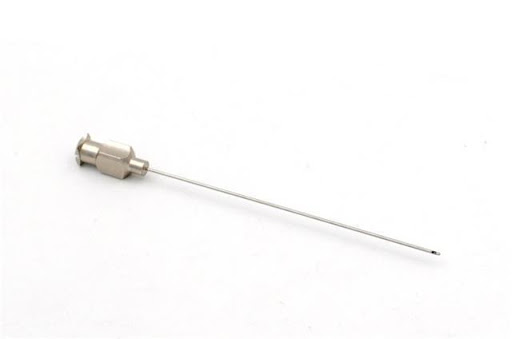
Spinal needle gauge is one of those specifications that looks like a minor procurement detail until you are managing anesthesia supply for a multi-specialty hospital or a distributor serving accounts across different clinical settings. The gauge range in common use — 22G at the wider end, 27G at the finer — represents a set of real tradeoffs between insertion confidence, CSF flow rate, procedural time, and complication risk. Stocking the wrong gauge for a given surgical program creates friction at the point of use, and stocking too many SKUs creates inventory complexity without clinical benefit.
What Gauge Actually Controls
Needle gauge determines the outer diameter of the needle — a higher gauge number means a narrower needle. For spinal anesthesia, the outer diameter has two primary effects: how much resistance the needle meets on insertion, and how large the dural defect is after withdrawal. Both matter clinically, but they matter in different ways depending on the procedure and the patient population.
A wider needle (lower gauge, say 22G or 23G) is easier to insert through resistant tissue, produces a faster and more reliable CSF backflow for confirmation of subarachnoid placement, and is easier to control in patients where the anatomy is difficult. The cost is a larger dural defect and correspondingly higher risk of post-dural puncture headache, particularly if a cutting-tip Quincke bevel is used.
A finer needle (25G to 27G) reduces dural defect size and PDPH risk substantially, but requires more careful technique. At 27G, CSF flow is slow enough that confirmation can take several seconds, which adds procedural time and can be a source of anxiety for less experienced clinicians in a busy theater environment. The thinner shaft also increases deflection risk in patients with significant tissue resistance or unusual spinal anatomy.
Matching Gauge to Surgical Program
Obstetrics is the clearest case for fine-gauge pencil-point needles. Patients are generally young, healthy, and mobile, which means PDPH is both more likely to occur and more disruptive when it does — a new mother with a severe positional headache cannot care for her infant or mobilize normally in the postpartum period. Most obstetric anesthesia programs have standardized on 25G or 27G pencil-point spinal needles for elective and emergency cesarean section precisely because the risk-benefit calculation is so consistent.
Orthopedic surgery for lower limb procedures — hip replacement, knee arthroplasty — typically uses spinal anesthesia in older patients where PDPH risk is lower due to reduced CSF pressure dynamics associated with age, but where tissue resistance can be higher. Many orthopedic anesthesia programs find that 25G or 26G pencil-point needles strike the right balance: fine enough to minimize PDPH risk, robust enough to maintain insertion control in patients with stiffer ligamentous tissue.
Urology procedures, particularly transurethral resections and cystoscopies performed under spinal block, often take place in older male patients where again PDPH risk is lower. Here the gauge choice is less critical from a complication standpoint and procurement decisions often reflect departmental convention or formulary agreement rather than strict clinical optimization.
Diagnostic lumbar puncture, where adequate CSF volume collection is important for laboratory analysis, skews toward wider gauges (22G or 23G) because flow rate matters as much as dural trauma. Some neurology departments maintain a separate spinal needle formulary from the anesthesia department for this reason — different clinical goal, different optimal specification.
The Inventory Management Problem
A hospital serving obstetrics, orthopedics, urology, and neurology simultaneously may have legitimate clinical reasons to stock 22G, 25G, 26G, and 27G spinal needles in both Quincke and pencil-point configurations. That is eight SKUs before accounting for length variations — standard 88mm versus long 120mm for bariatric or unusual anatomy cases. Maintaining eight or more spinal needle SKUs across distributed OR storage locations creates real risk of wrong-product selection under time pressure.
The practical approach most procurement managers land on is a two-tier system: a primary formulary of two or three needle specifications that covers the majority of procedures, and a smaller secondary supply of specialty configurations held in central anesthesia stores rather than decentralized OR cupboards. This requires honest dialogue between procurement and clinical leadership about which gauge and tip combinations are genuinely necessary versus which ones persist by habit.
Length, Packaging, and Kit Compatibility
Gauge is only one dimension of the spinal needle specification. Length matters too — standard spinal needles run around 88mm to 90mm, but longer variants (119mm to 120mm) are required for bariatric patients or those with unusual anatomy where standard length may not reliably reach the subarachnoid space. If your distributor network serves both general surgical accounts and bariatric centers, you need both lengths on the catalog.
For kit assemblers, the spinal needle gauge and length specification also feeds into packaging decisions. A combined spinal-epidural kit must be designed so that the spinal needle, once passed through the Tuohy needle, reliably extends beyond the Tuohy tip by a consistent distance — typically 10mm to 15mm. The matching of needle lengths in a CSE kit is a dimensional engineering problem, not just a gauge selection problem, and it requires coordination between the spinal needle specification and the epidural component specification.
Changfeng Medical produces spinal anesthesia needles in gauges from 22G to 27G with both Quincke and pencil-point tip options, available in standard and long lengths to support a range of clinical and kit assembly applications. CE certified and ISO 13485 compliant. Export inquiries welcome at changfengmed.com/contact.