Why Capillary Blood Collection Is Replacing Venipuncture in POC and Pediatric Workflows

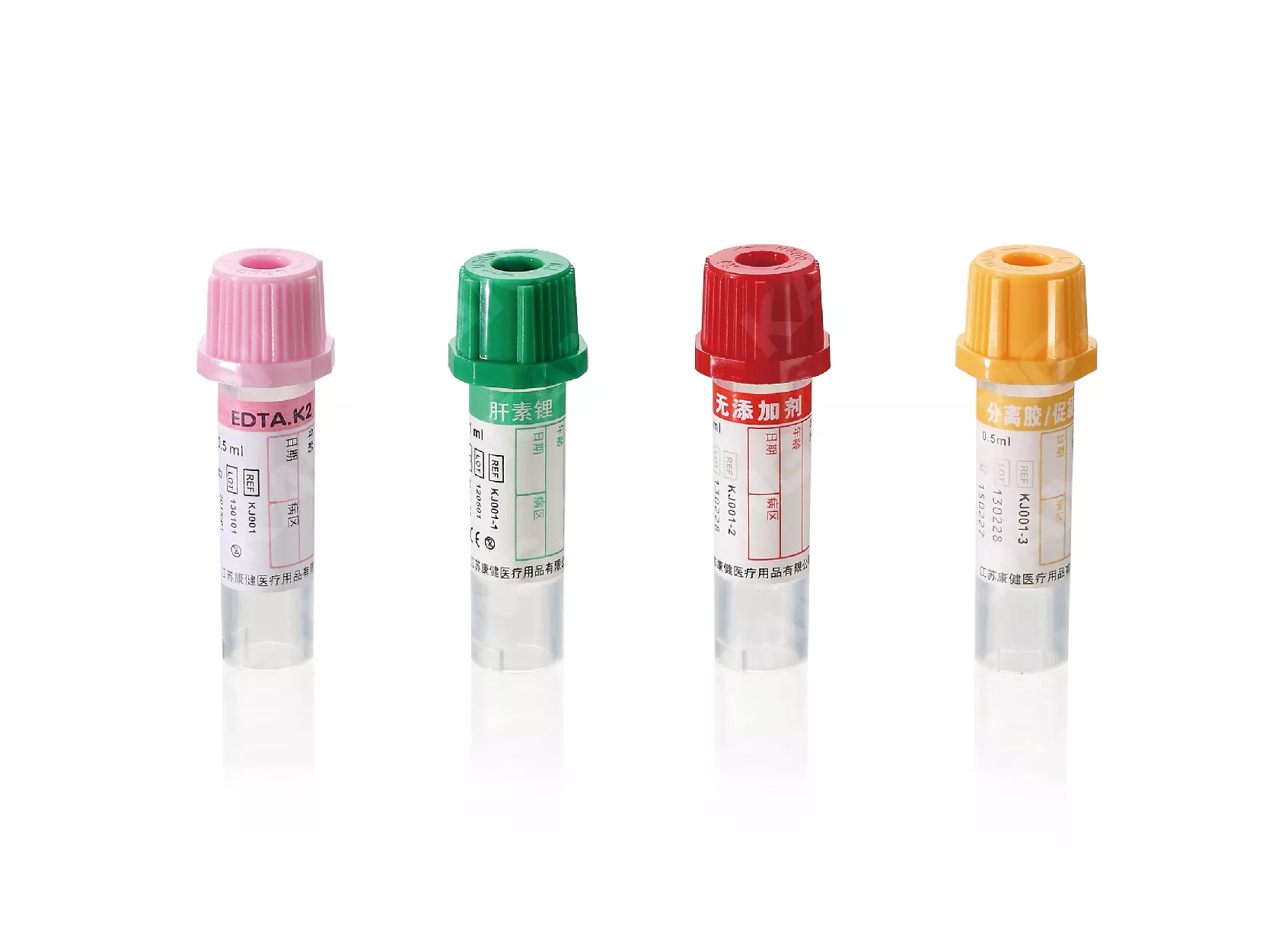
Venipuncture has been the default method for blood collection in clinical labs for decades. That’s changing, and it’s changing faster than most supply chain planners have accounted for. Micro-volume capillary collection — using fingerstick or heelstick sampling into small-format tubes — is now the method of choice in a growing range of diagnostic workflows. Understanding what’s driving this shift and what it means for tube specification is practical information for distributors and kit manufacturers working with this product category.
Where the Demand Is Coming From
Pediatric and neonatal settings were the first to move. In patients under two years, peripheral venipuncture is technically difficult and causes significant distress. Heelstick collection into 0.25–0.5 mL capillary tubes has been standard in newborn screening programs for years, and the infrastructure for capillary collection in these settings is now well-established. Globally, usage of micro-collection tubes under 0.5 mL in pediatric and neonatal applications grew 38% in recent years as more countries expanded newborn screening panels.
Point-of-care testing is the second major driver. POC analyzers from multiple manufacturers now accept fingerstick whole blood directly, requiring only 10–50 µL per test. The tube in this context functions as a collection and brief transport vessel — it needs to preserve the sample without introducing interference, maintain the anticoagulant in the correct ratio, and be compatible with the pipetting or aspiration mechanism on the target analyzer. None of these requirements are automatically satisfied just because a tube is described as “micro-volume.”
Home-based and remote diagnostic programs are a third growth area. Dried blood spot cards have dominated home collection historically, but liquid micro-volume tubes with closure systems that allow safe postal transport are increasingly being qualified for home-based testing programs in infectious disease, therapeutic drug monitoring, and chronic disease management. Demand for low-volume formats driven by point-of-care and home-care applications is projected to grow at roughly 9.5% annually through the end of the decade — faster than the overall blood collection tube market.
What Changes at the Tube Level
Capillary blood differs from venous blood in ways that matter for tube design. Tissue fluid contamination from the puncture site is a consistent source of sample dilution and electrolyte interference if the first drop is not discarded. Capillary samples are also more prone to platelet activation from the tissue trauma, which affects coagulation-sensitive assays. Tubes designed specifically for capillary collection should account for these characteristics — particularly in additive concentration, which needs to be calibrated against a lower and more variable fill volume than venous collection tubes.
Closure design is also more critical in small-format tubes. A capillary tube that requires significant force to close, or that leaks under mild pressure, creates both sample loss and biosafety risk. The closure should work reliably with one hand in a clinical setting and provide a positive seal confirmation. For distributors specifying tubes into POC programs, this is worth checking in a physical sample test before committing to volume orders.
Analyzer Compatibility Is Not Transferable Between Suppliers
One of the most common sourcing errors is assuming that analyzer compatibility established with one supplier’s micro-volume tube transfers to another supplier’s tube of nominally the same specification. It doesn’t — not reliably. Tube internal diameter, material surface energy, additive coating uniformity, and closure-to-tube dead volume all affect how the sample behaves in an automated aspiration system. If a kit developer or laboratory has validated against a specific tube, switching suppliers requires re-validation. This is not bureaucratic overhead; it reflects real performance variation between manufacturers.
For OEM buyers, the practical implication is that tube supplier selection should happen early in assay development, with the tube treated as a component of the test system rather than a commodity input. A supplier willing to provide early-stage samples, technical documentation, and response to specification queries is worth more than a supplier offering the lowest unit price at launch.
Supply Chain Considerations for Distributors
Micro-volume tubes have shorter shelf lives than standard tubes in some formats, and smaller pack sizes mean higher per-unit logistics cost. Distributors building out a capillary collection portfolio should map their end-customer workflow: if the customer is a hospital POC program, large-format shelf stock is appropriate; if the customer is a home-testing program or a mobile clinic, smaller pack sizes with better per-unit transport cost matter more. Specifying this at the sourcing stage avoids packaging re-work later.
Changfeng Medical supplies single-use micro-volume blood collection tubes with documentation packages suited for B2B distribution and OEM kit integration. Full specifications are available through our product page, and custom specifications can be discussed directly with our OEM team.