
EO or Gamma: How Swab Sterilization Method Affects PCR Compatibility and Regulatory Documentation

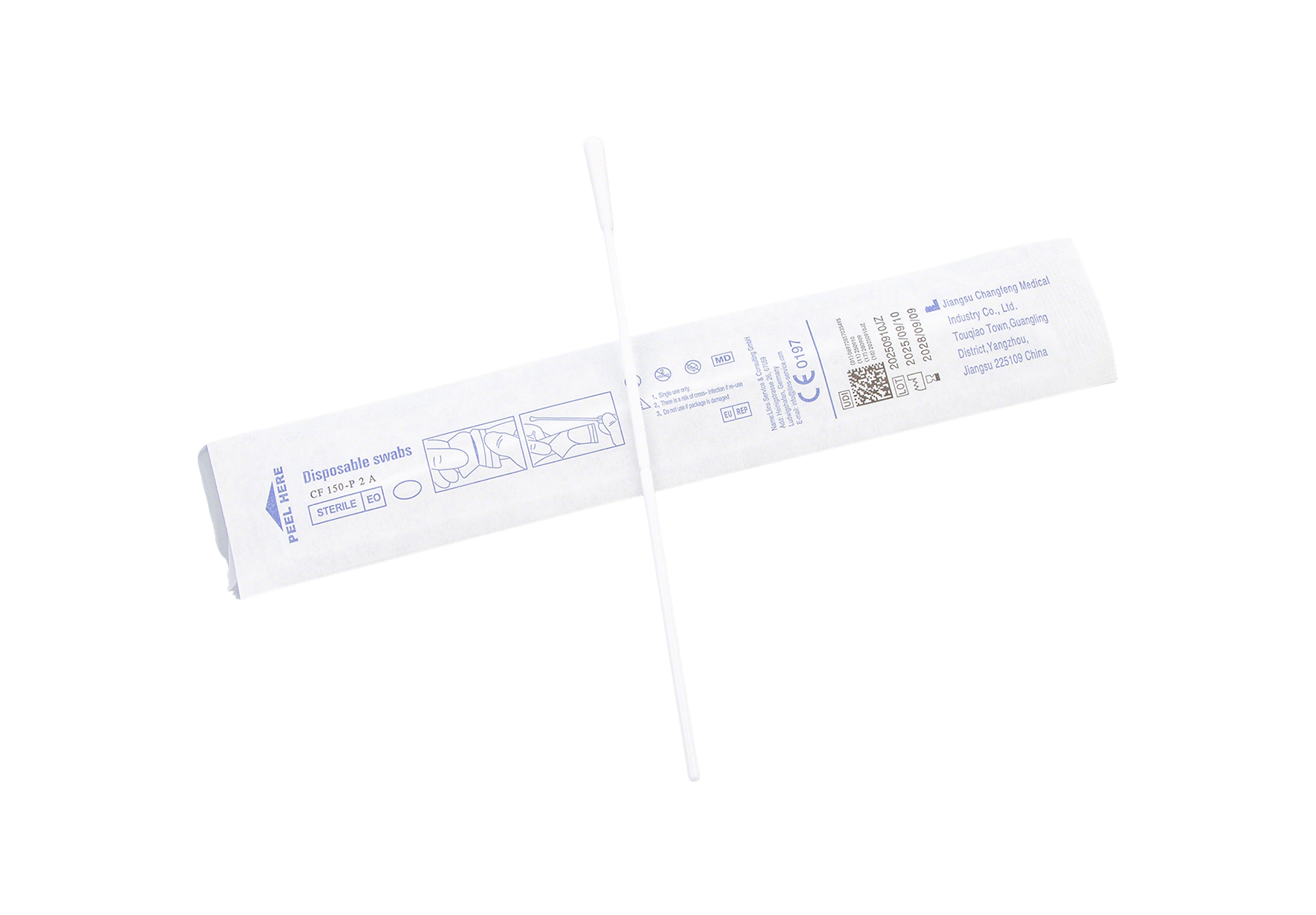
Sterility is a baseline requirement for any clinical sampling swab — not a differentiating factor in supplier selection. What does differentiate suppliers, and what does matter to kit developers and procurement managers, is how sterility is achieved and what that means for the product that arrives at the end user.
The two sterilization methods used for medical sampling swabs are ethylene oxide gas (EO or EtO) and gamma irradiation. Both are effective and widely used. They have different effects on swab materials, different implications for nucleic acid-based testing, different regulatory documentation trails, and different constraints on packaging. Knowing which method a supplier uses — and why — is a legitimate part of supplier qualification for swab-based diagnostic kits.
How Each Method Works
Ethylene oxide sterilization exposes the product to EO gas under controlled temperature and humidity conditions. EO is an alkylating agent: it disrupts microbial DNA by chemically modifying the nucleotide bases, preventing replication. The process works at low temperatures, which matters for heat-sensitive materials like the polypropylene and nylon commonly used in swab shafts and tips. After exposure, the product undergoes an aeration cycle to allow residual EO and its byproducts — primarily ethylene glycol and ethylene chlorohydrin — to off-gas to levels below regulatory limits before packaging is sealed.
Gamma irradiation uses high-energy photons to break the covalent bonds of microbial DNA. The rays penetrate packaging materials including sealed pouches, tubes, and outer cartons, which means the product can be sterilized in its final packaged form. No aeration cycle is required, and there is no residual agent concern. The tradeoff is that gamma radiation can affect the physical properties of some polymers — causing yellowing, embrittlement, or changes in surface chemistry depending on the material and dose.
EO and PCR Compatibility
EO sterilization generates a well-documented and mostly manageable concern for molecular diagnostic applications: residual EO and its reaction products can, under certain conditions, affect downstream nucleic acid analysis. The effect is material-dependent. Research has shown negligible impact of EO treatment on DNA recovered from synthetic fiber swabs such as rayon and nylon when used after the standard aeration and off-gassing period. Cotton swabs show more pronounced effects, particularly when used shortly after treatment, which is one of several reasons cotton is not appropriate for molecular diagnostic applications regardless of sterilization method.
The practical implication for kit developers using EO-sterilized nylon flocked or polyester swabs: confirm with the supplier that the product meets residual EO limits per ISO 10993-7 before the product is packaged and released. Reputable manufacturers will have this data as part of routine release testing, and it should be available as part of the technical file. If a supplier cannot produce EO residual test data on request, that is a quality system gap worth noting during qualification.
Importantly, by the time an EO-sterilized swab reaches the end user — given typical manufacturing lead times, transit, and shelf storage — EO residuals have fallen well below measurable levels. The concern is most relevant for products used very close to the sterilization date, which in practice means it applies to the manufacturer’s quality release process more than to the end user’s application.
Gamma Irradiation and Material Effects
Gamma irradiation does not leave chemical residuals, which simplifies the molecular compatibility picture. The relevant concern with gamma-treated swabs is physical: irradiation can alter the surface properties of synthetic fibers, potentially affecting elution characteristics. The practical significance depends on the material, the irradiation dose, and the sensitivity of the downstream assay. For standard diagnostic swabs at typical sterilization doses (25–40 kGy), the effect on sample collection and elution performance is generally within acceptable bounds, but validation data from the specific supplier and product is the only reliable basis for confirming this.
Gamma sterilization is commonly used for molded tube products and complete swab-tube collection kits packaged in final form, because the penetrating capability allows sterilization of the assembled product without disassembly. For individual swabs packaged in peel pouches — the most common format for clinical and OEM supply — EO is typically preferred because the porous pouch material allows EO penetration and subsequent off-gassing without requiring the gamma doses that denser packaging would need.
Regulatory Documentation Requirements
Both sterilization methods require documented validation as part of the product’s technical file under ISO 13485 and CE MDR. The relevant standards are ISO 11135 for EO sterilization and ISO 11137 for gamma and electron beam sterilization. Compliance with these standards is required for CE marking of sterile medical devices and is part of what MDSAP audits verify in the manufacturing quality system.
For kit developers incorporating third-party swabs into a CE-marked kit, the sterilization validation documentation from the swab supplier is part of the technical documentation the notified body will review. Specifically: the sterilization method, the validated sterilization cycle parameters, the bioburden testing program, the sterility assurance level (SAL, typically 10⁻⁶ for medical devices), and — for EO — the residual testing protocol and release limits.
Under the EU MDR, the supplier relationship must be formally managed: swab manufacturers supplying components to kit assemblers should be on the assembler’s approved supplier list, with documented qualification criteria and periodic re-evaluation. The sterilization documentation sits within this supplier qualification framework, not separately from it. Assemblers who treat sterility as a given — confirmed by the “sterile” marking on the packaging — without holding the underlying validation documentation are exposed in any technical file review.
What to Ask Suppliers
When qualifying a swab supplier on sterilization, the documentation request should be specific: the sterilization method (EO or gamma), the sterilization standard the process is validated to (ISO 11135 or ISO 11137), the SAL, the validation report reference number and date, and — for EO — the residual testing standard and release limit. Ask for the certificate of conformance for the specific product lot and confirm that the supplier’s quality system conducts bioburden monitoring as part of ongoing production, not only at initial validation.
A supplier that hesitates at any of these requests, or provides only the CE certificate without the underlying sterilization validation data, is not audit-ready by MDR standards. For kit assemblers submitting to a notified body, the completeness of the supply chain documentation is a direct reflection of the assembler’s quality system — not just the component supplier’s.
Changfeng Medical’s sampling swabs are EO-sterilized per ISO 11135 with residual testing per ISO 10993-7. Full sterilization validation documentation is available for OEM kit qualification under CE MDR and MDSAP frameworks. See the swab product range or contact us directly for technical documentation requests.