Bone Marrow Biopsy Needles: Why Tip Design Drives Sample Quality

Most medical device specifications can be rank-ordered by importance: dimensions matter most, materials next, packaging last. Bone marrow biopsy needles invert that hierarchy. Gauge and length matter — but they’re table stakes. The variable that most affects whether the pathologist sends back a clean diagnosis or a “repeat please” is something more subtle: the geometry of the cutting tip and the internal architecture of the cannula.
For distributors sourcing bone marrow biopsy needles for hematology and oncology customers, getting the tip design right is what separates a product that builds loyalty from one that gets returned.
The Procedure That Doesn’t Forgive a Bad Needle
Bone marrow biopsy is performed primarily on the posterior iliac crest, with a smaller volume on the sternum (aspirate only) or anterior iliac crest. The clinician advances a thick-walled, large-gauge cannula through the cortex of the bone, then through the marrow space, and finally captures a cylindrical core of trabecular bone and marrow within the cannula.
What the pathologist needs is a 1.5–2 cm intact core with preserved architecture — trabeculae, fat spaces, hematopoietic cells, and stroma all visible in their natural spatial relationship. What too many needles deliver is a crushed, fragmented, or aspiration-contaminated sample that limits diagnostic confidence.
The difference between those two outcomes isn’t operator skill alone. The needle itself does most of the work.
What Makes a Good Cutting Tip
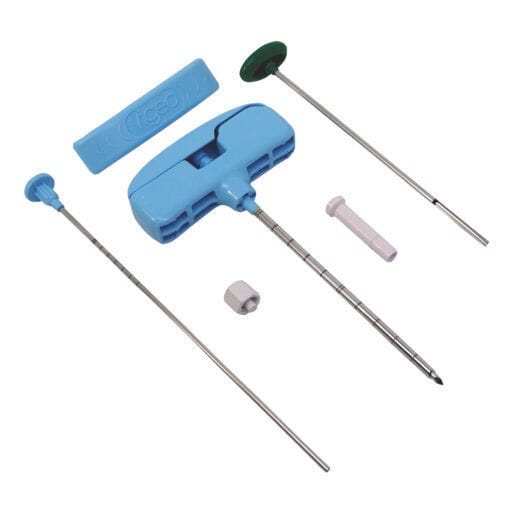
A Jamshidi-style bone marrow biopsy needle — the dominant design worldwide — has three critical tip features:
Bevel angle and edge sharpness. The distal edge of the cannula must cut cortical bone cleanly without crushing the underlying trabecular structure. Too steep a bevel and the needle wedges and crushes; too shallow and it skives off the cortex rather than penetrating. The optimal angle is a manufacturing tradeoff that varies slightly between products, but consistency across the production batch is what actually matters in procurement. Inconsistent bevels mean inconsistent samples.
Internal cannula taper. As the operator advances the needle and rotates to detach the core, the trabecular sample passes into the cannula lumen. A subtle internal taper — wider at the cutting edge, narrower a few millimeters back — helps retain the sample on withdrawal. Without it, the core slides back out as the needle is withdrawn from the bone, and the operator has to fish for a fragmented sample with the obturator or a separate probe.
Wall thickness uniformity. The cannula walls have to be thin enough to maximize sample diameter at a given outer gauge, but thick enough to resist deformation during cortical penetration. Uniform wall thickness around the circumference is what keeps the tip from bending laterally during the procedure. Variation here is a quiet defect that operators feel but rarely articulate.
These are the variables that matter. They’re also the variables that are hardest to evaluate from a spec sheet alone, which is why sample units and clinical feedback are essential parts of the sourcing process.
Stylet, Obturator, and the Sample Recovery Story
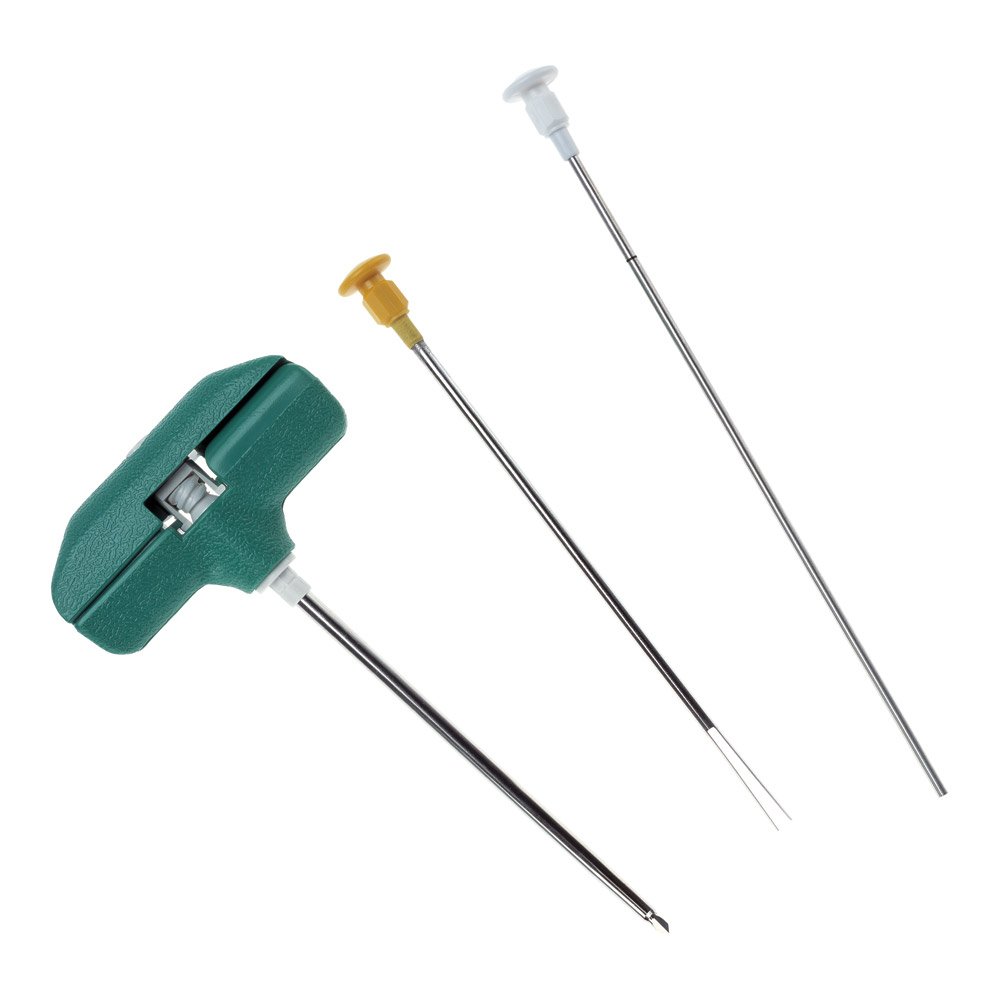
The stylet (sometimes called the trocar or inner stylus) sits inside the cannula during initial bone penetration. Its job is to prevent the cannula from coring tissue or bone before the operator has positioned the tip in the marrow space. A good stylet:
- Locks securely into the hub during advancement
- Releases with a single, intuitive motion when it’s time to capture the core
- Has a tip geometry that matches the cannula bevel cleanly, with no protrusion or recession that could affect entry feel
The obturator, used after withdrawal to push the captured core out of the cannula and onto the tissue cassette, is a small component that gets a lot of complaints when it’s wrong. It should advance smoothly from hub to tip without binding, and its diameter should match the cannula lumen precisely. Loose obturators leave samples stuck; tight ones crush the sample as they push it out.
Handle and Ergonomics
Bone marrow biopsy is performed with significant manual force, and the operator needs precise rotational control during cortical penetration. Most modern needles use one of three handle styles:
- T-handle. Traditional, low-cost, requires moderate operator skill. Best for experienced operators.
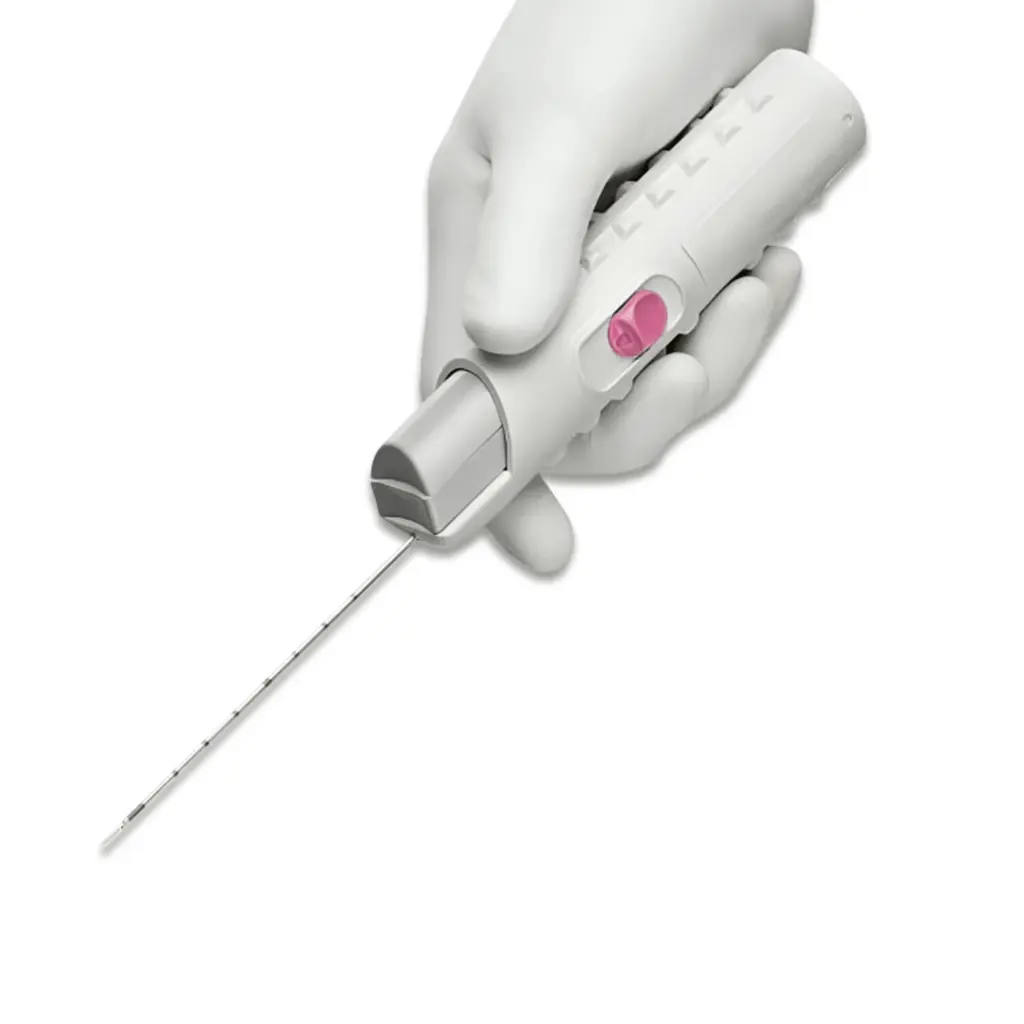
- Ergonomic grip with finger-placement contours. Better force distribution, less hand fatigue during difficult procedures. Standard on premium products.
- Powered/battery-driven. Emerging category — a small motor drives the cannula through the bone, reducing operator effort and procedure time. Significantly higher cost; reserved for high-volume centers in developed markets.
For distributors building a product portfolio, T-handle and ergonomic grip products cover the majority of the global market. Powered systems are a niche premium offering with limited geographic adoption.
What to Evaluate When Sourcing
For distributors and procurement teams looking at bone marrow biopsy needle suppliers, the questions that actually predict product performance:
Sample yield data. Ask the supplier for documented core yield rates — what percentage of insertions produce an intact, evaluable core of stated minimum length? A reputable manufacturer has this data from their own validation testing. If they can’t produce it, that’s information too.
Gauge and length range. Standard adult offerings are 8G, 11G, and 13G in lengths from 100 mm to 150 mm. Pediatric offerings extend smaller (15G) and shorter (75 mm). A supplier covering the full range is preferable to one with gaps that force you to source from multiple vendors.
Stylet and obturator action. Request sample units and test the locking mechanism, stylet release, and obturator advancement yourself. The feel of the components tells you more about quality control than any specification document.
Sterilization, packaging, shelf life. EO sterilization is standard. Shelf life of 3–5 years is typical. Packaging should protect the cutting tip from damage during shipping — a bent or dulled tip from poor packaging is a returned product.
Regulatory documentation. CE-MDR technical files, FDA 510(k) where applicable, ISO 13485, and MDSAP coverage should be available on request. Bone marrow biopsy needles are Class IIa in the EU and Class II in the US — verify the supplier holds the relevant clearances.
Single-use packaging only. Reusable bone marrow biopsy needles essentially don’t exist in current procurement — sample contamination risk and the difficulty of re-sharpening cutting tips make single-use the only viable configuration. Any supplier proposing reusable products in this category should be questioned closely.
OEM and ODM Considerations
For brand owners sourcing bone marrow biopsy needles for private label:
- Custom branding and packaging. Bone marrow needles are often included in hematology procedure kits. Supplier flexibility on packaging configuration, multilingual IFUs, and custom tray layouts matters more than catalog price.
- Color coding by gauge. Most premium products use color-coded hubs to identify gauge at a glance — useful in stocked procedure trays. Confirm the supplier offers this without surcharge.
- Companion products. Specimen jars, slides, and aspirate syringes are often bundled with biopsy needles in procedure kits. Suppliers offering matched companion components reduce kitting complexity.
- Sample qualification. Functional testing on bone marrow needles — cortical penetration force, sample retention, tip durability after multiple simulated penetrations — takes weeks. Build that into your sourcing schedule from the first conversation.
The Bottom Line
Bone marrow biopsy needles aren’t a commodity product despite their simple appearance. The variables that drive clinical outcomes — bevel geometry, internal taper, wall thickness uniformity, stylet and obturator action — don’t show up cleanly on a spec sheet. They show up in the pathologist’s report on sample quality, and in the clinician’s willingness to keep using the product after the first dozen procedures.
For distributors building a hematology and oncology product line, the right way to evaluate suppliers is to look past the catalog and into the production process. Ask for sample units. Ask for yield data. Ask for the regulatory documentation. The suppliers who can produce all three on request are the ones worth building a relationship with.
Changfeng Medical manufactures Jamshidi-style bone marrow biopsy needles in adult and pediatric gauge ranges, with T-handle and ergonomic-grip configurations, under ISO 13485 with CE-MDR and MDSAP coverage. Color-coded hub options and custom kit configurations available for OEM and ODM partners.