
gFOBT vs. FIT: What the Shift to Immunochemical Testing Means for Sampling Bottle Specifications

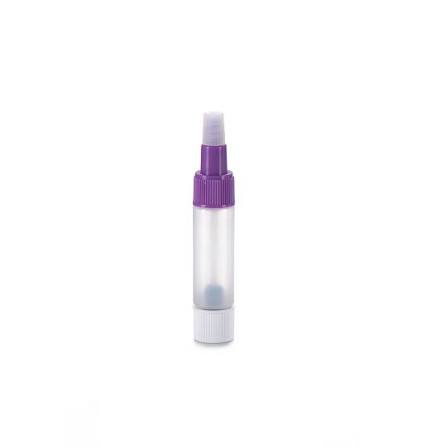
For most of the past three decades, guaiac-based fecal occult blood testing was the standard first-line tool in colorectal cancer screening programs. That is changing. National programs across Europe, Asia Pacific, and Latin America are transitioning to fecal immunochemical testing, and the shift is accelerating. For manufacturers and distributors of FOB sampling consumables, this transition changes what buyers are asking for in a sampling bottle — and what specifications matter most when evaluating suppliers.
This article explains the technical differences between gFOBT and FIT from a consumables standpoint, and what procurement teams and kit developers should understand before making sourcing decisions.
Why Programs Are Moving Away from gFOBT
The guaiac method detects peroxidase activity in hemoglobin through a chemical reaction. It is inexpensive and does not require specialized equipment, but it has two well-documented limitations. First, it reacts to peroxidase from non-human sources — dietary meat, certain raw vegetables, and some medications can produce false positives. Second, sensitivity for advanced adenomas and early-stage cancers is lower than immunochemical methods. Studies have consistently shown that FIT at a cut-off of 75 ng/mL detects advanced neoplasia at roughly twice the rate of gFOBT, while maintaining a comparable colonoscopy referral burden.
The American College of Gastroenterology has recommended replacing gFOBT with FIT as the preferred stool-based screening method. Several national programs — including those in the UK, the Netherlands, Australia, and Japan — have already completed or are in the process of completing this transition. As a result, procurement demand is shifting from guaiac cards and pads toward FIT sampling bottles with liquid preservation buffer.
How the Consumable Formats Differ
The physical consumable used for gFOBT is typically a cardboard card with guaiac-impregnated windows. The patient smears a small amount of stool onto the card, allows it to dry, and either submits the card to a clinic or mails it. The card format is cheap to manufacture but sensitive to humidity, temperature, and the dietary variables described above. Storage and transport conditions must be carefully managed to avoid degrading the guaiac reagent before analysis.
FIT sampling uses a liquid buffer bottle with an integrated probe or spoon. The patient collects a stool sample using the probe, inserts it back into the bottle, and the sample is immediately stabilized in the preservation buffer. This format offers several practical advantages: the buffer protects hemoglobin during transit, sample handling is more hygienic and less unpleasant for patients, and no dietary restrictions are required because FIT uses an antibody specific to human hemoglobin rather than a peroxidase reaction.
For procurement purposes, the key difference is that FIT consumables are more technically specified. A guaiac card is a relatively simple substrate. A FIT sampling bottle involves precise buffer chemistry, defined probe geometry, specific volume tolerances, and leak-resistance requirements for postal submission. Each of these parameters must be controlled and documented by the supplier.
Specification Differences That Matter to Kit Developers
Buffer chemistry and hemoglobin stability. FIT sampling buffers must stabilize hemoglobin at ambient temperatures for the duration of the collection-to-analysis window. This window varies by program: same-day clinic submission may require only 24-hour stability, while mail-in programs operating in warm climates may require five days or more at temperatures above 30°C. Ask suppliers for stability data at the specific temperature and duration relevant to your program, not just a generic shelf-life claim.
Sample volume control. Quantitative FIT analyzers calculate hemoglobin concentration based on a defined buffer-to-sample ratio. If the probe geometry varies between production lots, the amount of fecal material transferred to the buffer also varies, shifting the effective cut-off. Probe dimensional consistency across lots is a quality parameter that many buyers do not verify during initial supplier qualification but discover as a problem during program operation.
Compatibility with automated analyzers. Many high-volume FIT programs use automated analyzer platforms such as the OC-SENSOR series. Sampling bottles must be compatible with the specific instrument being used — not just in terms of physical fit into the analyzer sample tray, but in terms of the buffer formulation and hemoglobin recovery characteristics the instrument was calibrated against. Confirm analyzer compatibility before finalizing a bottle supplier for any program that uses quantitative FIT.
Leak resistance and transport packaging. FIT sampling bottles submitted by mail are subject to postal handling conditions. The bottle must maintain leak integrity through pressure changes, temperature variation, and physical handling during transit. UN 3373 requirements for Biological Substance Category B apply to most stool sample mailers. Confirm that your supplier has tested and documented leak resistance under the applicable standard.
What This Means for Distributor and OEM Sourcing
Distributors that have historically supplied gFOBT cards are being asked by their hospital and program clients to quote FIT sampling bottles instead. The supplier qualification requirements for FIT bottles are more demanding than for guaiac cards, and not every manufacturer that can produce a guaiac card can produce a FIT bottle that meets the documentation requirements for regulated market submissions.
For OEM kit developers, the transition also creates an opportunity. Programs that are switching from gFOBT to FIT often need to re-register or re-validate their kits anyway, which opens procurement to new component suppliers. Developers that can present a well-documented FIT sampling bottle with stability data, dimensional specifications, and ISO 13485 supplier certification have a clear advantage in these conversations.
The direct-to-consumer home testing segment is also growing, with physician-led programs still accounting for the majority of market share in 2025 but home kit channels scaling at a faster rate. Home-use FIT kits place additional emphasis on patient-friendly probe design and clear labeling, since there is no clinical staff to assist with sample collection.
Changfeng Medical manufactures FIT-compatible FOB sampling bottles in 3 mL, 6 mL, and 10 mL formats, with integrated sampling probes and preservation buffer. Available for OEM and private label programs with full regulatory documentation support. Contact us for samples and technical specifications.