
Qualifying a Swab Supplier in 2026: The Documentation Checklist for ISO 13485, CE MDR, and MDSAP Markets

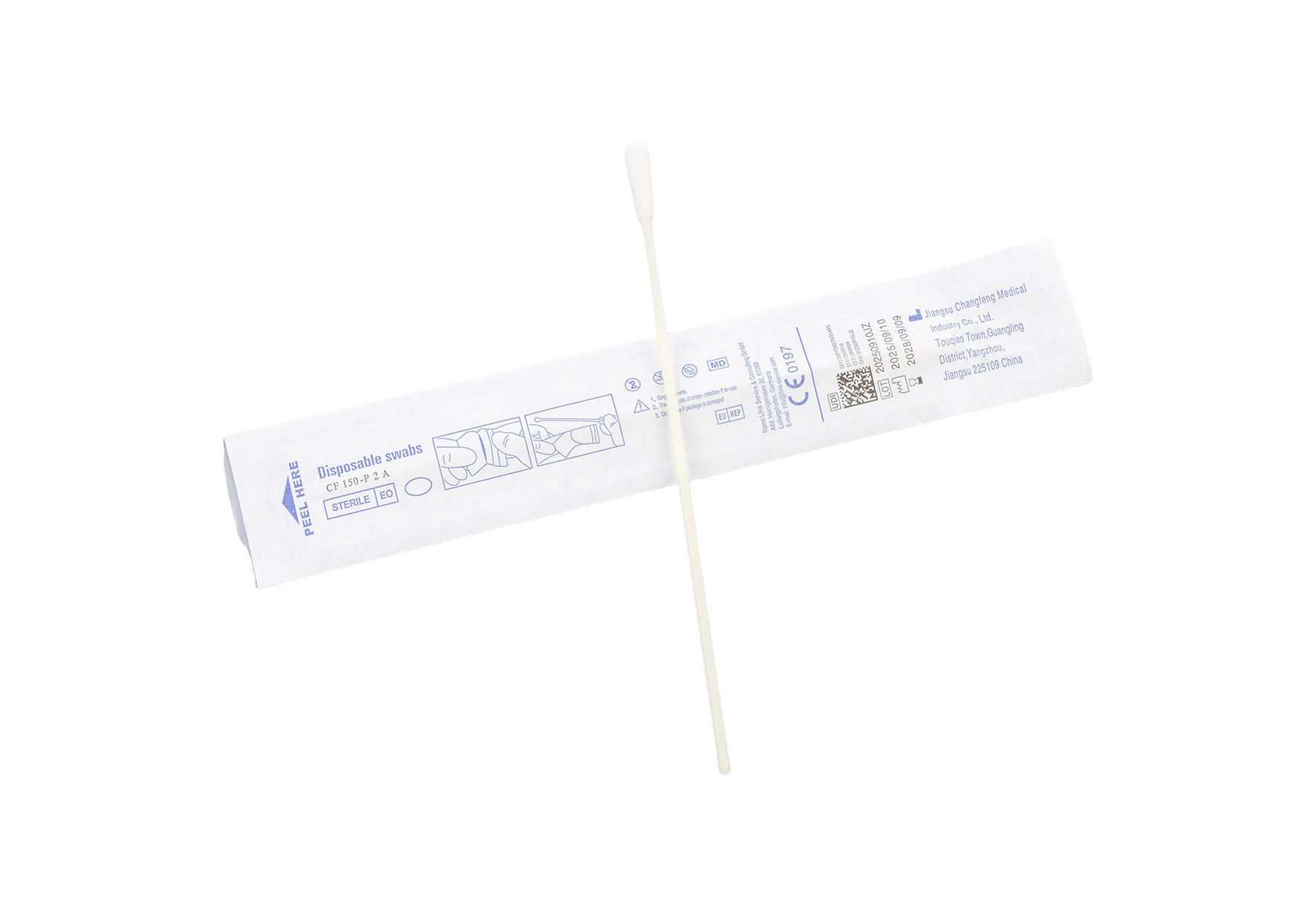
Adding a new swab supplier to an IVD kit assembly operation is not a purchasing decision — it is a quality system event. The regulatory frameworks governing medical device manufacturing in every major market treat component suppliers as part of the manufacturer’s quality management system, which means the documentation a supplier can provide is as important as the product specification they quote.
For distributors and OEM kit assemblers working across EU, North American, and Asia-Pacific markets, swab supplier qualification needs to satisfy three overlapping frameworks simultaneously: ISO 13485, CE MDR, and MDSAP. Here is what each requires, what has changed recently, and what a complete qualification documentation package should contain.
ISO 13485: The Foundation
ISO 13485:2016 is the quality management system standard that underlies CE MDR compliance, MDSAP participation, and most national medical device regulatory frameworks. Its supplier control requirements (Clause 7.4) require that purchasing organizations evaluate and select suppliers based on their ability to supply products meeting specified requirements, maintain records of that evaluation, and define the controls applied to purchased products based on risk.
In practice, this means that every swab supplier in a CE-marked or MDSAP-covered kit needs to be on an approved supplier list with documented qualification criteria. The minimum documentation from the supplier side: a current ISO 13485 certificate from an accredited certification body (with scope that explicitly covers the product category being sourced), evidence that the quality system covers the manufacturing site producing the specific product, and a record of how the supplier was evaluated — whether by audit, questionnaire, or certificate review.
ISO 13485 certificates have defined expiration dates and undergo surveillance audits between renewal cycles. Verify that the certificate on file is current and that the certification body is accredited — an ISO 13485 certificate issued by a non-accredited body does not satisfy the standard’s supplier qualification intent.
CE MDR: What Changed and What It Requires Now
Under the EU Medical Device Regulation (MDR 2017/745), the supplier relationship is formally a supply chain responsibility of the legal manufacturer — the entity whose name appears on the CE declaration of conformity. If a kit assembler is the legal manufacturer of a CE-marked diagnostic kit that incorporates third-party swabs, the assembler is responsible for maintaining the technical documentation on those swab components, including their CE marking documentation, sterilization validation, and biocompatibility data.
The relevant documentation from a swab supplier for EU MDR purposes: the EU Declaration of Conformity for the swab product, the notified body certificate number and scope (where applicable), the sterilization validation report reference, biocompatibility testing per ISO 10993, and the unique device identifier (UDI) assignment for the product. EUDAMED registration is becoming mandatory for new MDR device registrations and will eventually extend to component-level traceability — assemblers building audit-ready systems now should confirm whether their swab suppliers are registered in EUDAMED.
A swab marketed with a CE mark under the old Medical Device Directive (MDD 93/42/EEC) does not meet MDR requirements. The transition to MDR is complete for devices sold in the EU. Any supplier still citing MDD compliance as their CE evidence needs to be asked directly whether MDR certification has been obtained.
MDSAP: The 2026 Landscape
The Medical Device Single Audit Program now covers five core jurisdictions — the US, Canada, Brazil, Australia, and Japan — plus an expanding group of affiliate members. Malaysia joined as an affiliate member in September 2025, and the program’s reach continues to grow. For swab suppliers and kit assemblers with MDSAP certification, a single annual audit covers the quality system requirements for all participating markets simultaneously.
The MDSAP audit approach was updated in February 2026 (AU P0002.010), removing legacy QSR references and consolidating audit documentation. Critically, FDA’s Quality Management System Regulation (QMSR), which became mandatory in February 2026, incorporates ISO 13485:2016 by reference — which means FDA inspections now evaluate quality systems through an ISO 13485 lens with US-specific supplementary requirements, rather than as a parallel system. For suppliers and assemblers who previously maintained separate QSR and ISO 13485 documentation, consolidation is now appropriate and expected.
From a supplier qualification standpoint: a swab supplier with MDSAP certification provides the most efficient documentation for assemblers selling across multiple markets. The MDSAP certificate, combined with the audit report from the most recent MDSAP cycle, gives the assembler evidence of quality system performance across all covered jurisdictions from a single audit event.
The Complete Qualification Documentation Package
For a swab supplier qualification file that will withstand notified body review under CE MDR and MDSAP audit scrutiny, the documentation package should include the following:
Quality system documentation: Current ISO 13485 certificate with accredited certification body, scope covering the relevant product category, and the manufacturing site address matching the site producing the product. MDSAP certificate where applicable.
Regulatory certification: EU Declaration of Conformity under MDR 2017/745 (not MDD), notified body certificate number and expiry, UDI assignment confirmation.
Product technical documentation: Product specification sheet with dimensions, tip material, shaft material, breakpoint position (where applicable), and sterility claim. Sterilization method and validation standard (ISO 11135 or ISO 11137). Residual EO testing protocol and results (for EO-sterilized products). Biocompatibility data per ISO 10993 series.
Ongoing supply controls: Certificate of conformance format for each production lot. Change notification policy — specifically, whether the supplier commits to notifying customers before making changes to materials, manufacturing process, sterilization cycle, or packaging that could affect the product’s performance or regulatory status. Shelf life validation data.
The change notification policy is worth particular attention. A supplier who changes tip fiber source material, shaft polymer grade, or sterilization contractor without notifying downstream customers has created a regulatory event for the assembler — potentially invalidating the kit’s CE marking without the assembler’s knowledge. This risk is managed through a formal supply agreement that specifies change notification obligations, not through an informal understanding.
Ongoing Supplier Monitoring
Initial qualification is not a one-time event. ISO 13485 requires periodic re-evaluation of approved suppliers, and the frequency should be risk-based — more frequent for critical components like sterile swabs used in diagnostic kits than for lower-risk consumables. Re-evaluation should include confirmation that the ISO 13485 and MDR certificates are still current, review of any complaints or nonconformances related to the supplier’s product, and — for high-volume suppliers — consideration of periodic on-site or remote audits.
Assemblers who maintain a live approved supplier list with documented re-evaluation dates and records are substantially better positioned in notified body audits than those who treat supplier qualification as a one-time exercise at onboarding. The regulatory trend across MDR, MDSAP, and FDA QMSR is toward continuous supply chain oversight — assemblers building that infrastructure now are ahead of the compliance curve rather than catching up to it.
Changfeng Medical holds ISO 13485, CE MDR, and MDSAP certification, with sterilization validation per ISO 11135 and biocompatibility data per ISO 10993. Complete qualification documentation packages — including certificates, Declaration of Conformity, sterilization validation references, and lot-level certificates of conformance — are available for OEM and distributor customers. Contact us for the documentation request process.