
Why More Interventional Radiologists Still Prefer Semi-Automatic Biopsy Needles

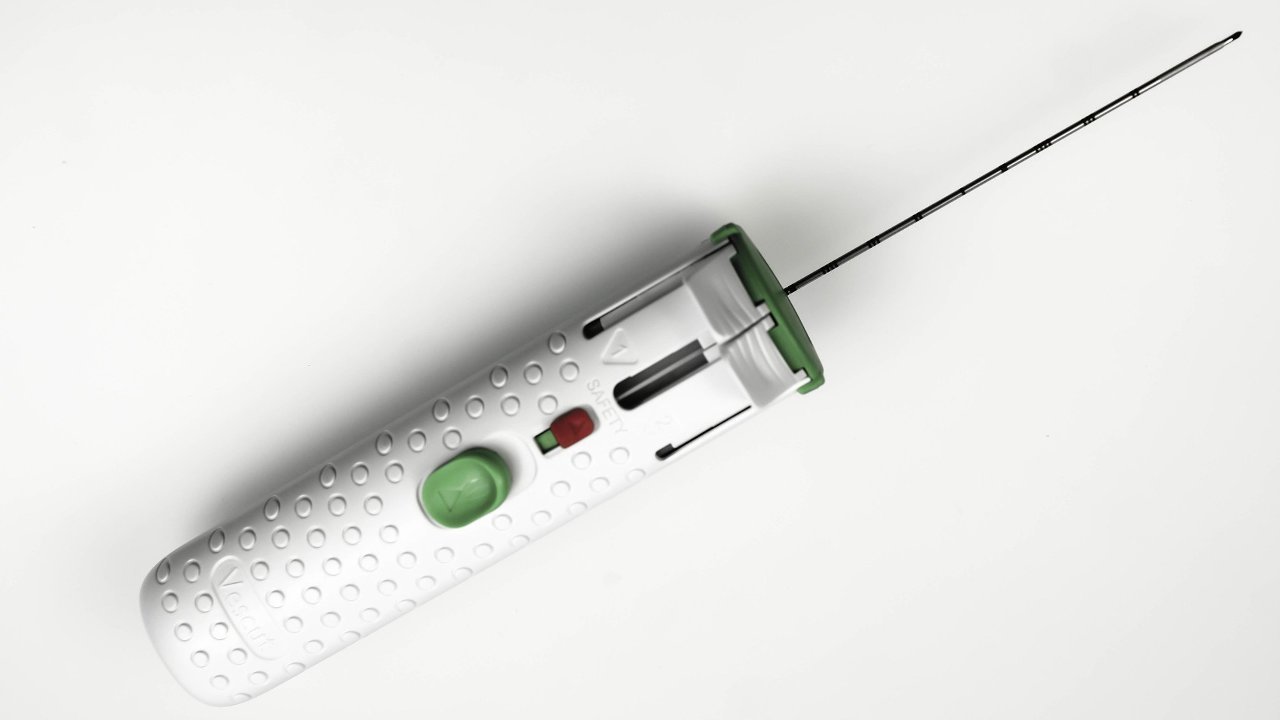
For years, medical device marketing has pushed a simple idea: more automation equals better outcomes. In many product categories, that’s true. In biopsy procedures, the story is more complicated.
Despite the widespread availability of fully automatic biopsy systems, semi-automatic biopsy needles continue to hold a strong position in interventional radiology. Hospitals keep buying them. Radiologists keep requesting them. Distributors continue adding them to their product portfolios.
The reason isn’t tradition. It’s control.
The Shift Toward Smaller Targets
Modern imaging systems are identifying lesions earlier than ever before. As screening programs expand and imaging quality improves, clinicians are increasingly asked to biopsy smaller and more difficult targets.
A decade ago, many biopsies involved relatively large masses. Today, sub-centimeter lesions are common. The smaller the target, the less room there is for error.
That trend has quietly increased the value of devices that allow physicians to verify positioning before tissue collection occurs.
Why Manual Stylet Placement Still Matters
In a fully automatic system, both the stylet and cutting cannula fire in rapid succession. The process is fast and efficient.
In a semi-automatic biopsy needle, the physician first places the specimen notch exactly where it is needed. Only after imaging confirmation does the cutting cannula advance to capture tissue.
For lesions located near vessels, nerves, pleural surfaces, or other sensitive anatomy, that additional level of control can improve operator confidence and reduce procedural uncertainty.
The Procurement Perspective
Many buyers focus on gauge size, working length, and unit cost. Experienced distributors look deeper.
- Trigger consistency across production lots
- Specimen notch options
- Ultrasound visibility and echogenic enhancement
- Compatibility with coaxial introducer systems
- Availability of OEM packaging
- Regulatory documentation support
These factors often determine long-term customer satisfaction far more than small price differences between suppliers.
Why OEM Buyers Are Paying Attention
For private-label brands, the challenge is no longer simply sourcing a biopsy needle. The challenge is finding a manufacturing partner capable of supporting validation, regulatory submissions, packaging customization, and future product expansion.
Manufacturers operating under ISO 13485 quality systems with established export experience can significantly reduce qualification timelines for distributors entering new markets.
The Bottom Line
Semi-automatic biopsy needles remain relevant because they solve a clinical problem automation cannot completely eliminate: precise operator control. As biopsy procedures become increasingly image-guided and target increasingly smaller lesions, that control continues to matter.
Changfeng Medical manufactures semi-automatic tissue biopsy needles under ISO 13485 quality systems, supporting OEM and ODM projects with multiple gauge sizes, specimen notch configurations, and customized packaging solutions for global distributors.